
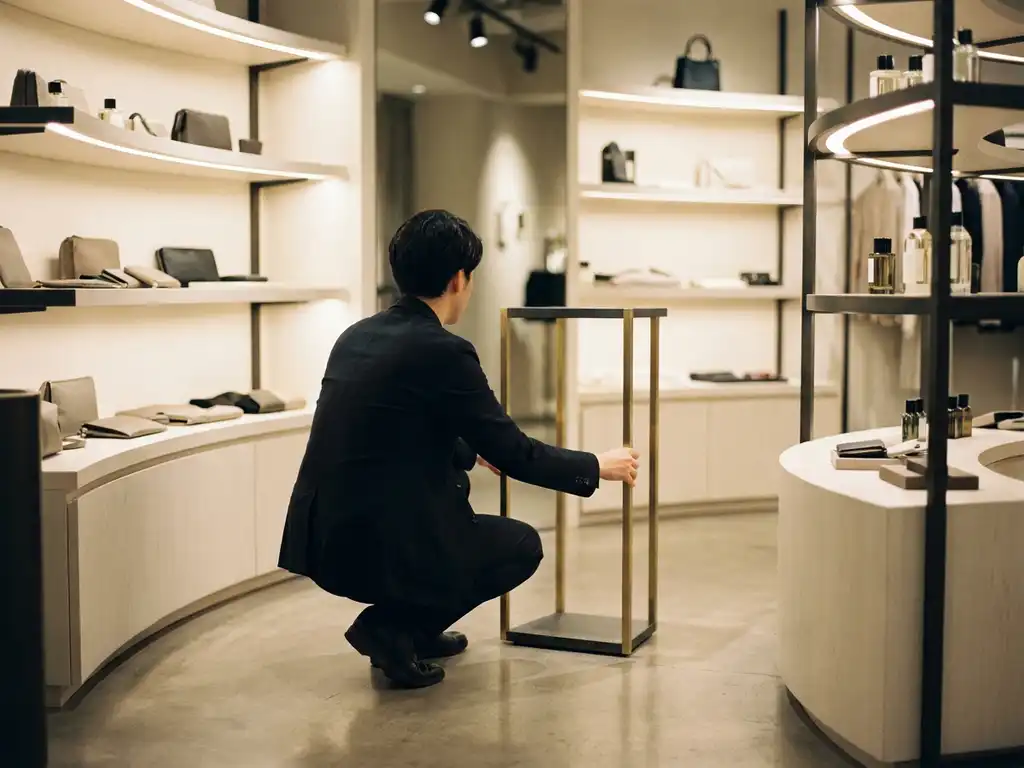
Fixture placement in a retail store should be determined by customer traffic flow, product category, shopper behaviour, and the commercial objectives of both the brand and the retailer. The goal is to position fixtures where they intercept the highest-value shopper journeys, maximise dwell time, and drive conversion at the point of purchase. The sections below address the key questions that shape an effective retail fixture placement strategy.
Fixture placement in retail is determined by a combination of traffic data, category logic, shopper psychology, and commercial agreements between brands and retailers. No single factor operates in isolation. Effective in-store fixture layout requires balancing the retailer's overall store architecture with the brand's visibility and conversion objectives.
The primary factors that influence fixture positioning include:
Understanding these factors before committing to a fixture design ensures that the physical unit performs as a commercial asset, not just a display vehicle.
Customer traffic flow is one of the most critical inputs in retail store layout strategy. Shoppers in most retail environments follow predictable movement patterns, entering from a single point, drifting to the right, and moving through the store in broadly consistent routes. Fixtures placed along high-traffic corridors and natural pause points capture significantly more shopper attention than those positioned in low-flow areas.
Retailers and brands use footfall data, heat mapping, and observational research to identify where shoppers slow down, stop, and engage. These dwell zones are prime locations for brand fixtures, particularly for categories that benefit from considered purchase decisions. Conversely, high-speed transit zones near store entrances and exits are better suited to bold, high-impact display formats that communicate a message quickly rather than requiring extended engagement.
Understanding the difference between primary traffic routes and secondary browsing zones allows brands to match fixture format and messaging to the shopper's mindset at each location. A fixture placed in a high-dwell zone can afford to carry more product depth and brand storytelling. One positioned on a primary route needs to work harder, faster.
End-of-aisle positions, freestanding floor units in high-traffic zones, and secondary placements near checkout areas consistently generate strong sales performance across most retail categories. These locations share a common characteristic: they intercept shoppers outside of their planned purchase path, creating incremental purchase opportunities.
Secondary placements, where a brand's product appears in more than one location within the same store, are particularly effective for impulse-driven categories. A product displayed both in its home category aisle and in a branded freestanding unit near a complementary category can meaningfully increase basket size and brand visibility.
Eye-level positioning within a fixture also has a direct impact on sales. Products placed between waist and eye height consistently outperform those on lower or upper shelves. This principle applies equally to the positioning of the fixture itself within the broader store environment: a well-placed unit at eye level in a high-traffic zone will outperform a superior fixture tucked into a low-visibility corner.
Balancing brand ambitions with retailer planogram constraints requires early collaboration, flexibility in fixture design, and a clear understanding of what each party is trying to achieve. Retailers set planogram rules to protect store navigation, category clarity, and overall shopper experience. Brands need to work within those parameters while still delivering a distinctive and effective retail display placement.
The most effective approach is to engage with the retailer's space planning or category management team before finalising fixture design. Understanding the available footprint, height restrictions, and adjacency rules at the outset prevents costly redesigns later in the project lifecycle.
Fixture designs that offer modular configurations give brands greater flexibility to adapt to different retailer environments without starting from scratch. A core unit that can be scaled up or down, or reconfigured to fit varying bay widths, allows a single fixture programme to operate across multiple retail partners while maintaining brand consistency. This adaptability is increasingly valued by brands managing complex, multi-retailer distribution strategies.
Yes. Temporary and permanent fixtures serve different commercial purposes and should be positioned accordingly. Permanent fixtures are integrated into the retailer's category layout and planogram, occupying fixed positions that form part of the store's long-term architecture. Temporary fixtures, by contrast, are typically deployed for promotional periods and are positioned to maximise impact during a specific campaign window.
Temporary point of sale placement prioritises high-traffic, high-visibility locations that may not be available on a permanent basis. Retailers often allocate premium promotional space, such as gondola ends, entrance zones, or feature areas, to temporary brand activations on a rotational basis. The brief window of availability means temporary fixtures must communicate quickly and clearly, with a strong call to action and immediate brand recognition.
Permanent fixtures, on the other hand, need to work consistently over time, accommodating product range changes, seasonal variations, and evolving brand messaging. Their placement is typically more considered and more deeply integrated into the retailer's category strategy. The design brief for a permanent fixture should account for longevity, maintainability, and the ability to update graphics or product configuration without replacing the entire unit.
Fixture height and scale directly influence where a unit can be placed and how effectively it performs in that location. Tall fixtures create strong vertical presence and are effective in open-plan retail environments where sight lines are long. However, many retailers impose height restrictions to protect store navigation and prevent fixtures from blocking sight lines to other categories or wayfinding signage.
Oversized fixtures placed in confined spaces create congestion and disrupt shopper flow, which can generate a negative brand association even if the fixture itself is well designed. Scale must be proportionate to the available space and the surrounding retail environment. A fixture that dominates a small pharmacy bay will read very differently from the same unit placed in the open-plan beauty hall of a department store.
Counter-height and mid-floor fixtures offer greater placement flexibility because they work within most retailer height guidelines while still delivering strong brand presence. For brands operating across diverse retail environments, designing to a versatile height range from the outset avoids placement restrictions that can compromise the fixture's commercial effectiveness.
Pivotal brings end-to-end expertise to every stage of the fixture placement process, from initial shopper insight and concept development through to manufacturing, installation, and compliance. Working with brands across beauty, health, fashion, and lifestyle sectors, Pivotal's approach combines commercial rigour with design precision to ensure every fixture performs in the environments it occupies.
For brands looking to strengthen their in-store fixture strategy, Pivotal offers a full-service partnership that removes the complexity of managing multiple suppliers. Get in touch with the Pivotal team to discuss how your next fixture programme can be designed, built, and placed for maximum commercial impact.