A hero display is the primary, high-impact retail fixture that anchors a brand's in-store campaign, while a secondary display is a supporting unit positioned elsewhere in the store to reinforce the message and capture additional purchase opportunities. The distinction lies not only in scale and prominence but also in strategic function: the hero drives brand awareness and shopper engagement, while secondary formats convert interest into sales across multiple touchpoints. Understanding how each type works — and how they work together — is essential for any brand investing in physical retail.
A hero display typically occupies a prime, high-traffic location such as a store entrance, a dedicated brand bay, or a central aisle feature. Secondary displays are positioned at supplementary locations throughout the store, including aisle ends, till points, shelf edges, and cross-category zones where complementary products are sold.
Placement is determined by footfall data, category adjacencies, and negotiated retailer agreements. Hero displays are designed to stop shoppers in their tracks and create a brand moment, so they require space and visibility. Secondary displays, by contrast, are compact and versatile — engineered to fit within the constraints of standard shelf runs or counter spaces without disrupting the retailer's overall planogram.
In a pharmacy environment, for example, a hero display might occupy a freestanding position in the skincare aisle, while secondary units appear at the prescription counter and near the checkout. This multi-location approach ensures the brand is visible at several decision points across a single shopper journey.
The hero display functions as the centrepiece of a brand's in-store campaign. It communicates the core brand message, showcases the full product range, and creates an immersive experience that differentiates the brand from competitors sharing the same retail floor. It is the single most important physical asset in a point of sale campaign.
Beyond product presentation, a well-designed hero display performs several strategic roles simultaneously. It builds brand equity by delivering consistent visual identity at full scale. It educates shoppers through integrated graphics, product information, and interactive or sensory elements. And it signals investment — a brand that commits to a prominent, well-crafted fixture communicates authority and confidence to both the shopper and the retailer.
For brands launching new product lines or entering a new retail channel, the hero display is often the first physical expression of the brand that shoppers encounter. The quality of that fixture directly influences first impressions and, ultimately, conversion. This is why brands working with partners such as Pivotal invest in the full design and development process, ensuring the hero unit is both structurally robust and creatively compelling.
Secondary displays extend the reach of the hero display by placing the brand at additional conversion points across the store. Rather than relying on shoppers to seek out the main fixture, secondary units intercept them at natural pause points in their journey, reinforcing the campaign message and prompting unplanned or impulse purchases.
The relationship between hero and secondary formats is cumulative. A shopper who passes the hero display without purchasing may encounter a secondary unit at the till point and convert there. Secondary displays also serve a reminder function — they keep the brand visible after the initial brand moment has passed, sustaining recall throughout the shopping trip.
Secondary formats commonly used alongside hero displays include counter display units (CDUs), shelf-edge strips, dump bins, clip strips, and spinner units. Each format is chosen based on the product type, the retail environment, and the specific conversion behaviour it is designed to trigger. The creative treatment of secondary displays should always echo the hero display's visual language to create a coherent, campaign-wide identity.
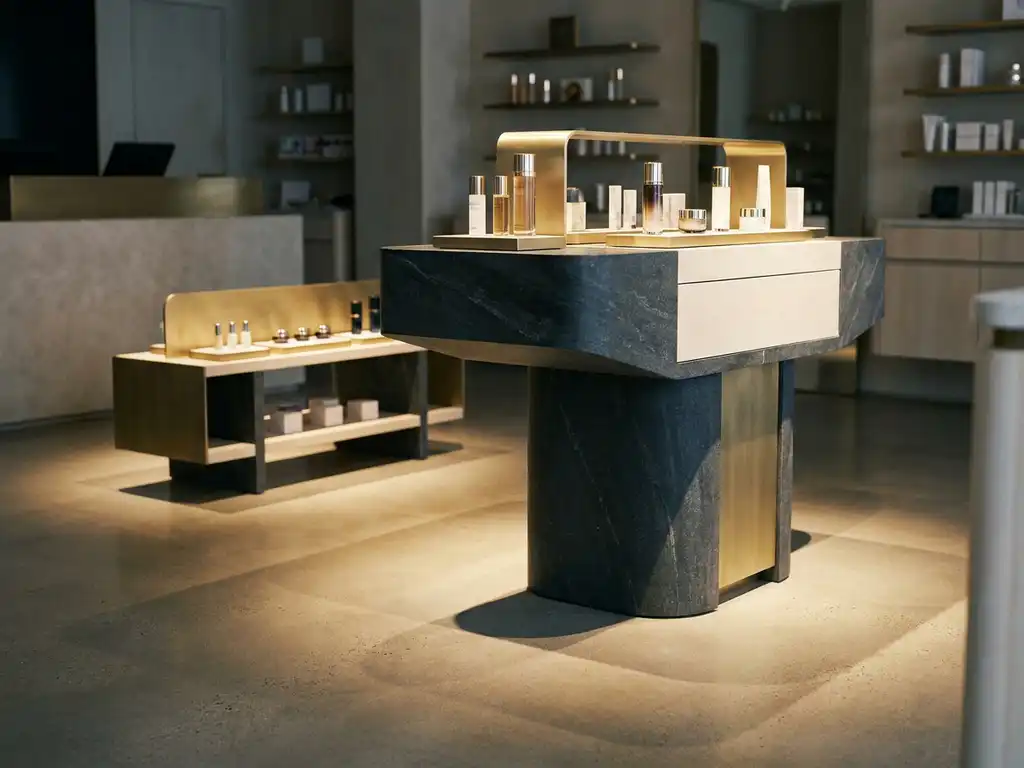
Hero displays and secondary displays differ in scale, material complexity, structural engineering, and production cost. Hero displays are typically larger, more architecturally complex structures built from a combination of materials including metal frameworks, acrylic panels, joinery elements, and printed graphics. Secondary displays are generally smaller, lighter, and designed for rapid installation and repositioning.
Hero displays are engineered to be permanent or semi-permanent fixtures. They often incorporate bespoke joinery, moulded components, and integrated lighting. The structural brief requires stability, durability, and the capacity to hold significant product weight across multiple shelving tiers. Given their prominence, the finish quality of a hero display is held to the highest standard — every material choice and surface treatment reflects directly on the brand.
Secondary displays prioritise portability, cost-efficiency, and ease of installation. They are frequently produced in higher volumes and may use lighter materials such as corrugated board, injection-moulded plastics, or lightweight metal wire. Despite their smaller scale, secondary units still require precise graphic alignment and structural integrity — a poorly constructed secondary display reflects on the brand just as much as a poorly constructed hero unit.
A brand should invest in both hero and secondary displays when the objective is to maximise in-store coverage and drive conversion across multiple shopper touchpoints within the same retail environment. A hero-only approach creates a single brand moment; combining both formats creates a connected campaign presence that accompanies the shopper throughout their visit.
The case for dual investment strengthens in several specific scenarios:
Budget allocation between the two types should reflect campaign priorities. In most cases, the majority of creative and production investment is directed at the hero display, with secondary units developed to a consistent but more cost-efficient specification.
Display placement is agreed through a commercial and operational negotiation between the brand and the retailer, typically involving the brand's trade marketing or shopper marketing team and the retailer's category management or space planning function. Placement decisions are governed by the retailer's planogram, available space, footfall data, and the commercial terms agreed as part of the brand's ranging or promotional deal.
Retailers manage their store environments carefully, and securing premium placement for a hero display often requires a combination of commercial investment and a compelling retail design proposition. A fixture that demonstrates clear shopper value — through its design quality, ease of replenishment, and compatibility with the retailer's store standards — is significantly more likely to be approved and given prominent positioning.
Compliance is a critical factor in this process. A display that has been approved in principle can still fail to reach the shop floor if it does not meet the retailer's structural, safety, or aesthetic requirements. Brands that work with experienced retail display partners are better positioned to navigate these requirements from the outset, reducing the risk of costly redesigns or delayed installations.
Pivotal provides end-to-end retail display design and development for brands seeking to build a coherent, high-impact in-store presence across both hero and secondary formats. Working with Pivotal means a single partner manages the entire process, from initial concept and CAD development through to manufacturing, installation, and compliance — removing the coordination burden that comes with managing multiple suppliers.
For brands ready to elevate their in-store display strategy, speak to the Pivotal team to discuss your next campaign.