
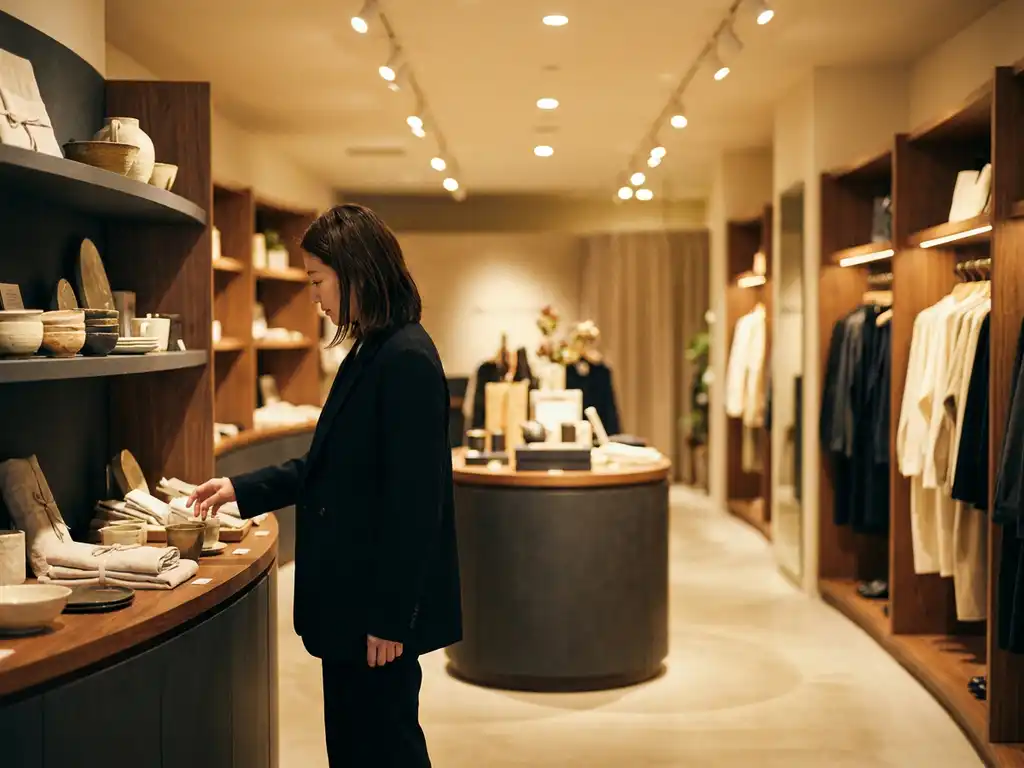
Store design directly affects shopper behaviour by shaping how people move through a space, what they notice, how long they stay, and ultimately whether they buy. The physical environment communicates brand values, guides decision-making, and influences emotional responses at every stage of the shopping journey. The sections below address the most important questions brands and retailers ask when evaluating the commercial impact of their in-store environments.
The elements of store design with the greatest impact on shopper behaviour are store layout, lighting, fixture placement, signage, and sensory cues such as colour and material. These factors work together to direct attention, create atmosphere, and reduce friction in the path to purchase. No single element operates in isolation — the most effective retail environments treat all of them as a coordinated system.
Layout determines the physical journey a shopper takes, while lighting controls what they notice along that route. Fixtures and displays govern how closely shoppers engage with products, and signage communicates hierarchy and value at a glance. Colour psychology, material choices, and spatial proportion all contribute to how a brand is perceived before a single product is picked up. When these elements are aligned with both brand identity and shopper psychology, they create environments that drive measurable commercial outcomes.
Store layout influences shopper paths by establishing the physical structure through which movement naturally flows. Retailers use layout strategies to slow shoppers down in high-margin areas, direct traffic toward key product categories, and reduce the likelihood of shoppers bypassing important fixtures. The layout is, in effect, a silent navigation system built into the architecture of the space.
Common retail layout formats each serve different commercial objectives. Grid layouts, typical in supermarkets and pharmacies, maximise product exposure by routing shoppers through defined aisles. Freeflow layouts, more common in fashion and lifestyle retail, encourage exploration and dwell time. Loop or racetrack layouts guide shoppers through a predetermined circuit, ensuring broad category exposure.
Beyond the macro-layout, the positioning of individual fixtures and display units within the store has a direct effect on product discovery. End-of-aisle placements, cross-category adjacencies, and strategically positioned point of sale units all influence which products receive attention and which are overlooked. Brands that treat fixture placement as a passive afterthought consistently underperform compared to those that approach it as a deliberate commercial strategy.
Lighting in retail stores affects buying decisions because it controls visibility, directs attention, and shapes the emotional tone of a shopping environment. Bright, focused lighting draws the eye to specific products or displays. Warmer, ambient lighting creates a sense of comfort and encourages shoppers to slow down and engage. The wrong lighting can make products look uninviting or cause shoppers to move through a space too quickly to notice key displays.
Accent lighting used above or within a display unit signals to shoppers that the product deserves closer inspection. This is particularly effective in beauty, skincare, and premium product categories where product appearance and perceived quality are central to the purchase decision. In contrast, uniform fluorescent lighting with no directional variation tends to flatten the visual hierarchy of a store, making it harder for any single product or fixture to stand out.
Lighting also reinforces brand positioning. A luxury skincare brand in a pharmacy environment, for example, can use targeted lighting within its dedicated display to create a premium experience that contrasts with the broader store environment. This separation, achieved through design rather than space, is a powerful tool for brand differentiation at the point of purchase.
Fixture and display design shapes product interaction by controlling how accessible, visible, and engaging a product is at the point of purchase. A well-designed fixture positions products at the correct height and angle for the target shopper, makes it easy to pick up and examine individual items, and communicates brand identity through material, colour, and form. Poor fixture design creates barriers to interaction that no amount of marketing spend can overcome.
The physical design of a display sends signals about product quality before the shopper reads a single word of copy. Premium materials, precise construction, and considered proportions convey brand confidence. Conversely, a poorly finished or structurally weak fixture undermines trust in the product itself. In categories such as skincare, cosmetics, and wellness, where purchase decisions are deeply personal, this perception gap has a direct effect on conversion.
Interactivity is an increasingly important dimension of display design. Fixtures that invite shoppers to test, sample, or engage with a product extend dwell time and increase the likelihood of purchase. Testers, tactile surfaces, and integrated product information all reduce the uncertainty that often prevents first-time buyers from committing. Bespoke display solutions designed around a specific product range consistently outperform generic shelving in driving this kind of engagement.
Store design is one of the most direct expressions of brand identity in a physical retail environment. Every material choice, colour palette, fixture format, and spatial decision communicates something about the brand to the shopper. When store design is coherent and intentional, it reinforces brand values and builds trust. When it is inconsistent or generic, it weakens brand perception and makes differentiation at the shelf significantly harder.
For brands operating within third-party retail environments such as department stores, pharmacies, or supermarkets, the challenge is greater. The brand does not control the broader store environment, so its display or fixture becomes the primary vehicle for communicating identity. In these contexts, the quality and distinctiveness of the in-store design work carries a disproportionate amount of brand-building responsibility.
Shoppers form impressions rapidly. Research in environmental psychology consistently shows that people make judgements about a space and the brands within it within seconds of entering. A display that reflects the brand's visual language precisely, uses materials appropriate to its positioning, and integrates seamlessly with the broader retail environment earns a level of credibility that drives both immediate purchase and longer-term brand loyalty.
Brands can increase in-store conversion through store design by removing friction from the path to purchase, directing attention to high-margin products, and creating the emotional conditions in which shoppers feel confident making a buying decision. Conversion is not simply a function of product quality or price — the physical environment in which a purchase decision is made has a measurable effect on whether that decision is made at all.
Specific design strategies that support conversion include clear visual hierarchy within displays, prominent and legible point of sale communication, logical product adjacency that encourages cross-category purchase, and fixture formats that make product selection intuitive. Shoppers who feel confused, overwhelmed, or unable to find what they are looking for disengage quickly. Design that simplifies the decision-making process keeps shoppers in the buying mindset.
Consistency across touchpoints also matters. A shopper who encounters a brand online, in advertising, and then in a physical retail environment expects visual and tonal coherence. When the in-store experience matches and extends the brand world they already recognise, confidence in the purchase increases. This alignment between brand communication and retail design is one of the strongest levers available to marketing and retail experience teams.
Pivotal is a full-service retail design partner that translates brand strategy into physical in-store experiences designed to influence shopper behaviour at every stage of the purchase journey. Working with brands across beauty, health, wellness, fashion, and lifestyle sectors, Pivotal delivers end-to-end solutions that address the full range of design factors covered in this article.
For brands looking to improve in-store conversion, strengthen brand perception, or launch new display solutions that perform at the point of purchase, Pivotal offers the strategic capability and manufacturing expertise to deliver. Connect with Pivotal to discuss your next retail design brief.