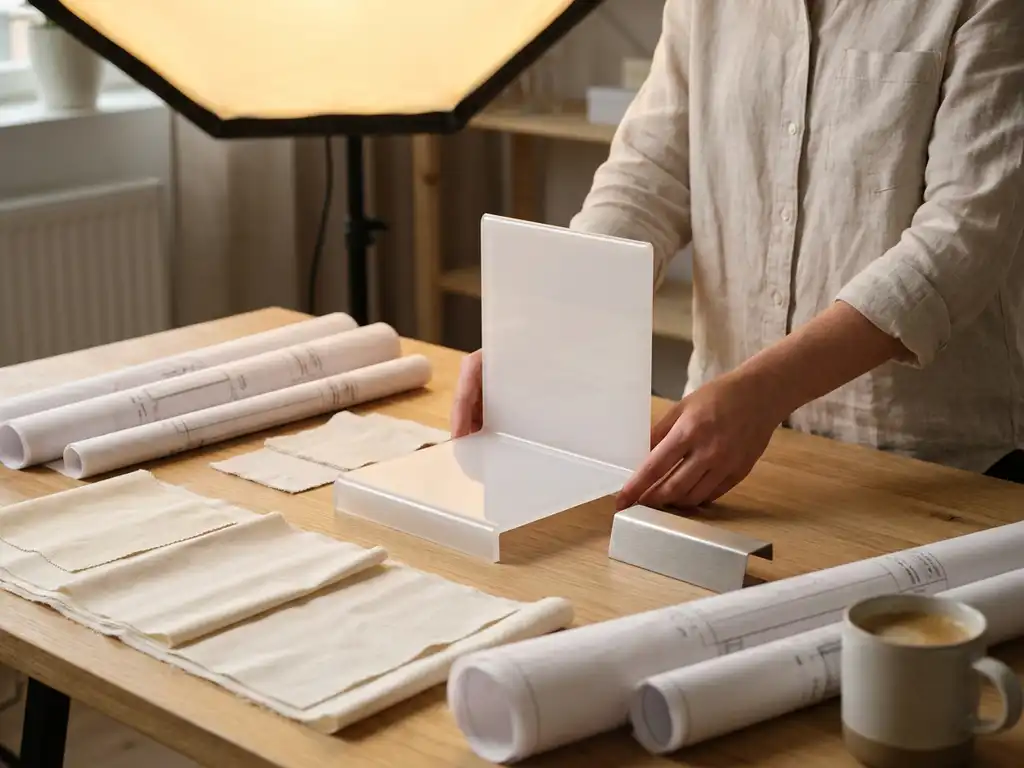
Designing a retail display unit from scratch involves defining the brief, understanding the retail environment, selecting appropriate materials, developing concepts through CAD and prototyping, and then manufacturing and installing the finished unit. The process is structured and iterative, requiring close collaboration between brand teams, designers, and manufacturers. The sections below address the most common questions brands ask when approaching a bespoke display project for the first time.
Retail display units are most commonly made from acrylic, wood, and MDF, metal, and injection-moulded plastics. The right material depends on the display's purpose, durability requirements, retail environment, and brand aesthetic. Permanent fixtures typically use more robust materials such as metal or solid timber joinery, while temporary point of sale displays often use lighter substrates and printed graphics.
Each material brings distinct advantages to a retail display unit design:
Material selection is rarely a single decision. Most bespoke retail displays combine two or more materials to balance aesthetics, structural performance, and budget. A beauty counter, for example, might pair an acrylic fascia with a timber base and metal hardware.
Before any design work begins on a retail display unit, you need a clear brief that covers the retail environment, product range, space dimensions, brand guidelines, budget, compliance requirements, and production timeline. Without this information, even the most creative concepts risk being unworkable in practice. Gathering this detail upfront prevents costly revisions later in the process.
The key information to establish at briefing stage includes:
A thorough brief is the foundation of any successful in-store display design process. The more precise the information gathered at this stage, the fewer iterations are required during design development.
The design process for a retail display unit typically moves through five stages: brief and research, concept development, CAD and technical drawing, prototyping, and final production sign-off. Each stage refines the design and validates it against practical, commercial, and retailer requirements before manufacturing begins.
Once the brief is established, designers develop initial concepts that respond to the brand's identity and the shopper's behaviour at the point of purchase. These concepts are presented as visual renders before being translated into detailed CAD drawings. CAD is critical at this stage because it defines precise dimensions, material specifications, and construction methods, giving the manufacturing team everything they need to build accurately.
Rapid prototyping allows a physical version of the display to be produced and evaluated before full production is committed. This stage is where fit, finish, product presentation, and structural integrity are assessed. Revisions identified during prototyping are far less costly than changes made after a production run. Once the prototype is approved by both the brand and the relevant retailer, manufacturing proceeds at the agreed volume.
A permanent retail display unit is designed for long-term use, typically installed as a fixed fixture within a store environment and built from durable materials such as metal, timber, or acrylic. A temporary display is designed for short-term promotional use, often constructed from lighter materials, and intended to be replaced or removed after a campaign period ends.
The distinction matters because it shapes every decision in the retail display manufacturing process:
Both types serve distinct commercial purposes. Permanent fixtures build long-term brand equity in-store, while temporary POS display units create urgency and support short-term sales objectives. Many brands use both in combination, with permanent fixtures providing the brand framework and temporary units driving promotional uplift.
Retailer compliance is achieved by designing the display unit against the specific guidelines issued by the retailer before production begins, then submitting the design for formal approval prior to manufacturing. Most major retailers, including pharmacy chains and department stores, publish detailed fixture standards covering dimensions, materials, fixings, electrical requirements, and safety certifications.
Compliance is not a final step — it must be built into the design process from the outset. Key considerations include:
Working with a manufacturer who has an established relationship with major retailers significantly reduces the risk of compliance rejection. Experienced retail display partners understand retailer approval processes and can anticipate requirements before they become obstacles.
For a bespoke retail display project, brands should work with a specialist retail design and manufacturing partner who can manage the full project lifecycle, from initial concept and CAD through to production and on-site installation. Splitting these functions across multiple agencies introduces risk, increases coordination overhead, and reduces accountability at each handover point.
The ideal partner combines creative design capability with in-house manufacturing and installation. This end-to-end model ensures that design intent is preserved through production, that compliance requirements are managed consistently, and that the finished display is installed correctly in the retail environment.
When evaluating potential partners, consider:
Pivotal is a full-service retail design and manufacturing partner, supporting brands through every stage of the display development process. For brands approaching a new point of sale display unit project, Pivotal provides:
Explore our retail display projects to see how Pivotal has delivered bespoke in-store solutions for leading brands. To discuss your brief with our design team, get in touch with Pivotal today.