Temporary retail displays are short-term, campaign-driven structures designed for a defined promotional period, while permanent retail displays are long-term fixtures built to anchor a brand's presence in-store indefinitely. The distinction matters because each type serves a fundamentally different commercial purpose, requires different materials and investment levels, and demands a different approach to design and deployment. The sections below address the most common questions brands ask when deciding which type of display is right for their retail strategy.
The right type of retail display depends on the duration, objective, and budget of your campaign. Temporary displays suit short-term promotions, product launches, and seasonal activations. Permanent displays are the correct choice when a brand requires a consistent, high-quality presence at the point of sale over an extended period. Many brands use both in combination to cover different commercial objectives simultaneously.
Before committing to a display type, brand owners and marketing directors should consider three core questions: How long will this display be in-store? What is the expected return on this investment? And does the display need to communicate a permanent brand identity or a time-limited message? Answering these questions clearly will determine whether a temporary, permanent, or hybrid approach is most appropriate for the campaign at hand.
Temporary retail displays are used to support short-term commercial objectives such as seasonal promotions, new product launches, in-store events, and limited-edition campaigns. They are typically designed for a lifespan of days to a few months and are produced to be cost-effective, fast to deploy, and straightforward to dismantle or replace once the campaign concludes.
Common applications for temporary in-store displays include:
The commercial logic behind temporary displays is speed and flexibility. Brands can respond to market trends, competitor activity, or seasonal demand without committing to a long-term fixture. Because temporary POS displays are designed for a defined period, they can be tailored precisely to a campaign's creative direction without needing to serve multiple future purposes.
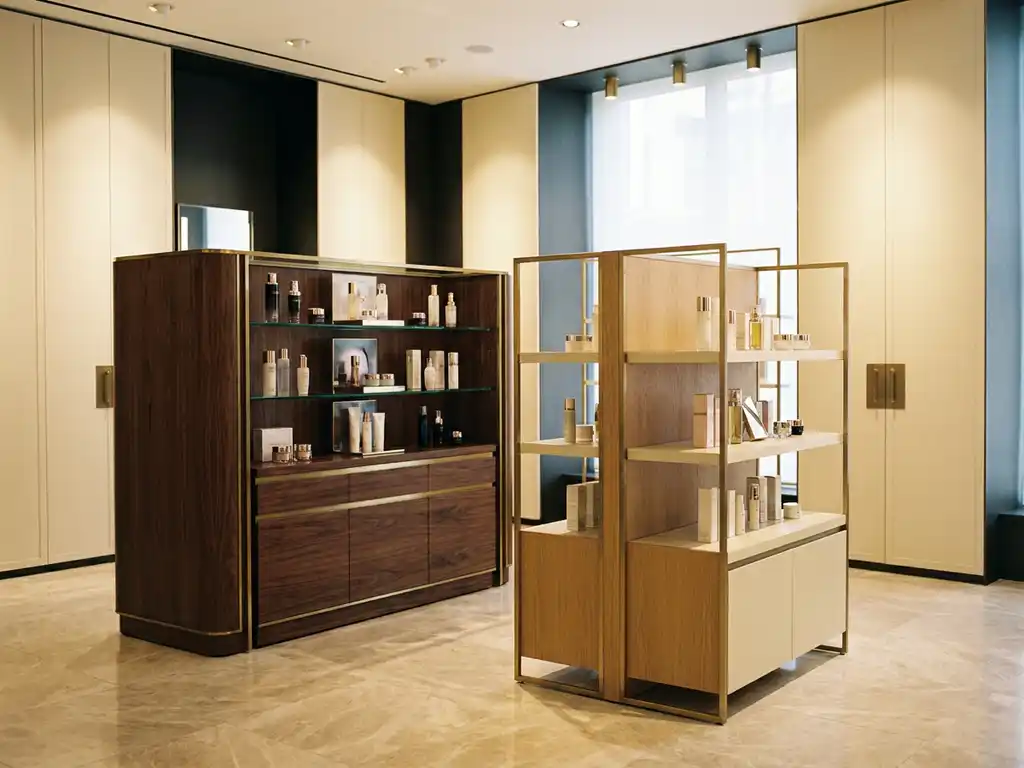
Permanent retail displays are designed to establish a consistent, long-term brand presence at the point of sale. Their primary purpose is to anchor a brand within a retail environment, create a recognisable and repeatable shopper experience, and drive sustained conversion over months or years rather than weeks. They are built to withstand the demands of a live retail floor over extended periods.
Permanent retail fixtures serve several strategic functions that temporary displays cannot fulfil:
For brands operating in competitive categories such as beauty, health, or lifestyle, a well-executed permanent display is a strategic asset. It communicates authority and investment to both the shopper and the retailer, and it ensures the brand is always represented correctly on the shop floor regardless of changes in staffing or merchandising priorities.
Temporary retail displays are typically produced using lighter, lower-cost materials such as corrugated cardboard, foamboard, or basic printed substrates, because durability over time is not a requirement. Permanent retail displays are manufactured using robust materials including acrylic, metal, engineered wood, joinery, and moulded components, chosen specifically for their longevity, finish quality, and ability to withstand sustained in-store use.
Corrugated cardboard is the most widely used material in temporary point of sale display production. It is cost-effective, lightweight, and can be printed to a high standard. Foamboard and PVC sheet are also used where a more rigid structure is needed without the cost of engineered materials. These substrates are appropriate for campaigns where the display will be in-store for weeks rather than months.
Permanent retail fixtures demand materials that maintain their appearance and structural integrity over sustained use. Acrylic is widely used for its clarity and premium appearance, particularly in beauty and health retail environments. Metal fabrication provides strength and precision for structural components. Joinery and engineered wood deliver warmth and craftsmanship for lifestyle and fashion brands. Moulded components allow for complex, brand-specific forms that cannot be achieved with flat sheet materials. The selection of materials for a permanent display directly affects how the brand is perceived by shoppers and retail partners over the life of the fixture.
Temporary retail displays carry a lower unit cost than permanent fixtures because they use simpler materials and require less complex manufacturing. However, when a brand runs multiple temporary campaigns across a year, cumulative production and installation costs can approach or exceed the investment in a single permanent display. Permanent retail displays require a higher upfront investment but typically deliver a lower cost-per-use over their operational lifespan.
Several factors influence the total cost of either display type:
Brands should evaluate display investment on a total cost of ownership basis rather than unit production cost alone. A temporary display that is replaced four times a year may represent a greater total spend than a permanent fixture that serves the same location for two years or more.
A brand should use both temporary and permanent retail displays together when it needs to maintain a consistent in-store presence while also responding to seasonal, promotional, or campaign-driven opportunities. The permanent fixture establishes the brand's baseline identity and product range, while temporary POS displays layer campaign messaging, promotional pricing, or new product launches on top of that foundation without disrupting the core brand experience.
This combined approach is particularly effective in the following scenarios:
The two display types are complementary rather than competing. Permanent fixtures protect long-term brand equity and retailer relationships. Temporary displays create the commercial agility to respond to market opportunities quickly. When planned as part of a coordinated retail display strategy, the combination delivers greater impact than either approach in isolation.
Pivotal works with brand owners and marketing teams to determine the most effective display strategy for each retail environment and campaign objective. Whether the requirement is a temporary POS display for a product launch or a permanent retail fixture for a long-term brand programme, Pivotal manages the full project lifecycle from concept through to on-site installation. Key capabilities include:
In 2025, Pivotal's in-store engineers visited a store every 34 minutes and installed over 2,000 new retail and brand experiences, demonstrating the operational scale and reliability that brands require when managing complex display programmes. To discuss your next retail display project, get in touch with the Pivotal team and find out how a structured approach to temporary and permanent displays can strengthen your in-store performance.