
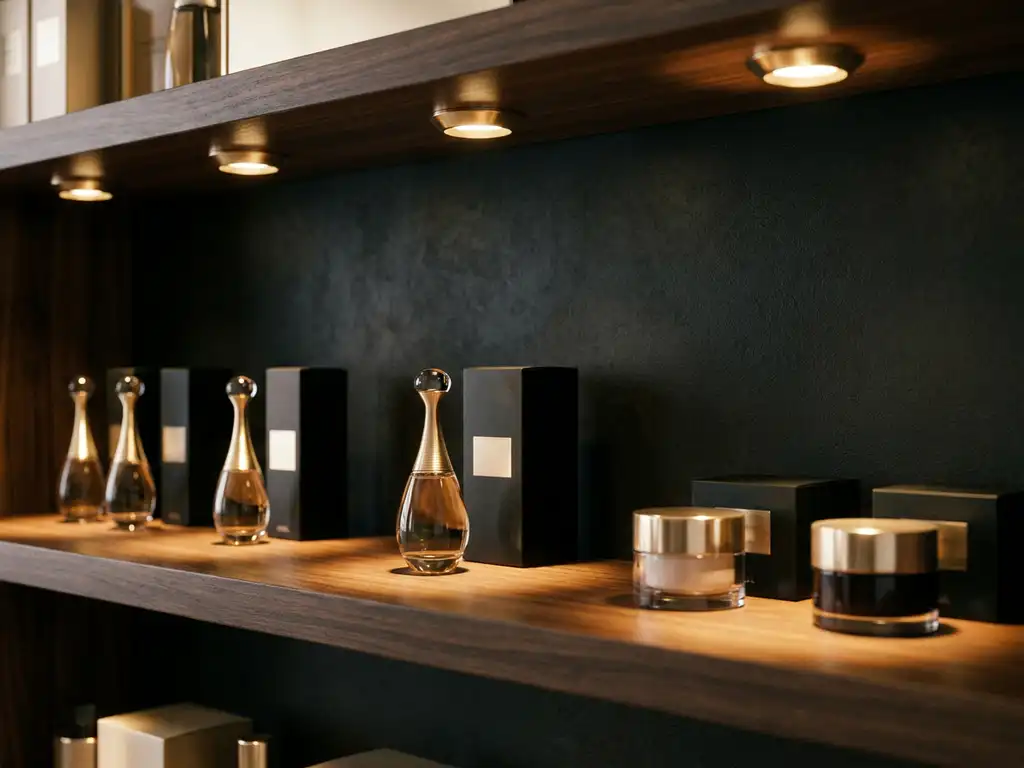
Lighting plays a fundamental role in retail display design by directing shopper attention, shaping product perception, and influencing purchasing decisions at the point of sale. The right lighting strategy can make a display feel premium, clinical, warm, or urgent, depending on the brand's intent. The sections below address the most important questions brands and retail teams face when specifying lighting for in-store environments.
In-store lighting directly influences how long shoppers dwell in a space, which products they notice first, and how they perceive product quality. Well-directed light draws the eye to key fixtures and creates a hierarchy of importance across a display, guiding shoppers through a planned journey rather than leaving navigation to chance.
Research in retail environments consistently shows that illuminated displays attract more shopper engagement than unlit equivalents. Brightness signals prominence. When a product is spotlit against a softer ambient background, it reads as more significant and more worthy of attention. This principle applies across categories, from beauty and skincare counters to food and beverage fixtures.
Beyond attention, lighting affects mood. Warm, low-level lighting in a premium beauty or lifestyle setting creates a sense of intimacy and consideration. Brighter, cooler environments in health or pharmacy retail communicate clarity and clinical confidence. Brands that understand this dynamic use lighting not just to illuminate, but to emotionally position their products before a shopper even reads the packaging.
Retail display lighting falls into four principal categories: ambient lighting, accent lighting, task lighting, and decorative lighting. Each serves a distinct purpose, and effective retail lighting design typically layers two or more of these types to create depth, focus, and atmosphere within a single display or fixture.
LED technology now dominates all four categories in modern retail, offering energy efficiency, longevity, and precise colour control that older fluorescent or halogen sources could not match.
Lighting and display materials are interdependent. The finish of a surface determines how light behaves when it interacts with a display, and the wrong combination can undermine even the strongest lighting specification. Brands must consider both elements together rather than treating them as separate decisions.
Gloss and high-sheen finishes, such as polished acrylic or lacquered surfaces, reflect light strongly. When used intentionally, this creates a sense of luxury and visual energy. When used without care, it produces glare that makes products harder to see and reads as cheap rather than premium. Matte and satin finishes diffuse light more evenly, reducing hotspots and making displays easier to read across a wider viewing angle.
Translucent materials such as frosted acrylic or backlit fabric panels interact with light in a different way entirely, allowing illumination to pass through the material itself. This technique is widely used in beauty, wellness, and lifestyle retail to create a softly glowing, aspirational effect that draws shoppers from a distance.
Metalwork and joinery elements respond to accent lighting by casting shadows and highlights that add perceived depth and craftsmanship to a display. Understanding how each material reacts to both warm and cool light sources is a core part of the display design and development process, and it is where material expertise and lighting specification must work in close alignment.
Warm lighting (typically in the range of 2700K to 3000K on the colour temperature scale) and cool lighting (4000K to 6500K) produce measurably different effects on product appearance and shopper perception. The choice between them should be led by the brand's category, product palette, and the emotional response it wants to create at the point of purchase.
Warm light enhances reds, oranges, and yellows, making it well suited to food, beauty, and lifestyle categories where warmth, comfort, and indulgence are part of the brand's appeal. It softens skin tones and creates an inviting, considered atmosphere. Premium fragrance counters, skincare fixtures, and lifestyle accessories typically benefit from warmer colour temperatures.
Cool light, by contrast, enhances blues, greens, and whites, and communicates clarity, precision, and clinical confidence. It is the standard choice for pharmacy retail, health products, and technical or scientific product categories where trust and efficacy are the primary purchase drivers. Cool lighting also renders white packaging more accurately, which is important for brands where packaging cleanliness is part of their identity.
Many brands operating across multiple categories benefit from a layered approach, using a neutral mid-range temperature as the ambient base and introducing warmer or cooler accent lighting to differentiate specific product zones within a single display.
Lighting improves conversion at the point of purchase by reducing visual friction, increasing product salience, and reinforcing the perceived value of what is being sold. A shopper who can immediately see, understand, and feel positively about a product is significantly more likely to pick it up and place it in their basket.
Directional accent lighting on hero products creates a natural visual hierarchy. When a key product or promotional item is more brightly lit than its neighbours, it receives disproportionate shopper attention without requiring additional signage or messaging. This is one of the most cost-effective tools available in point of sale lighting design.
Illuminated displays also extend effective dwell time. A well-lit fixture invites closer inspection. Shoppers who engage at close range are more likely to read secondary messaging, interact with testers, and ultimately purchase. In contrast, poorly lit displays are passed over quickly, regardless of how strong the product or creative concept may be.
Lighting also contributes to brand trust. A display that is thoughtfully lit signals investment and care, which transfers to the product itself. In categories such as skincare, health, and premium lifestyle, perceived quality at the shelf level is a genuine conversion driver.
When specifying lighting for a retail display, brands should consider colour temperature, lumen output, beam angle, energy consumption, heat generation, maintenance requirements, and compatibility with the display materials and finishes chosen. Each of these factors affects both the performance of the display and its total cost of ownership over the installation's lifespan.
The most effective lighting specifications are developed in parallel with the structural and material design of the display, not as an afterthought. Treating lighting as an integrated design element from the concept stage produces better outcomes at every stage of the project lifecycle.
Pivotal brings lighting specification into the display design process from the very first concept stage, ensuring that illumination, materials, and brand intent are developed as a single, coherent solution. As a full-service retail design and manufacturing partner, Pivotal delivers:
Pivotal installed over 2,000 new retail and brand experiences in 2025, working with leading brands across beauty, health, lifestyle, and food and beverage. To discuss how our retail display work could strengthen your in-store presence, get in touch with the Pivotal team today.