
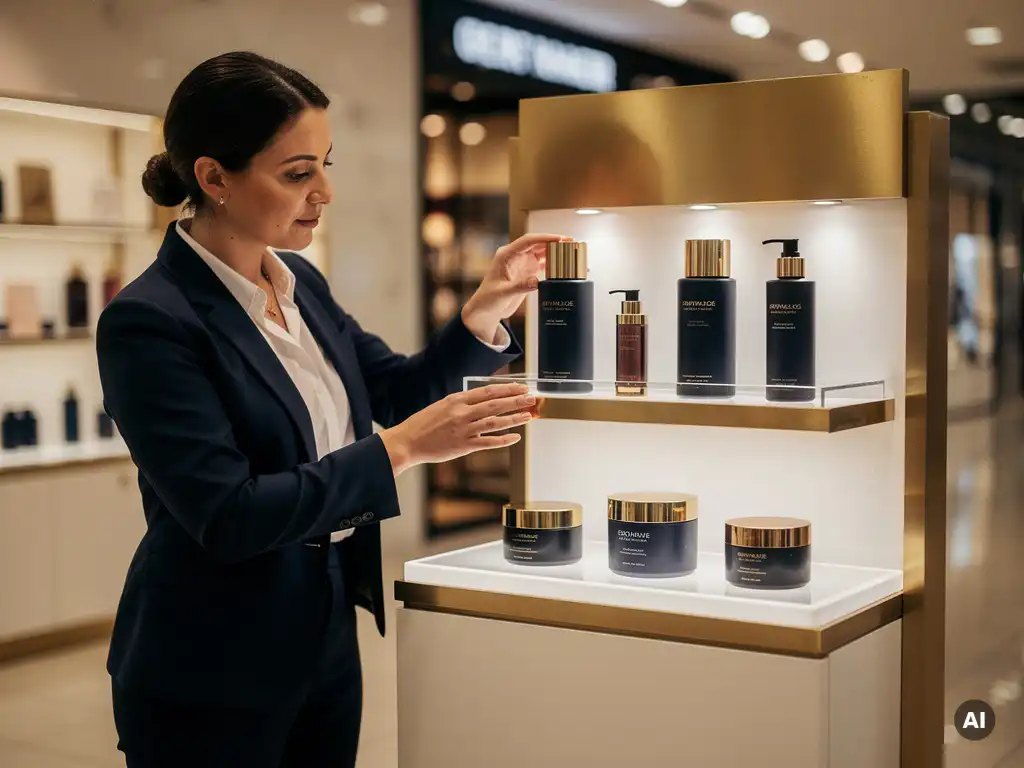
Point of sale strategy is important for UK brand marketing teams because it directly influences purchase decisions at the moment of highest commercial intent. When a shopper stands in front of a display, they are already in buying mode - a well-executed POS strategy converts that intent into action. The sections below address the most pressing questions UK brand marketing teams face when building or refining their in-store approach.
Point of sale strategy influences shopper purchase decisions by shaping the environment, messaging, and physical experience at the precise moment a consumer is ready to buy. Effective POS marketing removes friction, reinforces brand trust, and gives shoppers a compelling reason to choose one product over another - often within seconds of encountering a display.
The physical retail environment remains one of the most powerful channels for brand marketing because it engages multiple senses simultaneously. Unlike digital advertising, which competes for attention across a screen, in-store displays occupy physical space and create a tangible brand presence. A shopper who can touch, see, and interact with a product is significantly more likely to purchase than one who encounters it only online.
Shopper engagement at the point of purchase is also shaped by placement, hierarchy, and clarity. A display that clearly communicates product benefit, price, and brand identity - without overwhelming the shopper - performs measurably better than one that prioritises visual complexity over clarity. For UK brand marketing teams, this means treating every fixture and display as a piece of communication, not simply a storage solution.
An effective POS strategy comprises five core components: creative concept and brand alignment, display design and materials, placement and planogram compliance, installation quality, and performance measurement. Each element must work in coordination - a strong creative concept undermines itself if the display is poorly manufactured or incorrectly positioned in-store.
The creative concept defines how a brand communicates its identity through physical form. This includes graphic design, structural shape, lighting, and the hierarchy of messaging on the display. The physical execution - the materials used, the finish quality, and the structural integrity of the unit - determines whether that concept survives the retail environment over time.
Even the most well-designed retail display fails if it is placed incorrectly, damaged during installation, or removed by store staff due to non-compliance with retailer guidelines. Professional installation by retailer-approved fitting teams ensures that displays are positioned according to agreed planograms and meet the standards required by major UK retail chains. This is a frequently underestimated component of in-store marketing strategy.
POS strategy differs from broader retail marketing in its specificity and timing. Retail marketing encompasses the full range of activities that drive shoppers into stores - including advertising, promotions, and digital campaigns. POS strategy operates exclusively at the point of purchase, focusing on what happens once the shopper is already in the aisle or at the fixture, ready to make a decision.
Broader retail marketing builds awareness and drives footfall. POS strategy converts that footfall into sales. The two are complementary, but they require different disciplines. Retail marketing is primarily a communications function; POS strategy is a combination of design, logistics, compliance, and physical execution. UK brand marketing teams that treat them as interchangeable often find that strong above-the-line investment is undermined by weak in-store execution.
POS plays a critical role in new product launches because it is often the first physical interaction a shopper has with an unfamiliar product. For UK brands launching into competitive retail environments - pharmacies, supermarkets, department stores - the display must do the work of communicating what the product is, why it matters, and why it should be chosen over established alternatives, all within a matter of seconds.
Launch-phase POS also serves a commercial signalling function. A well-designed, prominently positioned display communicates to retailers that the brand is investing seriously in the product - which can influence ranging decisions, shelf positioning, and promotional support. Brands that arrive at launch with professional, retailer-compliant display solutions are better positioned to secure premium placement and sustained in-store visibility.
Temporary displays and promotional fixtures are particularly valuable during launch windows, offering flexibility to test positioning and messaging before committing to permanent installations. Rapid prototyping capabilities allow brand marketing teams to move quickly from concept to physical unit, compressing timelines without sacrificing quality.
UK brand marketing teams should brief a POS design partner with a clear statement of commercial objective, target shopper profile, retail environment specifications, and brand guidelines. The brief should define what success looks like - whether that is increased rate of sale, improved fixture compliance, or brand differentiation at the point of purchase - before any creative discussion begins.
A strong brief includes the following elements:
Teams that invest time in a thorough brief consistently achieve better outcomes - fewer revision cycles, faster manufacturing timelines, and displays that perform as intended in-store. Briefing a partner who offers end-to-end capability, from CAD and prototyping through to installation, also reduces the coordination burden on internal teams significantly.
Sustainable materials available for POS displays include FSC-certified timber, recycled and recyclable plastics, responsibly sourced acrylic, corrugated cardboard structures, and metal components designed for disassembly and reuse. The right choice depends on the display's intended lifespan, the retail environment it will occupy, and the brand's specific environmental commitments.
Permanent displays - those intended to remain in-store for twelve months or more - benefit from durable, repairable materials that reduce the frequency of replacement. Temporary and promotional displays, by contrast, are better suited to lightweight, recyclable substrates that minimise waste at end of campaign. The distinction between permanent and temporary is therefore not just a creative or budgetary consideration; it is also a sustainability decision.
Beyond materials, sustainable practice in POS production includes efficient manufacturing processes that reduce offcuts and waste, local sourcing to lower transport emissions, and modular design that allows components to be updated without replacing an entire fixture. UK brand marketing teams with sustainability commitments should discuss these practices explicitly during the briefing process, as they influence both design decisions and material specifications from the outset.
Pivotal is a full-service retail design partner that supports UK brand marketing teams at every stage of the POS process - from initial concept through to in-store installation. In 2025 alone, Pivotal's in-store engineers visited a store every 34 minutes and installed over 2,000 new retail and brand experiences, with 15 new global brands choosing Pivotal as their in-store partner. That operational scale reflects a capability that few single-source suppliers can match.
Working with Pivotal gives brand marketing teams access to:
If your brand is preparing a product launch, refreshing existing fixtures, or building a longer-term in-store marketing strategy, speak to the Pivotal team to discuss how a bespoke retail display solution can be developed and delivered to your exact requirements.