
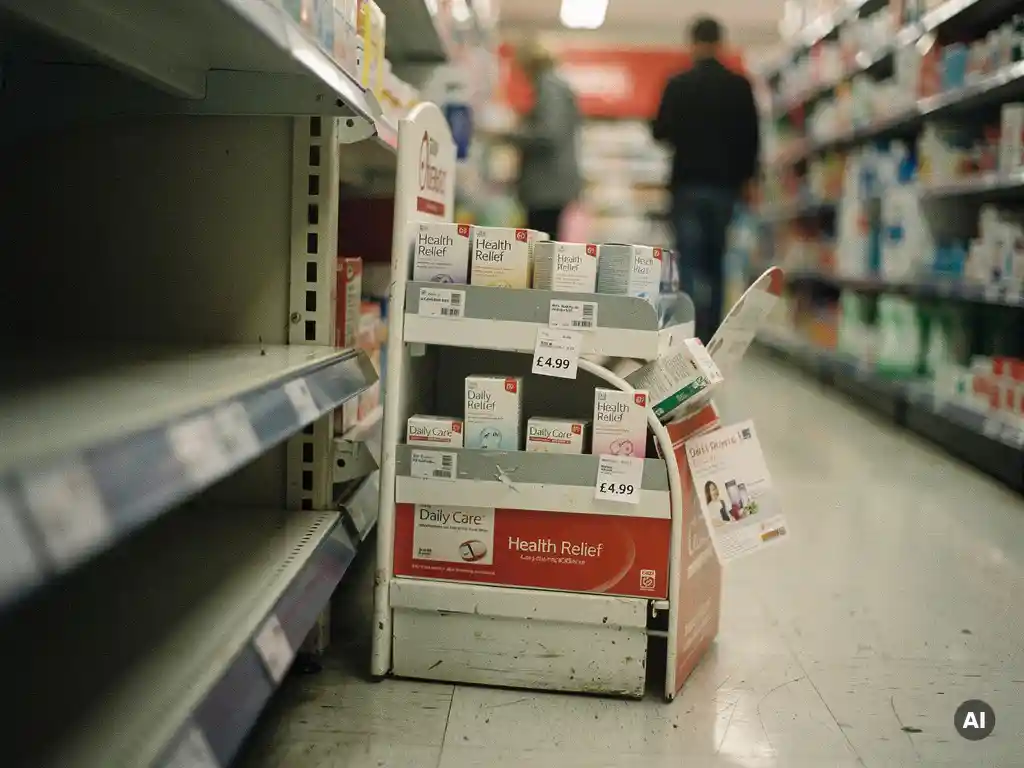
The biggest POS mistakes UK brand managers make include designing displays without reference to shopper behaviour, under-briefing retail compliance teams, selecting inappropriate materials for the environment, and engaging a production partner too late in the project lifecycle. These errors consistently undermine conversion at the point of purchase, regardless of the strength of the underlying brand. The sections below examine each failure point in detail and explain what better practice looks like.
Most POS displays fail to drive conversion because they are designed to impress in a boardroom rather than to perform in a retail environment. A display that wins internal sign-off but ignores sightlines, footfall patterns, and the competitive visual noise of a real shop floor will consistently underdeliver. Conversion depends on stopping power, message clarity, and ease of product interaction, not aesthetic ambition alone.
The root cause is usually a disconnect between the brand team and the physical retail environment. When creative decisions are made without direct reference to the store format, category location, or the typical shopper journey through that aisle or department, the resulting display is optimised for the wrong audience. Brand managers who brief POS as a branding exercise rather than a sales tool are setting the project up for a poor return.
Effective retail POS must answer a simple question within seconds: why should this shopper stop, pick this up, and buy it now? If the display cannot answer that question through its structure, messaging hierarchy, and product placement, it has failed its primary function.
When POS design ignores shopper behaviour, displays are placed, structured, or messaged in ways that shoppers naturally bypass. The result is a fixture that occupies floor space or fixture real estate without generating meaningful uplift. Common symptoms include low dwell time at the unit, poor product interaction rates, and no measurable difference in sales velocity during the display period.
Shopper behaviour research consistently shows that consumers make purchase decisions rapidly and often subconsciously. A display positioned outside the natural path of travel, or one that leads with brand imagery rather than a clear product benefit, loses the shopper before engagement begins. Typography that requires a shopper to stop and read at length, rather than communicating at a glance, is one of the most frequent in-store display mistakes made by brand teams working without shopper insight.
The physical dimensions of the display also matter. A unit that is too tall interrupts sightlines to surrounding products; one that is too narrow fails to create the visual presence needed to interrupt a shopper in motion. Designing POS without reference to planogram data, category adjacencies, and observed shopper dwell behaviour produces displays that are structurally misaligned with how people actually shop.
Poor retailer compliance briefing undermines POS effectiveness by causing displays to be rejected, repositioned, or modified at the point of installation, often in ways that compromise the original design intent. Retailers operate strict guidelines governing fixture dimensions, fixings, weight tolerances, and placement zones. A display that has not been designed and signed off against those specifications will encounter problems on the shop floor.
This is one of the most avoidable point of sale mistakes in the UK market, yet it remains common. Brand managers sometimes treat retailer compliance as an administrative step rather than a design constraint, which means compliance requirements are reviewed late in the process when changes are costly. A display that must be reduced in height, stripped of certain fixings, or repositioned to a less prominent location because it failed retailer approval is a display that will not perform as intended.
Compliance briefing should inform the design from the outset. Retailer specifications for environments such as Boots, Superdrug, or major supermarket chains are detailed and non-negotiable. Any POS partner worth engaging will have established retailer relationships and will integrate compliance requirements into the earliest stages of concept development, not as a final check before production.
The most common POS material and production mistakes involve selecting materials based on visual appeal or unit cost without accounting for durability, retail environment conditions, or the display's intended lifespan. A material that performs well in a controlled showroom setting may warp, discolour, or degrade rapidly under the lighting, humidity, and physical handling conditions of a live retail environment.
Temporary displays are often over-engineered with premium materials, driving unnecessary cost. Permanent fixtures, conversely, are sometimes produced with materials suited only to short-term use, leading to premature deterioration and brand damage on the shop floor. The correct material specification depends on the display's classification, its location within the store, the level of shopper interaction expected, and the retailer's own requirements for fixtures in that space.
A separate but equally damaging production mistake is underestimating manufacturing lead times. Brand managers who compress the production schedule to accommodate a late creative sign-off often face a choice between launching with a compromised display or missing the campaign window entirely. Materials such as acrylic, moulded components, and bespoke metalwork each carry their own lead time requirements, and these cannot be meaningfully shortened without cost implications or quality risk.
Yes, POS must be designed differently for pharmacy and department store environments because the shopper mindset, fixture constraints, and category dynamics differ significantly between the two. A display that performs in a pharmacy setting will not automatically translate to a department store floor, and treating these environments as interchangeable is a retail POS error that directly affects performance.
In a pharmacy environment, shoppers are typically task-oriented. They arrive with a specific need and move efficiently through the store. POS in this setting must communicate product benefit and credibility quickly, support navigation within a category, and comply with the tighter space constraints typical of pharmacy fixture layouts. Brands such as Eucerin and Avène, which operate across pharmacy retail, require displays that convey clinical authority and are proportioned for the fixture formats found in those stores.
Department store environments present a different challenge. Shoppers are more likely to browse, and the competitive visual environment is more intense. Displays here need stronger stopping power, a more prominent brand presence, and often a greater emphasis on tactile interaction and product trial. The fixture footprint, height allowances, and fixings permissions also differ from those in a pharmacy, making it essential that design briefs reference the specific retail environment from the start.
UK brand managers should involve a POS partner at the concept stage of the project lifecycle, not after the creative has been finalised. Engaging a production and installation partner early ensures that design decisions are informed by manufacturing feasibility, material suitability, retailer compliance requirements, and realistic lead times, all of which affect the final display's performance and cost efficiency.
The most common lifecycle mistake is treating the POS partner as a supplier who receives a finished brief and executes it. In practice, the most effective in-store display projects are those where the brand team, creative agency, and POS partner are aligned from the outset. Early involvement allows the partner to flag compliance issues before they become redesign costs, recommend material specifications that balance aesthetics with durability, and build a production schedule that protects the campaign launch date.
For national rollouts across multiple retail locations, early partner involvement is particularly critical. Installation logistics, retailer access windows, and store-by-store compliance requirements must be planned well in advance. Pivotal's own installation teams visited a store every 34 minutes in 2025 and completed over 2,000 retail and brand experiences that year, a volume that is only achievable through disciplined project planning that begins long before a single unit goes into production.
Pivotal provides an end-to-end retail POS service designed to eliminate the errors that consistently undermine in-store display performance. Working with UK brand managers from concept through to installation, Pivotal integrates shopper insight, retailer compliance knowledge, and manufacturing expertise into every stage of the project lifecycle. Key capabilities include:
If your brand is planning a POS or in-store display project and you want a partner who manages the full lifecycle without the risk of late-stage redesigns or installation failures, contact Pivotal to discuss your brief.