
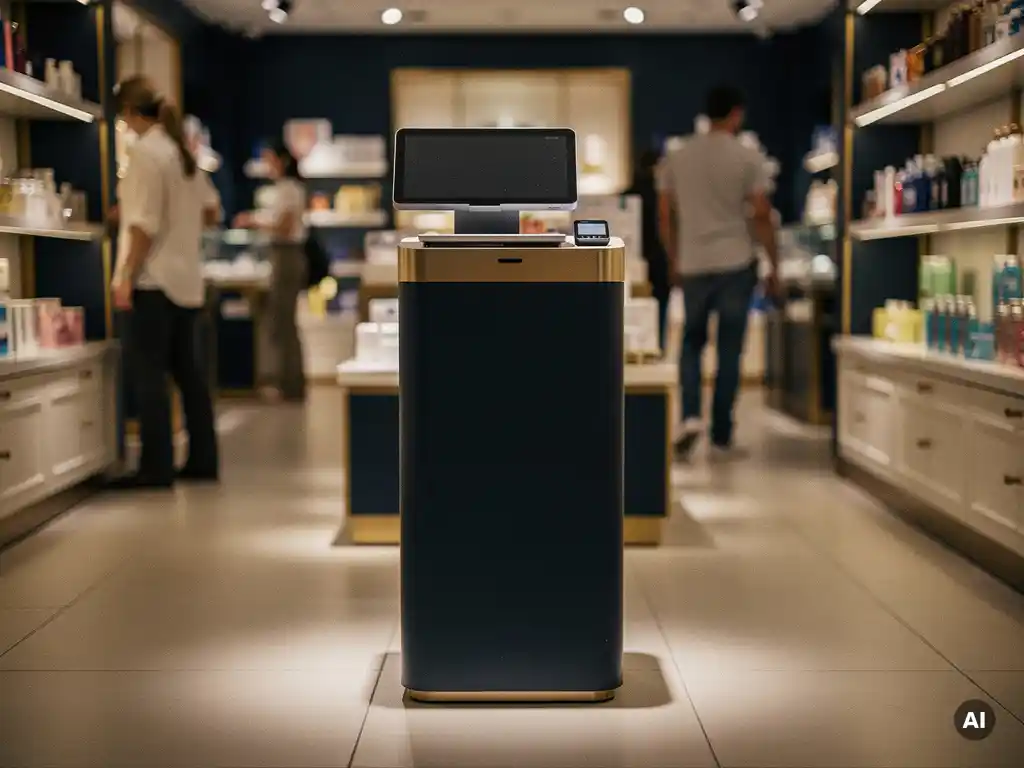
The retail environment has a direct and measurable impact on POS display performance. Factors including store layout, foot traffic patterns, lighting conditions, and the retail channel itself determine how visible a display is, how long shoppers engage with it, and whether it drives conversion at the point of purchase. Understanding these environmental variables is not optional for brand owners; it is the foundation of effective in-store display strategy. The sections below address the most critical questions surrounding retail environment and display performance.
The factors with the greatest impact on POS display visibility are physical placement, ambient lighting, surrounding fixture density, and shopper sightlines. A display positioned against the direction of natural shopper movement, obscured by competing fixtures, or poorly lit will underperform regardless of its creative quality. Retail environment conditions determine whether a display is seen before it can do any persuasive work.
Brand owners frequently invest in strong display creative while underestimating how the retail environment will interact with that creative. In a pharmacy environment, for instance, narrow aisles and high shelving create natural visual corridors that either funnel attention toward a display or bury it entirely. In a department store, open floor plans create different challenges around standout and navigation. The retail environment is not a neutral backdrop; it is an active variable in display performance.
Key environmental factors to assess before finalising any display design include:
Shopper traffic flow determines which areas of a store receive the highest footfall, longest dwell time, and most natural pause points, all of which directly influence where a POS display will perform best. Displays placed against the natural direction of traffic flow, or in low-dwell zones, will generate significantly less engagement than those positioned at decision points along the primary shopper journey.
Retail environments have predictable movement patterns. Shoppers entering a store typically move to the right, tend to follow perimeter walls, and slow down at junctions, category transitions, and queue areas. These are high-value placement zones for in-store displays. End-of-aisle positions, gondola ends, and areas adjacent to complementary product categories consistently outperform mid-aisle secondary placements for the same display unit.
Understanding traffic flow also informs display orientation. A unit that faces the direction from which shoppers approach will be read and processed before a shopper passes it. A display angled away from the primary flow may be seen only peripherally or not at all. This is particularly relevant for brands placing displays in high-footfall retail environments such as supermarkets or pharmacy chains, where the margin between a well-placed and a poorly placed display can determine whether a product is noticed at all.
Yes, store lighting significantly affects how shoppers perceive and respond to POS displays. Lighting influences colour accuracy, material appearance, and the overall prominence of a display within its environment. A display designed under studio conditions can appear flat, dull, or visually inconsistent when placed under the fluorescent or LED lighting typical of most retail environments, which alters colour temperature and shadow behaviour.
Warm lighting tends to enhance displays using natural tones, wood finishes, and lifestyle imagery, making them feel premium and inviting. Cool white lighting, common in pharmacy and grocery environments, can wash out pastel or light-coloured graphics and reduce contrast. High-contrast colour combinations and bold graphic treatments tend to hold their visual impact more reliably across varied lighting conditions.
Illuminated display units introduce another dimension. Internally lit POS displays command attention in ambient retail lighting and are particularly effective in high-footfall environments where competing visual stimuli are dense. However, the type of lighting integrated into the display must be considered in relation to the store's own lighting infrastructure to avoid colour clash or visibility issues.
Brands commissioning displays for rollout across multiple retail channels should factor in the lighting profile of each environment during the design and prototyping stage, rather than discovering incompatibilities post-production.
A permanent display is a fixed, long-term branded fixture designed to hold a product range in a consistent retail location, typically built from durable materials and intended for use over months or years. A temporary display is a short-term unit, often linked to a promotional campaign or product launch, designed for rapid deployment, ease of installation, and eventual removal, usually within days to weeks.
Permanent displays are typically constructed from higher-grade materials such as acrylic, metal, or engineered wood, and are designed to withstand ongoing shopper interaction, restocking, and cleaning. They reflect long-term brand investment in a retail location and are usually subject to retailer approval processes given their fixed footprint. These units are appropriate for anchor product ranges where consistent shelf presence and brand identity at the point of purchase are strategic priorities.
Temporary displays prioritise speed to market, cost efficiency, and flexibility. They are commonly used for seasonal campaigns, new product launches, and promotional periods. Materials such as corrugated card, lightweight plastics, and modular components allow for rapid production and straightforward installation. While their lifespan is shorter, temporary displays can be highly effective at driving trial and conversion when placed correctly and supported by strong graphic communication.
The choice between permanent and temporary is rarely binary. Many brands use a combination: a permanent fixture as the base unit with temporary graphic or structural additions layered over it during promotional periods.
The retail channel, whether pharmacy, supermarket, department store, or specialist retailer, imposes distinct constraints and opportunities on POS display design. Each channel has its own retailer guidelines, space allocations, shopper demographics, and purchasing behaviour patterns. A display designed for one channel will rarely perform optimally in another without modification.
In pharmacy environments, displays must often comply with strict retailer guidelines around fixture height, materials, and placement zones. Shoppers in this channel are typically goal-oriented and health-conscious, which affects the messaging hierarchy and visual language that performs best. Brands such as Eucerin and Avène, for example, require displays that communicate clinical credibility alongside brand identity, a balance that differs significantly from what works in a fashion or lifestyle retail environment.
Department stores present different challenges. Open floor plans and premium brand adjacencies mean that display quality, material finish, and aesthetic coherence are scrutinised more closely. A display that appears well-crafted in isolation must also hold its own against the surrounding retail environment, which may include premium competitor brands.
Supermarket and grocery environments prioritise speed of recognition and simplicity of message, given the pace at which shoppers move through the store. Displays here must communicate the core proposition within seconds. Retailer compliance requirements in this channel are also typically rigorous, covering weight limits, footprint dimensions, and installation methods.
POS display design can compensate for a challenging retail environment through strategic use of height, contrast, illumination, and structural projection. When placement is constrained, whether by retailer rules, fixture density, or low-traffic positioning, the display itself must work harder to attract attention and hold it. Design decisions that would be optional in a premium location become essential in a difficult one.
Practical design strategies for difficult retail environments include:
Material selection also plays a role. Reflective surfaces, premium finishes, and tactile materials create a sensory contrast with standard retail shelving that can elevate a display's perceived importance even in a secondary location. The goal is to engineer standout through design when the environment does not provide it naturally.
Pivotal's end-to-end retail design service is built around the reality that display performance is inseparable from the environment in which it operates. From initial concept through to on-site installation, every stage of Pivotal's process accounts for the specific retail conditions a display will face.
If your brand is planning a new display programme or reviewing the performance of existing in-store fixtures, contact Pivotal to discuss how environment-led retail design can deliver measurable results at the point of purchase.