
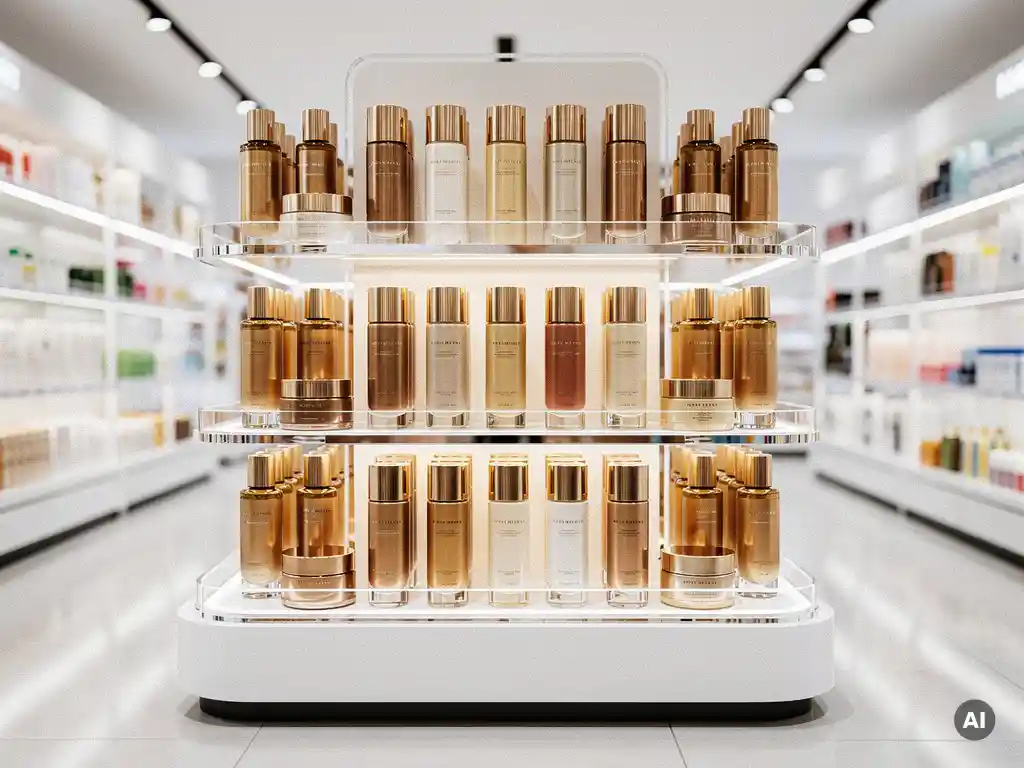
A high-converting point of sale display combines visual interruption, clear messaging hierarchy, structural integrity, and material quality to drive shopper engagement at the moment of purchase decision. The most effective in-store displays stop shoppers in their tracks, communicate a brand proposition within seconds, and make the path to purchase effortless. The sections below address the specific design, structural, and compliance factors that determine whether a POS display performs or gets overlooked.
Shoppers stop at a POS display when it creates an immediate visual interruption that stands apart from the surrounding retail environment. The trigger is almost always contrast, whether through colour, scale, lighting, shape, or motion. A display that blends into the fixture landscape around it will be ignored, regardless of the quality of the product it carries.
Effective retail display design accounts for the shopper's natural sightline and walking pace. Displays positioned at eye level, at aisle ends, or adjacent to high-traffic category fixtures benefit from natural dwell time. But position alone is not sufficient. The display must deliver an immediate visual cue, a bold brand colour, a distinctive structural form, or a clear product hero, that registers within the first two to three seconds of a shopper entering the zone.
Tactile elements also play a meaningful role. Shoppers are more likely to engage with a display that invites physical interaction, a tester unit, a product sample holder, or a surface texture that communicates quality before the product is even picked up. This is particularly relevant in beauty, skincare, and lifestyle categories, where the sensory experience of the brand is part of the purchase consideration.
Display structure affects purchase decisions by controlling how shoppers navigate product range, what they see first, and how easily they can select and retrieve a product. A well-engineered structure guides the eye from brand communication down to product and then to the point of action, whether that is picking up a product, scanning a QR code, or locating a price point.
Structural decisions also communicate brand values before a word is read. A display built from premium materials with clean joinery and precise finishes signals quality and credibility. A poorly constructed unit, one that bows under product weight, misaligns at shelf level, or shows visible joins, undermines consumer confidence in the brand it represents.
Stability and ergonomics are equally important commercial considerations. A display that is difficult to restock, prone to product fallout, or awkward for shoppers to access will underperform regardless of its visual design. Structure must serve both the shopper experience and the operational requirements of the retail environment it occupies.
Messaging hierarchy in POS design determines the sequence in which a shopper processes brand and product information. A clearly defined hierarchy moves the shopper from brand recognition to product benefit to purchase prompt in a logical, rapid sequence. Without it, a display presents too much information at once, and shoppers disengage before reaching the conversion moment.
The most effective in-store displays operate across three distinct communication levels. The first is the brand or campaign headline, a single, high-impact statement visible from several metres away. The second is the product-level message, key benefits, variants, or claims communicated at arm's reach. The third is the point-of-action detail, price, promotional mechanic, or a direct call to purchase, positioned where the shopper's hand naturally moves.
Graphic design and copy must work in coordination with the physical structure. Typography scale, contrast ratios, and the placement of graphics relative to product facings all influence whether the hierarchy lands as intended. A messaging strategy that works on screen does not automatically translate to a three-dimensional retail display: the physical context must be tested and validated before production.
Material choice directly influences a display's durability, visual quality, environmental footprint, and total cost of ownership. The right material for a given display depends on the retail environment, the intended lifespan of the unit, the weight and volume of product it must carry, and the brand aesthetic it needs to communicate.
Permanent retail displays, those intended to remain in-store for twelve months or longer, typically require materials that combine structural strength with a premium finish. Joinery, metalwork, and engineered board substrates are common choices, often combined with acrylic elements for product presentation or illuminated brand panels. These materials support complex fabrication, allow for precise tolerances, and maintain their appearance under sustained retail conditions.
Temporary POS displays, by contrast, are often constructed from corrugated card, Foamex, or lightweight plastics that can be produced rapidly and cost-effectively. The trade-off is longevity: these materials are suited to campaign-led activations, seasonal promotions, or new product launch windows where the display lifecycle is measured in weeks rather than months. Material selection here is as much a commercial decision as a design one.
Across both categories, sustainability is an increasingly significant factor. Brands operating in beauty, health, and lifestyle sectors face growing pressure from retailers and consumers alike to demonstrate responsible material sourcing and end-of-life recyclability. Specifying FSC-certified timber, recycled plastics, or modular systems designed for disassembly and reuse is no longer a differentiator: it is an expectation.
A permanent POS display is designed for long-term in-store use, typically spanning one to three years, and is built to withstand continuous restocking, shopper interaction, and the operational demands of a live retail environment. A temporary POS display is purpose-built for a defined campaign window, usually four to twelve weeks, and is produced at lower cost with faster turnaround to support promotional activations or product launches.
The distinction matters commercially because it determines the appropriate investment level, material specification, and design complexity. A permanent fixture justifies a higher unit cost because that cost is amortised across a longer lifespan and a greater number of shopper interactions. A temporary display must deliver strong visual impact at a price point that makes it viable for short-term deployment, often across a large number of store locations simultaneously.
Many brands operate both in parallel, using permanent fixtures to anchor their core range and temporary displays to activate seasonal campaigns or highlight new product introductions. A retail design partner capable of managing both formats within a single project workflow provides significant operational advantage, reducing lead times and ensuring visual consistency across the full in-store brand presence.
Ensuring a POS display meets retailer compliance standards requires early engagement with the retailer's fixture guidelines, structural specifications, and approval processes, ideally before the design is finalised. Retailers including major pharmacy chains, department stores, and supermarkets each operate their own compliance frameworks covering dimensions, fixings, materials, health and safety, and installation methodology.
Non-compliance is a significant commercial risk. A display that fails a retailer's approval process must be redesigned and re-submitted, adding cost and delay that can jeopardise a campaign launch date. In some cases, non-compliant displays are removed from the shop floor entirely, resulting in lost sales and reputational damage with the retailer.
The most reliable route to compliance is working with a retail display partner whose installation teams are retailer-approved and whose design process incorporates compliance checks at each stage, from initial CAD through to pre-production prototyping. Rapid prototyping allows compliance issues to be identified and resolved before tooling or full production runs are committed, protecting both budget and timeline.
Pivotal is a full-service retail design partner that manages every stage of the POS display process, from initial concept and CAD through to manufacturing, compliance, and installation. For brands seeking a single, accountable partner across the entire project lifecycle, Pivotal's end-to-end capability removes the coordination risk that comes with managing multiple suppliers.
In 2025 alone, Pivotal's in-store engineers visited a store every 34 minutes and installed over 2,000 new retail and brand experiences, a scale of delivery that reflects both operational capability and retailer trust. If you are planning a new display programme or refreshing an existing in-store presence, contact the Pivotal team to discuss your requirements.