
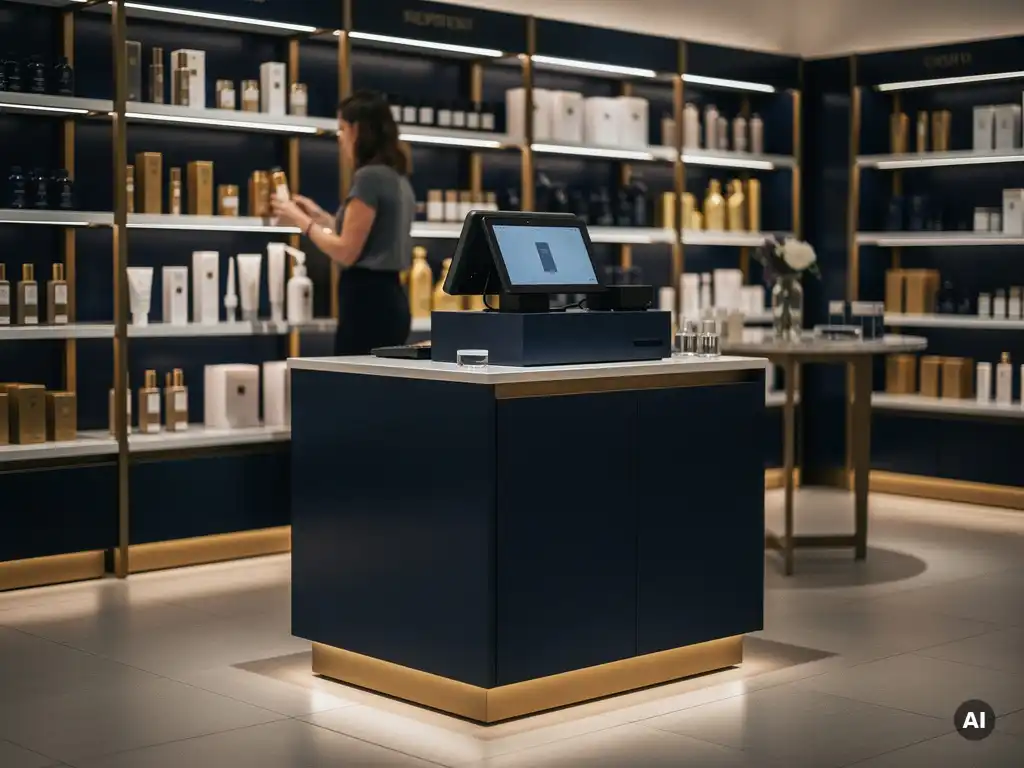
Point of sale plays a central role in omnichannel retail strategy by serving as the physical manifestation of a brand's entire customer experience. In a well-integrated omnichannel approach, in-store POS is not a standalone element; it is the point where digital intent converts into physical purchase, making it one of the most commercially critical touchpoints in the retail journey. The questions below unpack how brands can align, design, and maintain POS as a strategic omnichannel asset.
In an omnichannel retail strategy, point of sale connects physical stores to digital channels by reinforcing the same brand messages, promotions, and product narratives that shoppers encounter online. When a customer moves from a brand's website or social media to a physical store, in-store POS omnichannel displays create continuity, ensuring that the visual language, campaign messaging, and product positioning feel consistent and intentional across every environment.
This connection operates in both directions. Digital channels drive footfall by generating awareness and purchase intent, while in-store POS captures that intent at the moment of decision. A shopper who has researched a product online expects to find the same messaging reinforced on the shelf or at the fixture. When POS displays align with active digital campaigns, brands reduce friction in the path to purchase and increase the likelihood of conversion.
POS also functions as a data-generating touchpoint. Compliance tracking, installation reporting, and in-store performance monitoring allow brand owners to understand how physical displays are performing relative to wider campaign activity, creating a feedback loop that informs both future retail design and digital strategy.
In-store POS is distinct from other omnichannel touchpoints because it operates at the moment of purchase, in a physical environment where sensory experience, spatial context, and immediate availability all influence shopper behaviour. Unlike digital channels, which communicate through screens, in-store POS engages shoppers through materials, form, light, and proximity to the product itself.
This physicality is commercially significant. A well-designed display does not simply communicate; it creates an environment around the product that digital cannot replicate. The tactile quality of materials, the structural presence of a fixture, and the precise placement within a retail space all contribute to a perception of brand value that influences purchase decisions in ways that online advertising cannot.
In-store POS is also subject to retailer approval processes, space constraints, and compliance requirements that other touchpoints are not. This makes the design and execution of physical retail POS strategy more operationally complex, but also more impactful when executed correctly. A display that earns its position in a major pharmacy or department store carries an implicit endorsement from the retailer, something no digital channel can replicate.
POS displays should be designed for omnichannel consistency by anchoring the visual identity, colour palette, typography, and campaign messaging to the same brand guidelines that govern digital assets. Every design decision, from structural form to graphic application, should feel like a direct extension of what the shopper has already encountered online, in advertising, or through social channels.
Achieving this requires close collaboration between brand marketing teams and retail design specialists from the earliest stages of a project. When POS design is treated as an afterthought or handed to a separate supplier without access to the wider campaign, inconsistencies emerge that undermine the omnichannel experience. The most effective approach integrates retail display design into the broader campaign development process, ensuring that in-store execution reflects the same creative thinking as digital and above-the-line activity.
Structural and material choices also carry brand meaning. Premium materials signal quality; modular systems signal flexibility and scalability. For brands operating across multiple retail environments, from pharmacy to department store to specialist retailer, the ability to adapt a core display concept to different spatial contexts, while maintaining visual consistency, is a key design challenge that experienced retail design partners are equipped to solve.
Brands should update or refresh their in-store POS when campaign creative changes, when product ranges are updated, when retail partner requirements evolve, or when display performance data indicates that shopper engagement has declined. Allowing POS to fall out of alignment with current brand messaging or campaign activity creates visible inconsistency that undermines both brand perception and conversion.
Beyond campaign cycles, there are structural and compliance-driven reasons to refresh POS. Retailer guidelines evolve, and displays that were approved under previous specifications may no longer meet current standards. Physical wear, particularly in high-traffic locations, affects the quality of the shopper experience and reflects directly on brand perception.
From a strategic standpoint, new product launches, seasonal campaigns, and brand repositioning exercises all represent natural trigger points for POS review. Brands that treat their retail POS strategy as a living programme, rather than a one-time installation, are better positioned to maintain relevance on the shop floor and respond quickly to competitive activity. Pivotal's installation teams, who visited a store every 34 minutes throughout 2025, are structured precisely to support this kind of ongoing, responsive retail presence at scale.
Sustainability plays an increasingly important role in omnichannel POS strategy because brand values expressed online must be credibly reflected in physical retail execution. A brand that positions itself as environmentally responsible through its digital channels but installs single-use, non-recyclable POS displays creates a contradiction that informed shoppers and retail partners will notice.
For brand owners, sustainable POS is both a values-driven and commercially practical decision. Modular display systems designed for longevity and reconfiguration reduce waste and lower the total cost of ownership over multiple campaign cycles. Material choices, responsibly sourced timber, recycled substrates, low-impact finishes, contribute to measurable reductions in environmental footprint without compromising on the quality of the shopper experience.
Retailers themselves are applying greater scrutiny to the sustainability credentials of the brands and suppliers they work with. Meeting those standards is increasingly a prerequisite for securing premium retail space, not simply a differentiator. Brands that build sustainability into their POS design process from the outset are better placed to maintain strong retail partnerships and align their physical presence with the environmental commitments they make across every other channel.
Pivotal is a full-service retail design partner that helps brand owners align their in-store POS with the demands of a modern omnichannel retail strategy. Working with brands across beauty, health, wellness, and lifestyle sectors, Pivotal manages the entire project lifecycle, from concept and CAD through to manufacturing, compliance, and installation, through a single, accountable team.
If your brand is ready to strengthen its physical retail presence as part of a broader omnichannel strategy, speak to the Pivotal team to discuss your next project.