
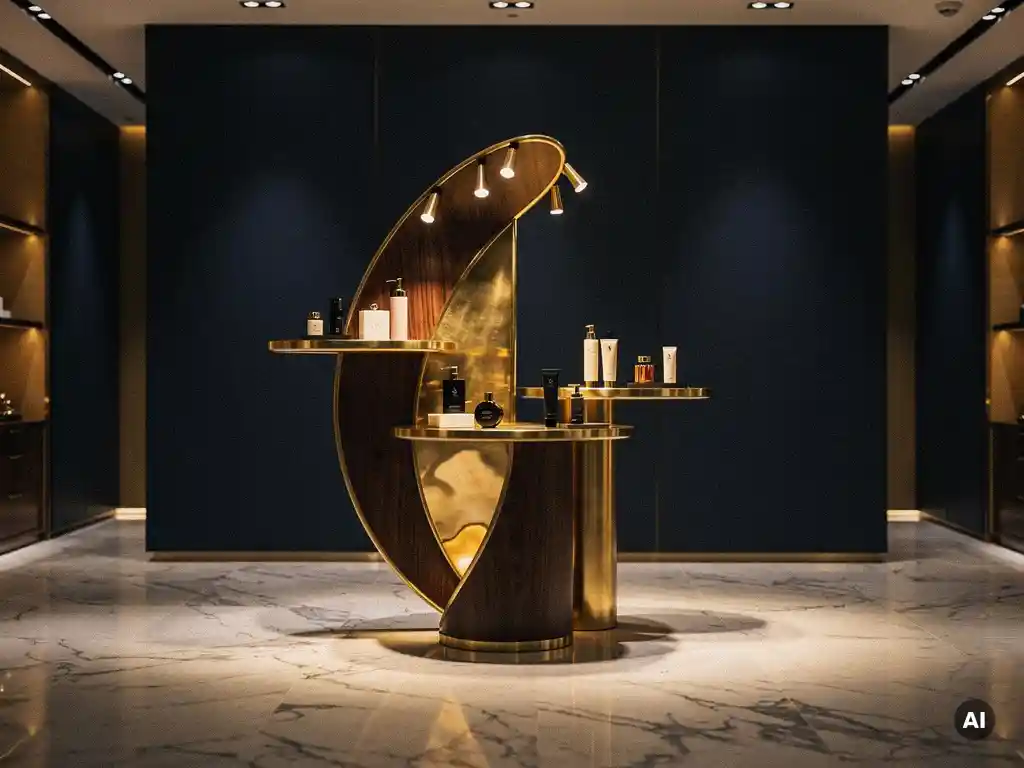
Brand expression in retail refers to the physical and sensory translation of a brand's identity into the in-store environment. It is the sum of all visible, tactile, and spatial elements that communicate who a brand is at the point of purchase. Where brand identity defines the values and personality of a business, brand expression is how those qualities are made tangible for shoppers in a physical space. The sections below address the most important questions retailers and brand owners ask when evaluating or evolving their in-store expression.
Brand identity is the strategic foundation: the defined values, personality, visual language, and positioning that a brand establishes. Brand expression in retail is the execution of that identity within a physical environment. Identity lives in brand guidelines; expression lives in the store. The distinction matters because a strong identity can be undermined entirely by weak or inconsistent in-store execution.
A brand may have a clearly articulated identity built around premium quality and innovation, but if its retail environment features generic fixtures, poor lighting, and cluttered displays, shoppers will not receive that message. Expression is the mechanism through which identity becomes perception. For retail chain owners managing multiple locations, this gap between intended identity and actual in-store expression is one of the most commercially significant risks they face.
The key elements of retail brand expression are the physical and sensory components that collectively communicate a brand's character to shoppers at the point of purchase. These include fixture design, materials, colour, typography, lighting, spatial layout, and point-of-sale displays. Each element contributes to a shopper's overall perception of the brand, either reinforcing or contradicting the intended message.
When these elements are designed and executed in alignment, they create a cohesive retail brand experience that builds trust and drives conversion.
In-store brand expression directly influences shopper behaviour by shaping perception, guiding navigation, and creating emotional responses that affect purchase decisions. A retail environment that communicates brand values clearly and consistently increases shopper confidence, reduces cognitive friction, and encourages longer dwell times. These factors collectively improve conversion rates and average transaction value.
Shoppers make rapid subconscious judgements about a brand based on the quality and coherence of its physical environment. A well-executed display communicates that a brand takes pride in its products and respects its customers. Conversely, a poorly maintained or generic retail environment signals indifference, which can erode brand equity even when the product itself is strong.
The physical retail environment also plays a role that digital channels cannot replicate. Tactile interaction with a product, the spatial experience of a well-designed zone, and the social dimension of in-store shopping all contribute to brand perception in ways that no screen can fully substitute. This is why retail display design remains a strategically important investment for brands competing in an omnichannel landscape.
Permanent brand expression refers to fixed in-store fixtures, fittings, and environmental design that form the structural identity of a retail space over an extended period. Temporary brand expression covers promotional displays, seasonal installations, and point-of-sale materials designed for short-term campaigns. Both serve distinct commercial purposes and require different design approaches.
Permanent installations define the baseline experience of a retail environment. These include branded fixture systems, shopfitting, wall treatments, and integrated display architecture. They are built to communicate the brand's core identity consistently over time and must be durable, scalable, and aligned with long-term brand strategy. The investment in permanent expression is typically higher, but the commercial return is sustained across every shopper visit.
Temporary displays and promotional POS units allow brands to respond to seasonal demand, new product launches, or campaign-specific objectives without overhauling the permanent environment. These solutions must be designed for rapid deployment, visual impact, and easy removal. When executed well, temporary brand expression creates urgency and draws shopper attention to priority products without disrupting the coherence of the permanent retail environment.
The most effective retail brand strategies use both in combination, maintaining a strong permanent foundation while deploying targeted temporary activations at key commercial moments throughout the year.
Retailers maintain brand expression consistency across multiple stores by establishing a defined set of design standards, using centrally produced display and fixture systems, and working with an end-to-end installation partner who can execute to specification at scale. Consistency is not achieved through guidelines alone; it requires controlled manufacturing, professional installation, and ongoing compliance monitoring.
For retail chain owners managing portfolios of stores, inconsistency in brand expression is a significant operational risk. A shopper who visits one location and then another expects the same experience. When that experience varies, it undermines brand trust and dilutes the investment made in the stronger locations.
Practical measures that support consistency include:
A brand should refresh its retail environment expression when there is a measurable gap between how the brand presents itself in-store and how it wants to be perceived by shoppers. Common triggers include a rebrand or repositioning, declining footfall or conversion rates, new product category launches, competitive pressure, or simply the natural ageing of fixtures and displays that no longer reflect the brand's current quality standards.
A refresh does not necessarily mean a complete overhaul. In many cases, updating key display units, refreshing graphic communications, and introducing new materials at high-traffic touchpoints can meaningfully improve the in-store brand experience without the cost and disruption of a full refit. The decision should be driven by an honest assessment of whether the current environment is actively supporting or passively undermining commercial performance.
In 2026, with shopper expectations continuing to rise and physical retail competing on experience as much as product, brands that delay investment in their in-store expression risk ceding ground to competitors who recognise the commercial value of the physical environment.
Pivotal is a full-service retail design partner that takes brand expression from concept through to completed installation, managing every stage of the process in-house. For brands and retailers seeking to close the gap between their intended identity and their actual in-store experience, Pivotal offers:
In 2025, Pivotal's in-store engineers visited a store every 34 minutes and installed over 2,000 new retail and brand experiences, with 15 new global brands choosing Pivotal as their in-store partner. To discuss how Pivotal can translate your brand identity into a physical retail environment that performs, speak to the Pivotal team today.
The cost of improving in-store brand expression varies significantly depending on the scope of the project, the materials specified, and the number of locations involved. A targeted refresh of key display units and POS materials will require a far smaller investment than a full shopfit or multi-site rollout. Rather than approaching it as a fixed cost, it is more useful to frame the investment against the commercial return — improved dwell time, higher conversion rates, and stronger brand equity all have measurable value that can be weighed against the cost of execution.
The most effective starting point is an honest audit of your current retail environment against your brand guidelines — identifying where the physical execution aligns with your intended identity and where it falls short. Walk your stores as a shopper would, paying attention to fixture quality, lighting, graphic consistency, and the overall coherence of the space. From there, prioritise the highest-traffic touchpoints where improvement will have the greatest commercial impact, and engage a retail design partner early in the process to ensure design decisions are grounded in both brand strategy and practical manufacturing reality.
Providing a comprehensive brand brief at the outset is essential — this should include your brand guidelines, examples of existing in-store environments, specific material or finish preferences, and clear commercial objectives for the project. The most reliable way to ensure accurate translation is to work with a partner who manages design, manufacturing, and installation under one roof, as this eliminates the risk of specification errors or quality inconsistencies that arise when multiple suppliers are involved. Requesting physical prototypes or samples before full production begins is also a practical safeguard.
Yes, and this is where modular display and fixture systems offer a significant advantage. A well-designed modular system allows individual components to be scaled, reconfigured, or selectively deployed depending on the footprint and format of each location, while the core materials, finishes, and visual language remain consistent across all sites. This approach is particularly valuable for retail chains that operate a mix of flagship, standard, and concession formats, as it maintains brand coherence without requiring a bespoke solution for every location.
The most direct indicators are commercial metrics: conversion rate, average transaction value, dwell time, and sales performance of featured products before and after a display or environment change. Shopper feedback gathered through in-store surveys or mystery shopping programmes can also provide qualitative insight into how the environment is being perceived. For brands running temporary activations, comparing sales uplift during the campaign period against baseline performance provides a clear measure of whether the expression is driving the intended behaviour.
The most frequent mistake is treating in-store expression as an afterthought — investing heavily in brand identity and digital channels while allowing the physical retail environment to age or drift from brand standards. A second common error is prioritising product volume over visual coherence, resulting in overcrowded displays that undermine the premium positioning the brand is trying to communicate. Finally, many brands underestimate the importance of installation quality; even well-designed fixtures and displays will fail to deliver their intended impact if they are poorly installed or inconsistently executed across locations.
For a single-site refresh involving bespoke fixtures and display systems, a planning lead time of eight to twelve weeks is a reasonable minimum to allow for design development, material procurement, manufacturing, and installation scheduling. Multi-site rollouts require proportionally more lead time, particularly where store access windows are restricted or phased deployment across locations needs to be coordinated. Engaging your retail design and installation partner as early as possible in the planning cycle reduces the risk of compressed timelines forcing compromises on design quality or manufacturing specification.