
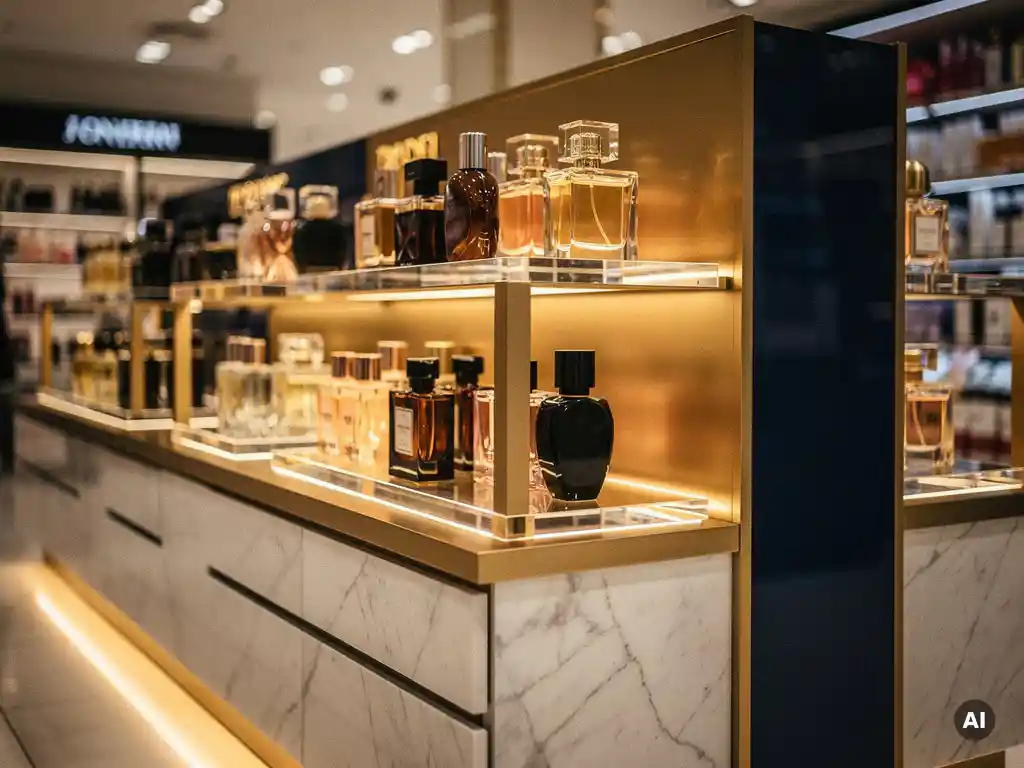
Mass-market brands build identity in crowded retail spaces by investing in purposeful physical design, specifically through point of sale materials, branded fixtures, and display systems that communicate brand values at the moment of purchase. The challenge is not visibility alone but differentiation: creating a presence that shoppers recognise, trust, and respond to, even within a shared retail environment. The sections below address the specific design, structural, and strategic questions that determine whether a brand stands out or disappears into the shelf.
A retail space feels like a brand when every physical element, fixture design, colour palette, material choice, graphic language, and spatial layout, works together to communicate a consistent identity. The difference between a branded environment and a generic shelf is intentionality: branded spaces are designed to evoke a feeling, not simply to store product. Shoppers register this distinction within seconds of approaching a display.
Brand identity in physical retail is built through sensory and visual coherence. When a fixture uses materials, finishes, and proportions that reflect a brand's positioning, whether premium, accessible, clinical, or playful, it creates an impression that extends well beyond the product itself. A well-designed display signals to the shopper that the brand has invested in their experience, which in turn builds trust and purchase confidence.
Contrast this with a standard shelf allocation, where product packaging must carry the entire weight of brand communication. In a branded display environment, the structure, lighting integration, and graphic application all contribute to the message. This is why brands that invest in bespoke retail display design consistently outperform those that rely on standard shelving alone.
Mass-market brands struggle to stand out in shared retail environments because they are competing for shopper attention within spaces they do not control. Supermarkets, pharmacies, and department stores dictate shelf placement, category adjacency, and often impose restrictions on fixture dimensions and materials. Within these constraints, many brands default to packaging design as their primary differentiator, which is rarely sufficient in a high-density category.
The core tension is between scale and specificity. Mass-market brands distribute across hundreds or thousands of retail locations, which makes bespoke, location-specific brand experiences logistically complex and costly. As a result, many brands accept generic shelf placements rather than investing in display solutions designed to perform within the constraints of each retail environment.
A second factor is category clutter. In high-competition categories such as skincare, health supplements, or personal care, shoppers are faced with dozens of similar products in close proximity. Without a physical structure that draws the eye and organises the brand's range clearly, even strong packaging can be overlooked. The brands that address this invest in point of sale design that creates a distinct visual zone within the shared retail space.
Point of sale design plays a central role in brand identity because it is the physical expression of a brand at the precise moment a purchase decision is made. Effective POS design translates brand values into three-dimensional form, through structure, material, colour, and graphic application, creating an environment that reinforces brand recognition and influences shopper behaviour directly at the shelf.
POS design functions as a brand communication tool that operates independently of advertising. A shopper who has never encountered a brand's television or digital campaign can still form an accurate impression of its positioning from a well-executed display unit. This makes point of sale branding particularly valuable for brands entering new markets or launching new product lines, where awareness is still being built.
The commercial impact of strong POS design is measurable. Displays that clearly organise a brand's range, communicate key product benefits, and create a visually distinct zone within a shared retail environment reduce the cognitive effort required to make a purchase decision. Reduced friction at the point of purchase translates directly into improved conversion rates.
Retail fixtures and displays shape shopper perception by acting as physical proxies for brand quality. A display built from premium materials with precise finishes signals that the brand values quality. A poorly constructed or generic fixture communicates the opposite, regardless of what the product inside it costs or how strong the packaging design is. Shoppers make these assessments rapidly and largely unconsciously.
Fixture design also influences how shoppers navigate a brand's product range. A well-structured display guides the eye, creates a logical hierarchy between hero products and supporting lines, and reduces the time a shopper needs to locate what they are looking for. This is particularly important in pharmacy and health retail, where shoppers are often seeking specific solutions and benefit from clear visual organisation.
Beyond aesthetics, the physical durability and maintenance condition of a fixture affect perception over time. A display that degrades quickly, becomes difficult to restock, or loses its structural integrity within weeks of installation undermines the brand impression it was designed to create. This is why material selection and construction quality are as strategically important as visual design in retail display development.
The most effective display strategies for mass-market brands in pharmacy and health retail combine clear product segmentation, clinical credibility in material and finish choices, and a strong visual hierarchy that guides shoppers from brand recognition to product selection. In a category where shoppers are often making considered, need-driven purchases, displays that communicate trust and clarity outperform those that prioritise aesthetic novelty alone.
Organising a brand's range by shopper need, skin concern, age group, treatment type, rather than by internal product code or SKU logic significantly improves navigation. Shoppers in pharmacy environments are frequently seeking solutions to specific problems, and a display that mirrors their decision-making process reduces friction and increases the likelihood of a considered purchase rather than a default choice.
In health and pharmacy retail, the materials used in display construction communicate brand values as clearly as graphic design. Clean lines, matte or soft-touch finishes, and considered use of white space convey clinical authority. Brands such as Eucerin and Avene, for whom Pivotal has designed and installed retail displays, operate in a space where shopper trust is the primary purchase driver, and every physical element of the display must support that trust.
In-store branding needs to be highly consistent across multiple retail locations to maintain brand recognition and shopper trust at scale. Inconsistency in fixture design, graphic application, or material quality across locations creates fragmented brand perception, which undermines the cumulative investment made in brand building. Shoppers who encounter a brand in multiple environments should have a coherent, recognisable experience each time.
Consistency does not require identical execution at every site. Retail environments vary in footprint, category allocation, and shopper profile, and effective display strategies account for this variation. What must remain constant is the visual language: the colour system, typography, material palette, and structural design logic that make a brand immediately identifiable regardless of location.
For multi-location brands, achieving this consistency at scale requires rigorous project management, standardised manufacturing specifications, and a deployment process that ensures every unit is installed to the same standard. This is where the operational capability of a retail design partner becomes as important as its creative output. Pivotal's in-store engineers visited a store every 34 minutes in 2025, with over 2,000 retail and brand experiences installed across that year, a scale of deployment that reflects the operational infrastructure required to deliver consistent brand presence across large retail networks.
Pivotal provides end-to-end retail display design and development for mass-market brands seeking to build a distinct, consistent presence in shared retail environments. The service covers the full project lifecycle, from initial concept through to on-site installation by Pivotal's own employed fitters. Key capabilities include:
For brands operating in competitive retail categories and seeking to convert shelf presence into genuine brand identity, Pivotal offers the design expertise and operational capability to deliver at scale. Contact Pivotal to discuss how a bespoke retail display strategy can strengthen your in-store brand experience.
The cost of a bespoke retail display programme varies significantly depending on material specification, production volume, number of locations, and complexity of installation. Rather than treating this as a marketing expense, brands that see the strongest return frame it as a commercial infrastructure investment: a well-executed display that improves conversion rates across hundreds of locations delivers measurable ROI that generic shelving simply cannot match. The most effective way to justify the investment is to model the uplift in units sold per location against the per-unit cost of display production and installation, a calculation that typically favours bespoke display solutions in competitive, high-footfall categories.
The most common mistake is designing displays in isolation from the actual retail environment, creating units that look strong in renders but fail to perform on the shop floor due to lighting conditions, category adjacency, or retailer space constraints. A second frequent error is prioritising visual impact over restocking practicality, resulting in displays that look excellent at launch but become difficult for retail staff to maintain, leading to degraded brand presentation within weeks. Brands also regularly underestimate the importance of structural durability, specifying materials that are cost-effective in production but unable to withstand the physical demands of a busy retail environment over a 12-to-24-month deployment cycle.
Retailer approval typically depends on demonstrating that a bespoke fixture works within their planogram guidelines, does not disrupt category flow, and meets their health and safety and installation standards. Approaching retail buyers with a fully developed proposal, including physical dimensions, material specifications, and a clear explanation of how the display benefits the category and the retailer, significantly increases the likelihood of approval. Brands that have an established retail design partner with existing retailer relationships can often navigate this process more efficiently, as familiarity with each retailer's requirements reduces the back-and-forth that delays deployment.
A typical retail display project, from initial briefing through to nationwide installation, runs between 12 and 20 weeks depending on design complexity, material sourcing, production volume, and the number of retail locations involved. Rapid prototyping capability can compress the creative development phase significantly, allowing physical testing and refinement before full production is committed to. Brands planning seasonal campaigns or product launches should factor this lead time into their go-to-market planning to avoid the common mistake of compressing production timelines in ways that compromise material quality or installation standards.
Yes, and this is one of the most important capabilities to build into a display system from the outset. Effective retail display design uses a modular approach, establishing a core visual language, material palette, and structural logic that can be scaled up or down to fit different footprints, from a small pharmacy shelf unit to a large-format department store installation. The brand identity remains consistent because the design system is consistent, even when individual executions differ in size or configuration. Brands that attempt to create entirely separate display solutions for each retail format typically end up with fragmented brand perception and significantly higher development costs.
The most important factors are end-to-end capability and proven operational scale. A partner that handles design but outsources manufacturing and installation introduces quality control risks at every handover point, which is where consistency most often breaks down across large retail networks. Brands should look for partners with in-house manufacturing expertise across relevant materials, their own employed installation teams rather than subcontracted labour, and a demonstrable track record of deploying at the scale the brand requires. Asking for references from brands in similar retail categories and requesting site visit data or installation volume figures gives a clearer picture of operational capability than creative portfolios alone.
Ongoing maintenance should be treated as a core component of the display programme, not an afterthought, because a degraded display actively damages brand perception rather than simply delivering diminishing returns. Brands should establish a compliance schedule that includes regular site visits to assess display condition, restock support, and a clear process for replacing damaged or worn components before they become visible to shoppers. Partnering with a display provider that offers post-installation compliance services, rather than managing this through internal field teams or relying on retail staff, ensures that the brand standard set at launch is maintained throughout the full deployment lifecycle.