A brand-led retail strategy is an approach where every element of the physical store experience, layout, fixtures, displays, messaging, and service, is designed to express and reinforce a brand's identity, values, and positioning, rather than simply showcasing products. The goal is to create an environment where shoppers connect emotionally with the brand itself, not just the items on shelf. The questions below unpack how this approach works in practice and why it is increasingly the model of choice for retail operators seeking sustained competitive advantage.
A brand-led retail strategy prioritises the shopper's relationship with the brand as a whole, while a product-led strategy focuses on presenting individual products as efficiently as possible. In a product-led environment, decisions about layout and display are driven by ranging and replenishment logic. In a brand-led environment, those same decisions are driven by what best communicates the brand's story, values, and emotional promise.
In practical terms, a product-led store organises space around categories and SKUs. A brand-led store organises space around experiences and identity. This distinction shapes everything from the choice of materials and finishes to how staff are trained and how seasonal campaigns are executed. Brands such as Estée Lauder and La Prairie, which operate in competitive beauty and luxury sectors, invest in brand-led environments precisely because the product alone cannot justify premium positioning: the surrounding experience must do that work.
The commercial implication is significant. When shoppers associate a positive in-store experience with a specific brand, they are more likely to return, to trade up within that brand's range, and to recommend it to others. A product-led approach can drive transactions; a brand-led approach builds the conditions for long-term revenue growth.
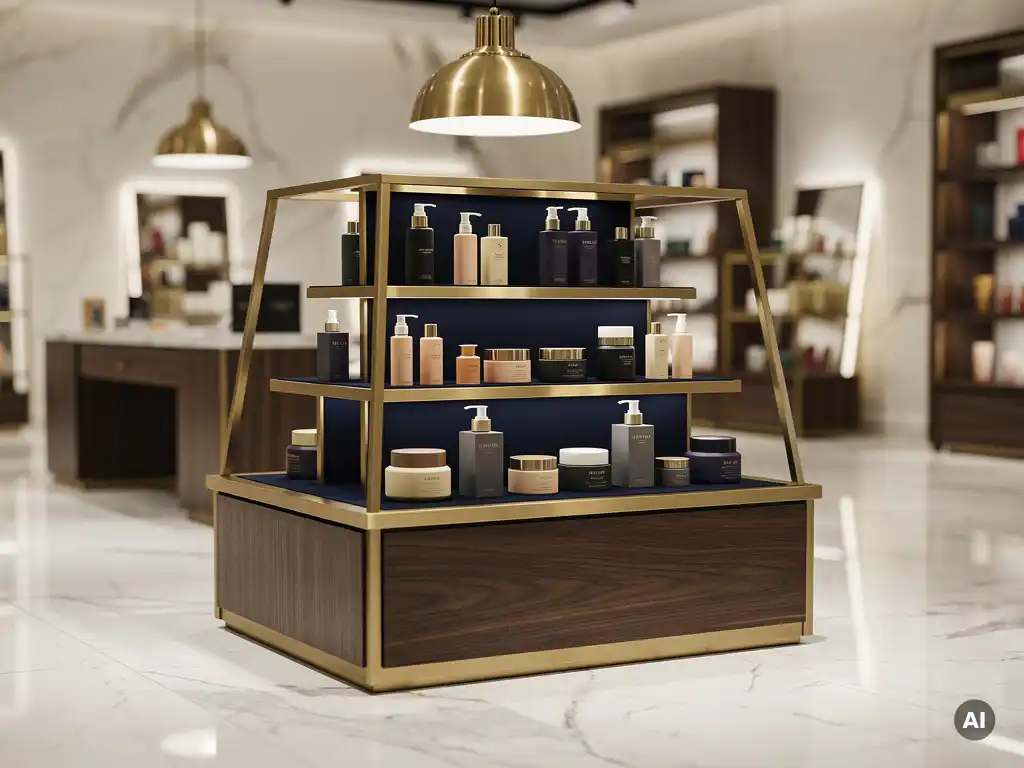
In-store design is the primary mechanism through which a brand-led retail strategy becomes tangible. It translates brand identity into physical form, through materials, spatial flow, lighting, display architecture, and graphic communication, so that shoppers experience the brand rather than simply encounter its products. Design is not decoration in this context; it is a strategic tool.
Every design decision carries meaning. The choice between a warm timber finish and a clinical acrylic surface communicates something different about the brand's values. The height and openness of a display unit signals whether a brand wants to invite exploration or create exclusivity. The placement of interactive or tactile elements tells shoppers whether the brand prioritises engagement or efficiency.
Effective retail design strategy also accounts for the shopper journey through the space. Entry points, navigation cues, focal displays, and point of sale materials all work together to guide attention and build a coherent brand narrative from the moment a shopper walks in. When this is executed well, the store becomes a media channel in its own right, one that communicates with greater depth and sensory richness than any digital touchpoint can replicate.
Brand-led retail strategies deliver the strongest returns in sectors where brand perception directly influences purchase decisions and where physical experience creates differentiation that digital channels cannot replicate. Beauty, personal care, luxury goods, sportswear, and premium food and drink are among the clearest beneficiaries, but the approach applies across a wider range of categories than is often assumed.
In pharmacy and health retail, brands such as Eucerin and Avène operate in environments where clinical credibility and trust are paramount. A brand-led display approach, using materials, layout, and messaging that reinforce efficacy and expertise, can meaningfully shift shopper confidence at the point of decision. In sports and lifestyle retail, brands like Lacoste use in-store environments to communicate heritage and aspiration in ways that a product grid cannot.
Fast-moving consumer goods brands, including those in beverages and energy drinks, also benefit significantly. Lucozade, for example, operates in a category where brand energy and visibility at point of sale are critical conversion drivers. Even in sectors traditionally considered functional, such as lottery and gaming, brand-driven retail environments, as demonstrated by Camelot, create trust and engagement that support sustained participation.
A brand-led approach improves shopper loyalty by creating consistent, emotionally resonant experiences that shoppers associate with the brand rather than with the retailer. When a shopper leaves a store with a positive feeling that they attribute to the brand, its values, its aesthetic, its way of presenting itself, they are more likely to seek that brand out again, both in-store and online.
Loyalty in physical retail is built through repeated positive experiences, and brand-led design creates the conditions for those experiences to occur reliably. A well-executed in-store brand environment signals investment, care, and confidence, qualities that shoppers interpret as indicators of brand quality. Conversely, inconsistent or generic in-store presentation can undermine even strong product performance by failing to reinforce why the brand deserves preference.
There is also a social dimension. Shoppers who feel that a brand's physical environment reflects their own values or aspirations are more likely to share that experience, recommend the brand, and return. Brand-led retail design that incorporates tactile materials, considered spatial flow, and clear brand storytelling creates the kind of environment that shoppers remember and return to, which is the foundation of durable loyalty in an era where e-commerce competes aggressively for repeat purchase.
Implementing a brand-led retail strategy involves translating brand identity into a coherent physical retail brief, then executing that brief across design, manufacturing, and installation with consistency and precision. It is a structured process that spans strategy, creative development, materials selection, prototyping, production, and on-site delivery, and it requires close coordination between brand teams, retail operators, and specialist retail design partners.
The process typically follows a clear sequence:
The complexity of this process is why brand-led retail strategy is best delivered through a full-service partner with capabilities spanning the entire project lifecycle, rather than through fragmented supplier relationships that introduce inconsistency at each handover point.
A brand-led retail strategy is working when it produces measurable improvements in shopper engagement, conversion, average transaction value, and return visit frequency, alongside qualitative evidence that shoppers associate the in-store experience positively with the brand. Measurement should be structured around both commercial outcomes and brand perception indicators.
Key performance indicators worth tracking include:
Measurement should begin before installation, establishing a baseline against which post-implementation performance can be compared. The most rigorous approach involves piloting brand-led concepts in a defined set of locations before rolling out at scale, using the pilot data to refine both the design and the measurement framework.
Pivotal is a full-service retail design partner that supports brands at every stage of developing and delivering a brand-led retail strategy. For retail chain owners and brand operators looking to strengthen their physical store presence, Pivotal offers a structured, end-to-end capability that removes the fragmentation and inconsistency that typically undermine in-store brand execution.
If your brand is ready to move from product presentation to genuine brand-led retail execution, contact Pivotal to discuss how a bespoke in-store strategy can be developed and delivered for your estate.
Costs vary significantly depending on the scale of the project, the materials specified, the number of locations, and the complexity of the design brief. A single premium brand fixture or display installation might range from a few thousand pounds to tens of thousands, while a full multi-site rollout across a retail estate will represent a considerably larger investment. The most effective way to approach budgeting is to begin with a pilot in a defined number of locations, use the commercial data from that pilot to build a business case, and then scale with confidence. A full-service retail design partner can help you structure phased investment that manages risk while delivering measurable returns.
A useful starting point is to audit your current in-store presence honestly: does it consistently communicate your brand's values, or does it simply present products in the most space-efficient way available? If your in-store environment looks indistinguishable from a competitor's, or if your display materials vary in quality and consistency across locations, those are strong signals that a brand-led strategy would create meaningful differentiation. Brands that have a clear identity and positioning but haven't yet translated that into their physical retail presence typically see the strongest early returns from making this shift.
The most frequent mistake is treating in-store design as a one-off project rather than an ongoing discipline, which leads to brand environments that degrade over time and lose their impact. A close second is fragmenting the process across multiple suppliers, for example using one agency for design, another for manufacturing, and another for installation, which introduces inconsistency at every handover point and makes it very difficult to maintain brand standards at scale. Brands also commonly underinvest in the compliance and maintenance phase, which means that even a well-designed installation can quickly fall below standard across a large retail portfolio.
Yes, and this is actually where brand-led thinking is most commercially critical. In a third-party retail environment, your brand is competing for shopper attention within a space that belongs to the retailer, surrounded by competitors. A well-designed branded fixture, display unit, or point of sale installation can create a distinct brand zone within that environment, signalling quality and identity even when you don't control the surrounding space. Brands like Eucerin, La Prairie, and Lucozade all operate in exactly this context, using brand-led display design to command attention and build preference at the point of decision.
A typical end-to-end timeline, from initial brand and shopper insight work through concept development, prototyping, manufacturing, and installation, runs between 12 and 24 weeks for a well-scoped project, though this varies with complexity and scale. Prototyping and testing is the phase most often underestimated: allowing adequate time here reduces the risk of costly revisions during full production. Working with a full-service partner who manages design, manufacturing, and installation under one roof significantly compresses timelines by eliminating the delays that occur when multiple suppliers need to be briefed, aligned, and coordinated.
Rather than competing with digital channels, a strong in-store brand experience reinforces and amplifies them. Shoppers who have a memorable, emotionally positive physical brand experience are more likely to engage with that brand's digital content, return via e-commerce, and respond to online campaigns. The physical store also does something digital cannot: it delivers sensory, tactile brand cues, materials, scent, spatial atmosphere, human interaction, that create deeper emotional associations than a screen can replicate. Brands that treat physical and digital as complementary channels, with consistent identity expressed across both, tend to build stronger overall brand equity than those that optimise each in isolation.
Look for a partner with demonstrable end-to-end capability: strategic and creative design, in-house manufacturing across multiple materials, and employed installation teams rather than subcontracted labour. This matters because consistency is the foundation of effective brand-led retail, and consistency breaks down at supplier handover points. Ask to see case studies from sectors relevant to yours, and specifically ask how the partner manages compliance and maintenance after installation, since that ongoing phase is where many brand-led strategies quietly fail. A partner who can show you how they measure performance and iterate based on data is significantly more valuable than one who treats installation as the end of the engagement.