
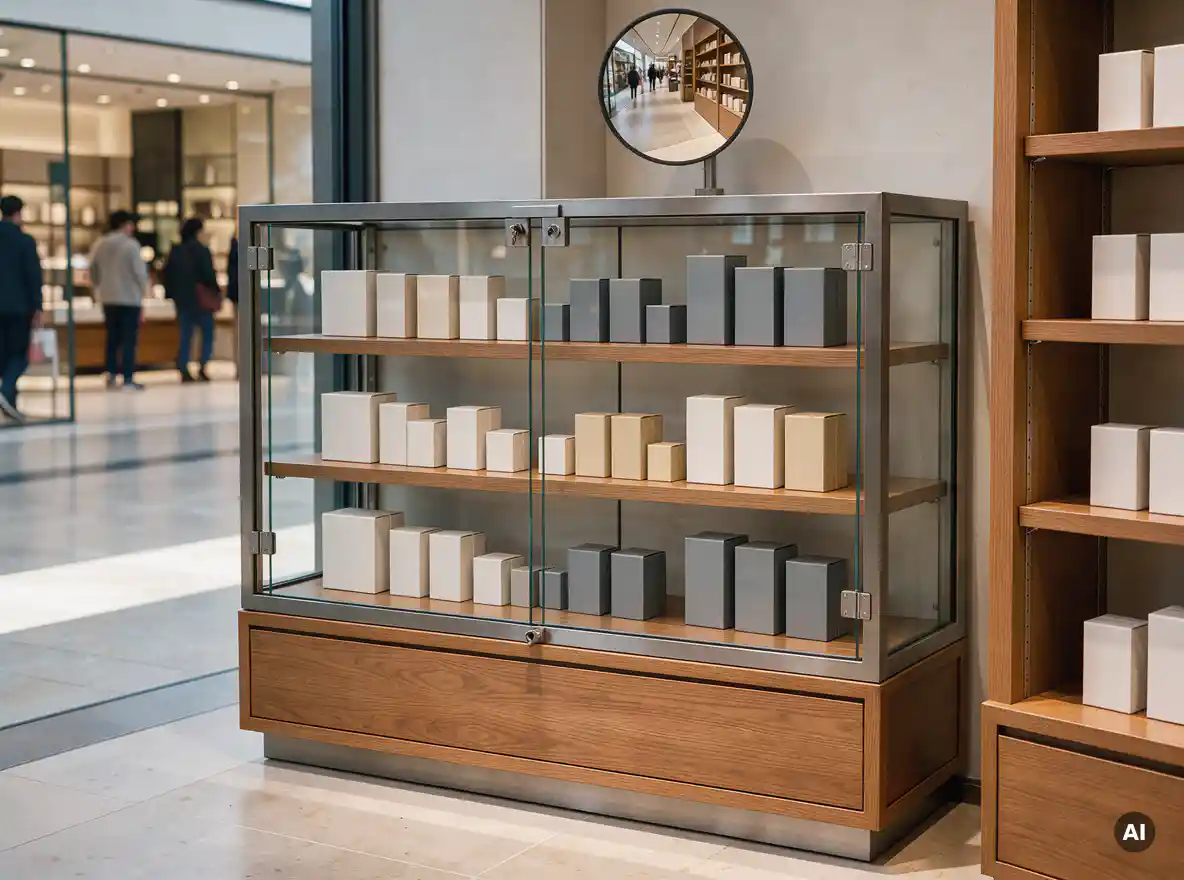
Retail loss prevention in a busy store works by combining layered controls: a layout that keeps high-risk stock visible, fixtures that slow or deter theft, tagging and camera coverage that act as a deterrent and evidence source, and staff routines that make those systems consistent. No single measure succeeds alone, particularly when footfall is high.
The effectiveness of each layer depends on how well it is designed into the shopping environment rather than added afterwards. The sections below answer the most common questions retail and brand teams ask about protecting stock without compromising the shopper experience.
Busy stores lose the most stock in high-value, easily concealed categories, at blind spots away from the till, and during peak trading when staff attention is divided. Beauty, health, grocery essentials and small consumer electronics are common targets because the products are compact, resaleable and frequently sold in open-access displays.
Loss is not limited to external theft. Industry experience shows that shrinkage typically arises from several sources: shoplifting, employee theft, supplier or delivery errors, and process failures such as mis-scanned items or damaged goods. Understanding which source dominates in a given store is the first step in effective retail loss prevention.
The highest-risk locations tend to share common traits:
Mapping incident data against these locations allows retailers and brand owners to prioritise investment where it will have the greatest effect.
Store layout reduces theft by maximising natural surveillance: keeping sightlines open, positioning high-value stock within staff view, and guiding shopper flow past checkout points. A well-planned floor plan makes concealment harder and legitimate browsing easier, so deterrence is built into the environment rather than relying on constant intervention.
Several layout principles consistently support loss prevention:
Lighting also plays a measurable role. Well-lit zones discourage opportunistic behaviour and improve camera image quality, which supports later review.
The most effective anti-theft display features are those that restrict access without restricting visibility: locked or gravity-fed dispensers, angled shelving that limits sweep theft, secure acrylic enclosures, and fixtures sized to hold limited quantities. Effective design makes theft inconvenient while keeping products attractive and accessible to genuine shoppers.
Fixture engineering can reduce loss before any technology is deployed. Proven features include:
Promotional and point of sale units present a specific challenge, as they are often placed in open, high-footfall locations with minimal supervision. Security should be specified at the concept stage, not retrofitted. Considering product size, retail environment, replenishment frequency and compliance requirements during design avoids compromising either the look of the unit or its protection. Because retailers apply their own security standards, displays that accommodate those requirements are more likely to be accepted into stores.
Tags, cameras and staff routines work together as complementary layers: electronic article surveillance tags and alarms detect removal, cameras deter and record incidents, and trained staff provide the visible presence and consistent procedures that make both technologies effective. Each layer compensates for the limitations of the others.
The interaction can be summarised as follows:
Routine discipline is what holds this system together. Regular stock counts on high-risk lines, consistent tag removal at the till, scheduled checks of display condition and clear delivery verification procedures all reduce the gaps that technology alone cannot close. Ongoing inspection of fixtures also matters, since damaged locks, loose tag mounts or worn display components quietly erode protection over time.
Stores prevent theft without hurting sales by protecting selectively rather than universally: securing only genuinely high-risk lines, favouring visible but unobtrusive measures, and training staff to engage shoppers positively. Excessive locking and barriers reduce conversion, so proportionate controls that preserve product access are essential.
Practical principles for balancing security and sales include:
The commercial objective is not zero loss at any cost, but the lowest sustainable loss that still allows shoppers to see, touch and buy the product with ease.
Pivotal is a UK retail design company that creates, makes, installs and maintains in-store displays and fixtures, which allows loss prevention to be considered across the full project lifecycle rather than as an afterthought. Its in-house team of designers, manufacturers and employed fitters delivers a single, accountable service from concept to installation.
For brands looking to protect stock while maintaining standout presence at the point of purchase, speak to Pivotal about a display solution designed to perform commercially and securely from day one.