
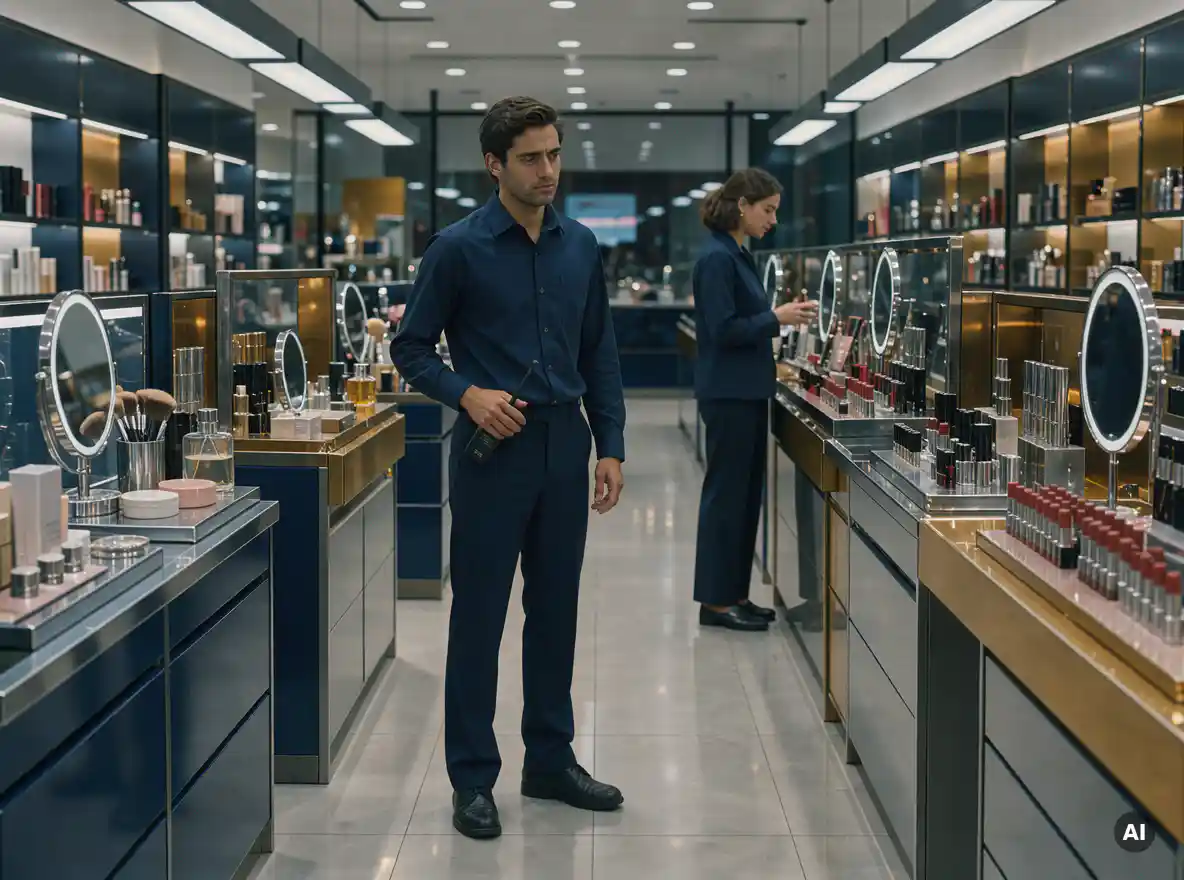
Retail employees should not confront shoplifters. Staff should observe, record details safely, and report the incident to management or the police. Confrontation exposes employees to physical harm and the business to legal liability. A clear policy, supported by well-designed store fixtures, protects people and stock more effectively than intervention. The sections below cover the risks, the legal position, recommended actions, policy design, preventative store layout, and what follows a police report.
Staff who confront shoplifters risk physical assault, verbal abuse, psychological distress, and legal claims. The outcome of a confrontation is unpredictable, and the stock being protected is almost always worth less than the wellbeing of the employee and the cost of an incident to the business.
The principal risks fall into three categories:
Employers also carry a duty of care under health and safety law. Encouraging or tolerating confrontation without training or safeguards undermines that duty. Effective retail loss prevention therefore begins with the principle that no item is worth an injury.
In the UK, shop employees have no special powers of arrest. Like any member of the public, they may make a citizen's arrest only in narrow circumstances, and only where it is reasonably necessary and the force used is proportionate. Most retailers advise against it as a matter of policy.
A citizen's arrest generally applies where a person is committing, or is reasonably suspected of committing, an indictable offence, and where it is not reasonably practicable for a police officer to make the arrest instead. The risks of acting incorrectly are significant. Unlawful detention or excessive force can result in civil action or criminal charges against the employee.
Retailers should seek legal advice when drafting their policies, as the position can vary and the details of an incident matter. In practice, the safest and most defensible approach is for staff never to physically stop, search, or restrain a suspected offender. Verbal engagement may be acceptable in some businesses, but physical contact should be ruled out entirely.
Staff who spot shoplifting should avoid confrontation, stay at a safe distance, note a description of the person and the items taken, and alert a manager or security colleague. Where it is safe, they should report the incident to the police promptly and preserve any CCTV footage.
A consistent response sequence helps employees act with confidence under pressure:
This approach keeps staff safe while retaining the evidence required to support a prosecution or a store ban.
A clear shoplifting policy states plainly that staff must not physically intervene, defines who may make decisions, sets out reporting steps, and describes how incidents are recorded. It should be written in simple language, issued to every employee, and reinforced through regular training.
An effective policy typically includes:
Policies should be reviewed at least annually and after any serious incident. Training should include practical scenarios, so that staff recognise the policy in action rather than treating it as a document to be signed and filed. Consistency across all locations is essential for brands operating across multiple retail partners.
Store design reduces shoplifting by improving sightlines, controlling access to high-value products, and placing stock where staff can naturally observe it. Well-planned fixtures deter theft passively, removing the need for staff to intervene and strengthening overall retail loss prevention.
Several design principles consistently support loss reduction:
For brands, the challenge is to protect product without diminishing the shopper experience. Display and point of sale units that integrate security into the design, rather than adding it afterwards, preserve brand presentation while reducing exposure. Ongoing maintenance also matters, since damaged locks, loose fixtures, and worn components create weaknesses that offenders recognise quickly.
After a report is made, the police log the incident, assess the evidence, and decide whether to attend or investigate. Outcomes range from a warning or caution to prosecution. Retailers improve the likelihood of action by submitting clear CCTV footage, accurate timings, and a detailed statement.
Retailers should expect to supply evidence promptly and may be asked to provide a witness statement. Where a case proceeds to court, staff who observed the incident may be required to give evidence. Keeping thorough internal records, and storing footage in a format the police can access easily, shortens this process.
Reporting every incident, including those where no arrest is made, has a further benefit. Consistent records allow police and retail partners to identify repeat offenders and organised groups, and they give store managers a factual basis for adjusting layouts, staffing patterns, and security measures.
Pivotal designs, manufactures, installs, and maintains in-store environments that support safer, more secure retail spaces. As a full-service retail design partner, Pivotal integrates loss prevention into the fixture itself, so brands protect product without relying on staff confrontation.
Contact Pivotal today to discuss a display solution that protects your product, supports your retail partners, and strengthens the shopper experience.