
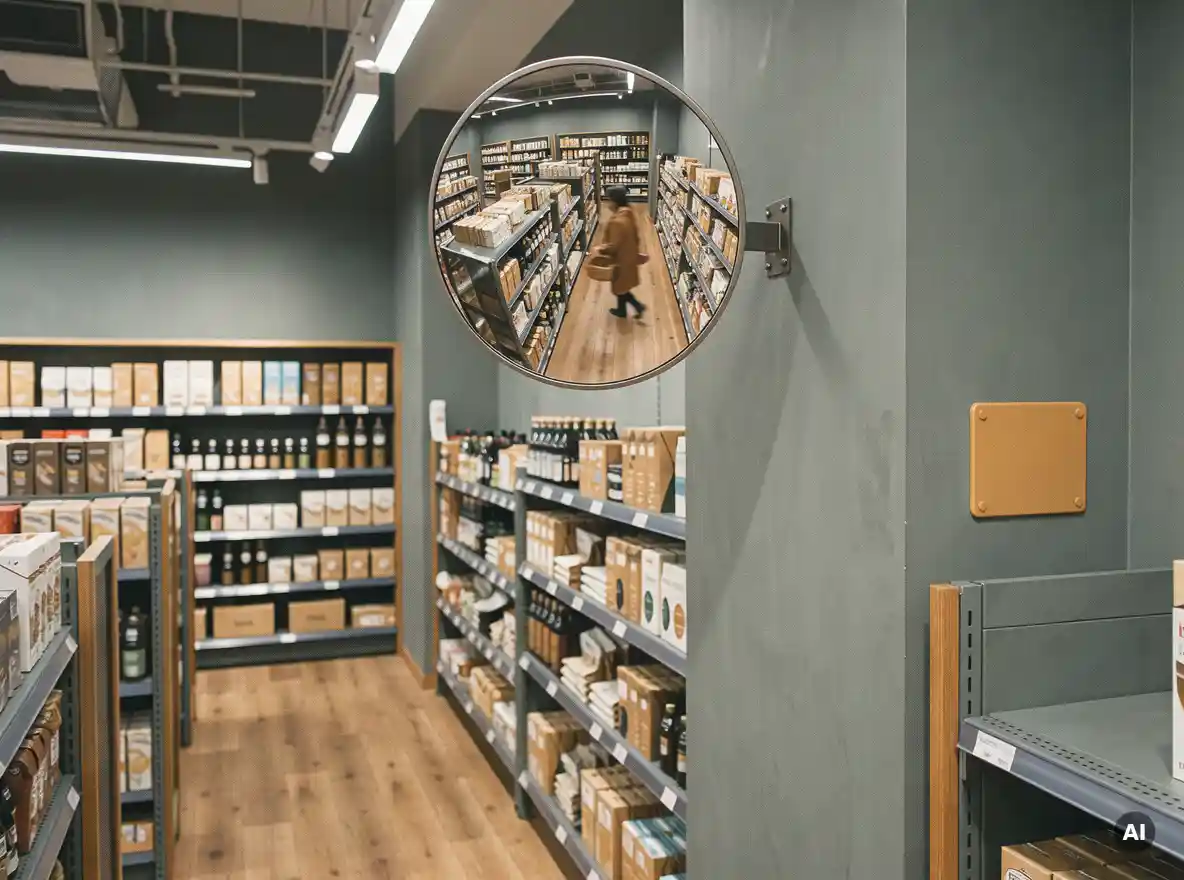
Mirrors and signage are effective as part of a layered retail loss prevention strategy, but they are not sufficient alone. Both work by increasing a would-be offender's perception of being observed, which reduces opportunistic theft. Their impact depends on placement, message design, and integration with fixtures and store layout.
For brand owners and retail experience managers, the practical question is how to configure deterrents so that they protect stock without undermining the shopper experience. The sections below address the psychology, placement, messaging, and design factors that determine results.
In-store deterrents work by raising the perceived risk of detection. Opportunistic offenders weigh effort against the likelihood of being caught, so visible cues that suggest observation, such as mirrors, signs, and open sightlines, shift that calculation and discourage theft before it begins.
This principle, often described in loss prevention research as situational crime prevention, focuses on altering the environment rather than confronting individuals. Three mechanisms matter most:
Deterrents are strongest against opportunistic theft. Organised or premeditated theft responds far less to passive cues, which is why deterrence must be treated as one layer rather than the whole solution.
Security mirrors should be placed where sightlines are naturally obstructed: at aisle ends, in corners, above high-value categories, and behind or beside tall fixtures. The objective is to give staff a view of areas hidden from the till or the shop floor entrance.
Effective positioning follows a few consistent principles:
Mirror placement should be reviewed whenever fixtures change. A layout refresh or seasonal display can create new blind spots that did not exist previously.
The most effective anti-shoplifting signs are clear, factual, and positioned at the point of temptation. Messages that state that CCTV is in operation or that offenders will be prosecuted outperform vague or aggressive wording, because they communicate a credible consequence without alienating legitimate shoppers.
Several design factors influence performance:
Signs that are faded, cluttered, or inconsistent with surrounding graphics lose authority. Maintaining them is as important as installing them.
Display and fixture design reduces shoplifting by controlling visibility, access, and the ease of concealment. Lower fixtures that preserve sightlines, secure merchandising for high-value lines, and layouts that guide shoppers past staffed areas all make theft harder without obstructing the purchase journey.
Tall, dense fixtures create the concealed pockets that offenders exploit. Keeping perimeter and aisle fixtures at a height that allows staff to see across the floor reduces blind spots at the design stage, which is more reliable than correcting them afterwards with additional hardware.
Products with high resale value or small dimensions benefit from fixtures designed to limit access, such as controlled dispensing, locked sections, or positioning close to the till. Well-engineered point of sale units can hold stock securely while still presenting product attractively, balancing protection with conversion. Because displays are often installed across multiple stores, fixture specification should be tested for robustness before national rollout.
Mirrors and signs are not enough on their own. They deter opportunistic behaviour but do not address organised theft, and their effect weakens without staff presence, sound store layout, and ongoing upkeep. Effective retail loss prevention combines environmental design, visible deterrents, technology, and trained personnel.
A resilient approach typically includes:
The final point is frequently overlooked. Damaged mirrors, obscured signs, and displays that have drifted from their original planogram all erode protection over time. Brands that treat loss prevention as a continuing process rather than a one-time installation retain the benefit.
Pivotal designs, manufactures, installs, and maintains in-store fixtures and displays with visibility, security, and shopper experience considered together from the outset. Its in-house team manages the full project lifecycle, so protective features are integrated into the design rather than added later.
To reduce shrinkage without compromising the in-store experience, speak to Pivotal about a display and fixture strategy built for protection and performance.