
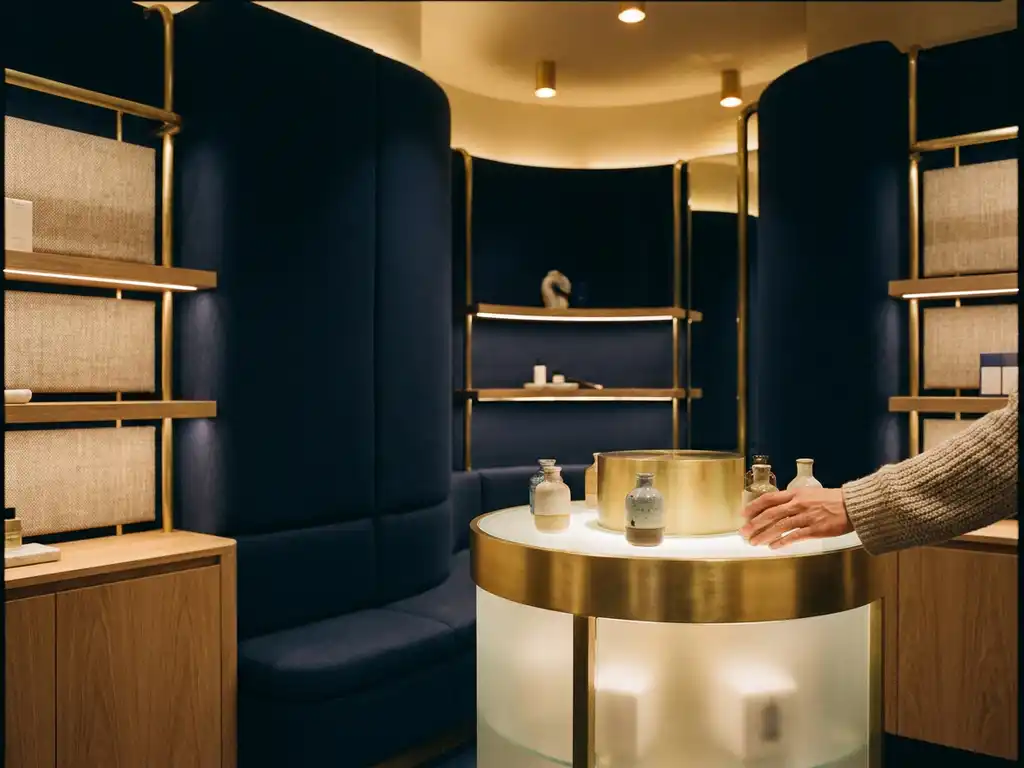
Experiential retail zones increase customer engagement by transforming passive browsing into active, memorable brand interactions. When shoppers are invited to touch, try, discover, or participate within a dedicated in-store environment, their dwell time increases, their emotional connection to the brand deepens, and their likelihood of converting at the point of purchase rises significantly. The sections below address the most important questions brands ask when planning and evaluating experiential retail design.
A retail zone becomes experiential when it moves beyond product display to create a sensory, interactive, or narrative-driven environment that actively involves the shopper. Rather than presenting merchandise on a shelf, an experiential zone uses spatial design, material choices, lighting, sound, and tactile elements to immerse the visitor in a brand story and prompt meaningful engagement.
In practice, this means designing a defined space within a store that has a clear purpose beyond transaction. It might invite shoppers to test a product, discover its provenance, or interact with a brand narrative through physical touchpoints. The distinction lies in intent: an experiential zone is engineered to generate an emotional response, not simply to organise stock.
Key characteristics that define an experiential retail zone include:
Experiential zones alter shopper behaviour by extending dwell time, increasing product interaction, and raising the likelihood of unplanned purchases. When a shopper engages physically with a product or brand environment, the decision-making process shifts from rational evaluation to emotional association, which is a more powerful driver of conversion at the point of sale.
Increased dwell time is one of the most commercially significant outcomes. A shopper who pauses to engage with an interactive display spends longer in proximity to the product range, which increases exposure and the chance of discovery. This is particularly valuable for brands introducing new lines or repositioning existing products within a retail environment.
Experiential design also reduces purchase hesitation. When a shopper can handle a product, experience its texture, or understand its benefits through demonstration, the perceived risk of buying decreases. This is especially relevant in beauty, health, and wellness categories where sensory reassurance is central to the purchase decision.
At a broader level, a well-executed experiential zone creates a memory. Shoppers who associate a positive physical experience with a brand are more likely to return, recommend, and seek out that brand in future retail visits, extending the commercial value of a single in-store encounter well beyond the initial visit.
The in-store experiences that drive the highest levels of shopper engagement are those that combine sensory interaction with a clear brand story, delivered through purposeful retail design. Demonstration-led zones, try-before-you-buy formats, and discovery-based layouts consistently outperform static display in generating meaningful shopper contact.
Zones that allow shoppers to test, sample, or trial a product in a supported environment generate strong engagement because they remove purchase uncertainty. Beauty brands, in particular, benefit from dedicated testing areas where product performance can be experienced directly. The physical act of trying creates a personal connection that no digital touchpoint can replicate.
Displays that communicate a brand's values, heritage, or product provenance through considered design and graphic content invite shoppers to invest emotionally before they invest commercially. When materials, finishes, and spatial layout are aligned with brand identity, the zone becomes an extension of the brand itself rather than a functional storage solution.
Layouts that guide the shopper through a curated sequence of products or brand moments, rather than presenting a full range simultaneously, create a sense of discovery. This format rewards exploration and encourages the shopper to engage with products they might otherwise have overlooked, increasing basket size and brand awareness in equal measure.
Retail zone design directly shapes how shoppers perceive a brand's quality, values, and positioning. The materials, proportions, finishes, and spatial logic of a display communicate brand character before a single product is examined. A poorly executed zone can undermine brand equity; a well-designed one reinforces it at the most critical moment in the purchase journey.
Shoppers make rapid, largely subconscious assessments of a brand based on the physical environment in which it is presented. Premium materials signal premium product. Considered lighting elevates perceived value. Cohesive graphic design communicates brand confidence. These cues operate below the level of conscious reasoning but have a measurable effect on purchase intent and willingness to pay.
For brands operating across multiple retail environments, consistency of design language is equally important. A retail zone that aligns with wider brand communications, from packaging to digital presence, reinforces recognition and trust. Inconsistency, by contrast, introduces doubt. This is why the design and manufacturing process must be managed with precision from concept through to on-site installation.
A temporary experiential display is designed for a defined period, typically supporting a product launch, seasonal campaign, or promotional event, and is built with materials and structures suited to short-term deployment. A permanent display is engineered for longevity, using more durable materials and construction methods to sustain brand presence over an extended period within a fixed retail location.
The choice between temporary and permanent formats depends on commercial objectives, budget, and the nature of the retail relationship. Temporary displays offer flexibility and the ability to respond quickly to market opportunities. They are well-suited to brands testing a new retail environment, supporting a limited-edition range, or activating around a specific moment in the retail calendar.
Permanent displays represent a longer-term investment in a retail location and are appropriate where a brand has an established, ongoing presence. They require more rigorous design development to ensure they remain visually relevant and structurally sound over time, and they benefit from materials that can withstand sustained shopper interaction without deteriorating in appearance.
In practice, many brands operate both formats in parallel: permanent fixtures that anchor the brand within a retailer's floor plan, supported by temporary activations that create seasonal interest and drive incremental engagement throughout the year.
Brands should measure the success of an experiential retail zone against a defined set of commercial and behavioural metrics established before installation. The most relevant indicators include dwell time within the zone, rate of product interaction, conversion from zone engagement to purchase, and any measurable uplift in sales volume during the activation period.
Dwell time and interaction rate can be assessed through in-store observation, traffic counting technology, or retailer data where available. These metrics indicate whether the zone is attracting and holding shopper attention, which is the foundational condition for all subsequent commercial outcomes.
Sales data provides the most direct measure of commercial performance, particularly when compared against a pre-activation baseline or a control location. Where a brand activates across multiple sites, comparing performance between experiential and non-experiential locations offers a useful indication of incremental impact.
Qualitative measures also carry weight. Shopper feedback, staff observation, and retailer response provide context that quantitative data alone cannot supply. A zone that generates positive retailer commentary and repeat briefs from the client is demonstrating value beyond the immediate sales cycle.
Finally, brands should assess compliance and condition over time. A permanent display that degrades in appearance or falls out of compliance with retailer guidelines will erode the brand perception gains achieved at launch. Regular maintenance and condition reporting are therefore integral to measuring sustained performance, not an afterthought.
Pivotal is a full-service retail design partner that takes experiential retail zones from initial concept through to installed reality. For brands seeking to increase shopper engagement and strengthen in-store presence, Pivotal provides end-to-end capability across every stage of the project lifecycle. In 2025 alone, Pivotal's in-store engineers visited a store every 34 minutes and installed over 2,000 new retail and brand experiences, demonstrating the scale and reliability that brand owners require from a delivery partner.
Pivotal's approach to retail display design is built around the following capabilities:
Brands that are ready to transform their physical retail presence can connect with Pivotal to discuss how a bespoke experiential retail zone can be designed, built, and installed to meet their commercial objectives.