
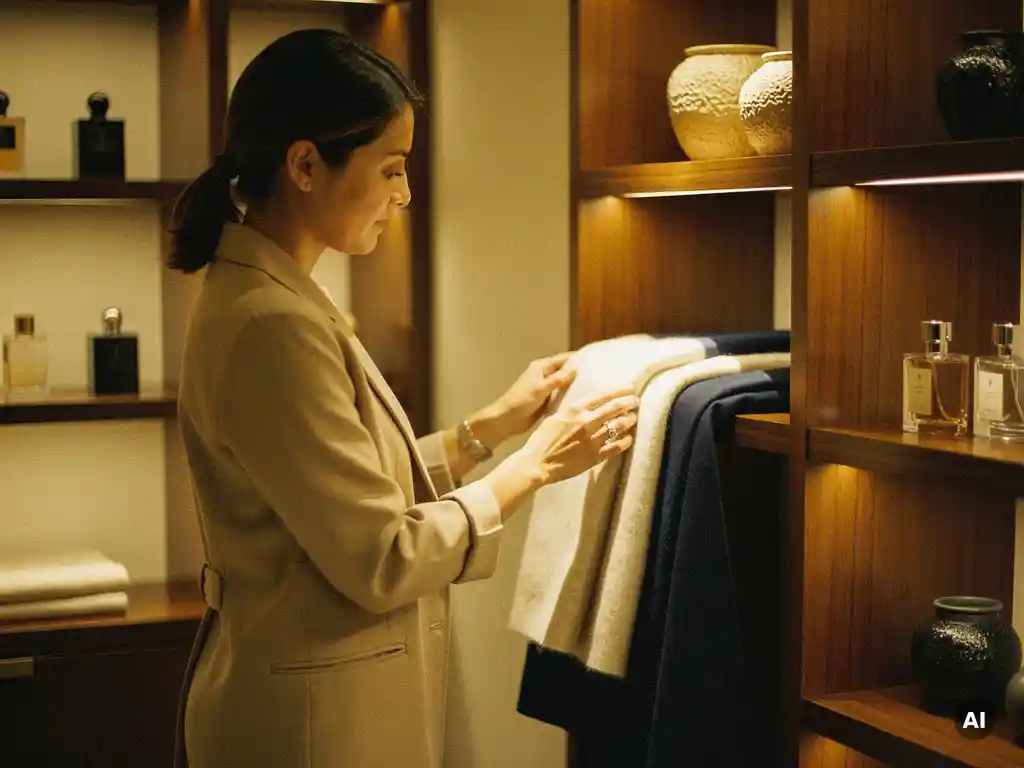
Lifestyle brands create emotional connections in store by designing physical environments that reflect their brand values, tell authentic stories, and engage shoppers through sensory and social experiences. Rather than simply displaying products, the most effective lifestyle brands use space, materials, staff, and narrative to make customers feel something: belonging, aspiration, identity. The sections below address the specific techniques, design principles, and measurement approaches that drive this emotional engagement.
Lifestyle brands trigger emotional responses in store through a combination of sensory design, spatial storytelling, and carefully curated brand moments. Scent, lighting, sound, texture, and colour all activate emotional memory and influence mood before a customer consciously engages with any product. When these elements align with a consistent brand identity, the cumulative effect is a powerful emotional signal.
The most effective techniques include:
Each technique works because it reduces the psychological distance between the customer and the brand, making the in-store emotional experience feel personal rather than transactional.
Store design communicates brand identity and values through every physical decision made in the space, from the materials used in fixtures to the flow of the floor plan. The built environment functions as a three-dimensional brand statement, and customers read it intuitively. A brand that values craftsmanship, for instance, will express that through natural materials, visible joinery, and restrained displays rather than high-gloss surfaces and dense product density.
Colour palettes establish emotional tone immediately. Warm tones suggest approachability and warmth; cooler, minimal palettes signal precision and exclusivity. Typography, signage hierarchy, and the proportion of negative space all reinforce whether a brand positions itself as democratic or premium, functional or aspirational.
Fixture design is particularly significant in emotional retail design. Bespoke display structures signal investment and intentionality: they tell the customer that this brand cares about how it presents itself. Off-the-shelf fixtures, by contrast, can undermine even the strongest brand identity. Brands that invest in purpose-built retail environments consistently achieve stronger emotional brand connection because the physical space itself becomes an expression of what the brand stands for.
Storytelling in retail displays strengthens brand loyalty because narrative creates emotional investment. When a display communicates where a product comes from, the values behind it, or the life it enables, customers move from evaluating a product to identifying with a brand. That shift from transaction to identity is the foundation of loyalty.
Effective retail brand storytelling operates at multiple levels simultaneously. At the macro level, the overall store environment tells the brand's origin story or mission. At the mid level, category displays frame product ranges within a coherent narrative. At the micro level, individual product fixtures provide detail: ingredient sourcing, craft process, or the human story behind the brand.
This layered approach means that a customer who spends two minutes in a store absorbs a different depth of story than one who spends twenty, but both leave with a stronger emotional connection than they would from a purely functional display. Brands that invest in narrative-driven display design consistently see higher repeat visit rates and stronger word-of-mouth advocacy because the story gives customers something worth sharing.
Staff behaviour is one of the most direct drivers of emotional brand connection in store because human interaction is irreplaceable as an emotional signal. A well-designed store creates the conditions for connection; staff determine whether that connection is realised. A single authentic, knowledgeable interaction can elevate a customer's perception of a brand more than any fixture or display.
Lifestyle brands with strong in-store emotional experiences train staff not just on product knowledge but on brand values and customer empathy. The goal is for every interaction to feel consistent with the brand's identity, whether that identity is warm and inclusive, expert and precise, or adventurous and energetic.
Staff behaviour also amplifies the impact of the physical environment. When a team member draws attention to a display, explains the story behind a product, or personalises a recommendation, they activate the emotional cues that the store design has already established. The physical and human dimensions of the in-store customer experience are most powerful when they operate in alignment.
Lifestyle brands use limited editions and exclusivity to deepen in-store emotion by creating a sense of urgency, privilege, and belonging that cannot be replicated online. Scarcity is a powerful emotional trigger: when a customer knows that a product or experience is available only in a specific location or for a limited time, the act of purchasing carries additional meaning. It becomes a statement of identity and timing, not just a transaction.
In-store exclusivity strategies that generate strong emotional responses include:
Each of these approaches works because it positions the physical store as the primary site of brand culture: a place where the most meaningful brand moments happen first.
Retailers can measure the emotional impact of an in-store experience through a combination of behavioural data, direct customer feedback, and commercial performance indicators. No single metric captures emotional response fully, but a structured combination of measures provides a reliable picture of how effectively a store is creating emotional brand connection.
Practical measurement approaches include:
The most useful measurement frameworks align these data points with specific design or display changes, allowing brands to test and refine their in-store emotional strategy with commercial rigour.
Pivotal is a full-service retail design partner that helps lifestyle brands translate identity and values into physical in-store experiences that resonate emotionally with shoppers. Working across the complete project lifecycle, Pivotal delivers:
For lifestyle brands looking to strengthen their in-store emotional experience and stand out in a competitive physical retail environment, Pivotal provides the design intelligence, manufacturing capability, and installation expertise to make it happen. Contact the Pivotal team today to discuss how your brand's in-store presence can be transformed.
Budget varies significantly depending on store size, fixture complexity, and the scope of bespoke elements, but the most important principle is to prioritise the highest-impact touchpoints first. Entry zones, hero product displays, and staff interaction areas typically deliver the strongest return on emotional investment. Working with a full-service retail design partner like Pivotal allows brands to prototype and test key elements before committing to a full rollout, reducing financial risk while validating emotional impact.
Consistency across locations requires a clearly documented brand experience framework that covers spatial zoning principles, material specifications, sensory guidelines (scent, sound, lighting), and staff behaviour standards. Bespoke fixtures designed and manufactured centrally then installed by a dedicated team ensure that the physical environment is replicated accurately at every site. The brands that achieve the strongest multi-location consistency treat their in-store experience as a system, not a one-off design project.
The most frequent mistake is prioritising visual aesthetics over sensory coherence — a store can look beautiful in photographs but feel flat or disconnected in person if scent, sound, and texture are not aligned with the brand identity. Another common error is neglecting staff training, so that a well-designed environment is undermined by interactions that feel off-brand. Finally, many brands underestimate the importance of negative space: overcrowding fixtures with product reduces the aspirational quality of the display and weakens the emotional signal the space is trying to send.
Absolutely — in fact, smaller stores often have an advantage because every square metre can be intentional and immersive without the operational complexity of a large format. The key is to focus emotional investment on a small number of high-impact moments: a signature entry experience, one hero display, and a strong sensory layer such as a distinctive scent or curated soundtrack. Independent brands frequently achieve deeper emotional resonance than larger retailers precisely because their identity is more specific and their storytelling more personal.
The core spatial and fixture design should be stable enough to build brand recognition over time, but surface-level storytelling elements — seasonal displays, campaign-driven installations, and limited-edition fixtures — should rotate regularly to give returning customers a reason to re-engage. A practical approach is to plan a tiered refresh calendar: minor seasonal updates every 8–12 weeks, mid-tier campaign activations two to four times a year, and a full environmental review every two to three years or when brand positioning evolves significantly.
The most effective approach is to treat the physical store as the place where the brand's digital identity becomes tangible, rather than trying to replicate online experiences in a physical space. Visual identity, tone of voice, and narrative themes should be consistent across both channels, but the store should offer something the digital experience cannot: sensory depth, human connection, and the ability to interact with products physically. Brands that use their online channels to build anticipation for in-store exclusives or events create a virtuous loop where each channel strengthens the emotional impact of the other.
Emotional experience strategy should be the starting point, not an afterthought — ideally defined before any spatial planning, fixture specification, or material selection begins. The emotional journey you want customers to feel should drive every downstream design decision, from the flow of the floor plan to the height of the fixtures to the warmth of the lighting. Brands that bring in retail design partners at the concept stage consistently achieve more coherent emotional outcomes than those who attempt to layer experience onto a space that was designed around operational or commercial priorities first.