Creating an effective in-store experience for a new product launch requires a coordinated approach that combines compelling display design, strategic placement, and clear shopper communication — all aligned with the brand identity of the product being introduced. The most successful launches treat the physical retail environment as an active selling tool, not a passive backdrop. The questions below address the key decisions brands face when planning a product launch in-store.
A product launch display stands out through a combination of distinctive visual design, clear brand messaging, intuitive product presentation, and purposeful use of materials. The display must communicate the product's value proposition within seconds, drawing shoppers in before they have consciously decided to engage. Structural originality, strong graphic hierarchy, and considered lighting all contribute to cut-through at the point of purchase.
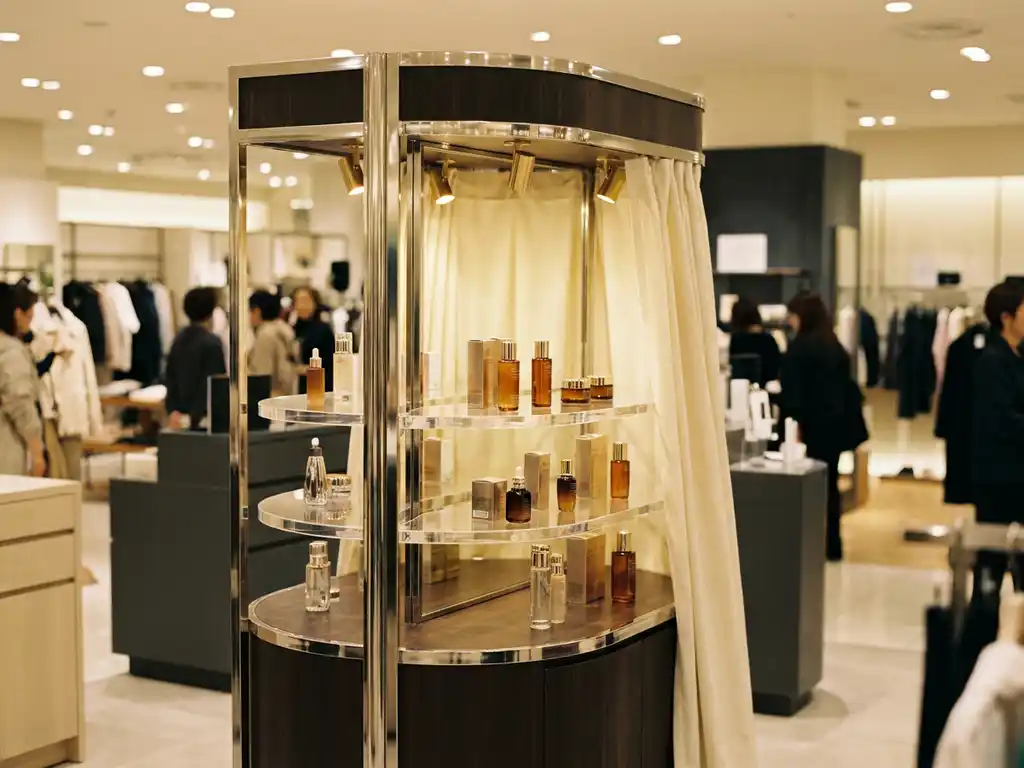
Beyond aesthetics, the most effective launch displays are engineered around shopper behaviour. They position key product information at natural eye level, create a logical flow from awareness to consideration to purchase, and use tactile finishes or interactive elements to invite physical engagement. For premium products, material quality signals brand value as powerfully as any graphic. A display built from high-grade acrylic, metalwork, or joinery communicates a level of brand investment that shoppers register instinctively.
Retailers also respond to displays that integrate cleanly into their store environment. A launch fixture that respects the retailer's planogram requirements and store aesthetic is far more likely to be positioned prominently and maintained correctly by store teams.
In-store experience directly shapes shopper behaviour at launch by creating the conditions for discovery, trial, and purchase. A well-designed retail environment removes friction from the decision-making process, builds immediate brand credibility, and gives shoppers a reason to stop, engage, and buy at the precise moment the product is new and generating interest.
Physical retail remains uniquely powerful at product launch because it activates multiple senses simultaneously. Shoppers can see, touch, and in many categories, smell or test a new product in a way no digital channel replicates. This sensory engagement accelerates purchase confidence, particularly for categories where tactile evaluation matters, such as beauty, wellness, and personal care.
The launch window is also when shopper curiosity is highest. A display that capitalises on this moment with strong in-store marketing, clear benefit communication, and an experience that feels curated rather than generic can convert browsing shoppers into first-time buyers. First impressions formed at launch often determine long-term brand perception, making the quality of the in-store experience a strategic commercial priority, not a cosmetic one.
A temporary retail display is designed for a defined promotional period, typically aligned to a campaign window, seasonal push, or initial launch phase. A permanent display is built to remain in-store as an ongoing brand fixture, integrated into the retailer's category layout. The key differences lie in material specification, structural complexity, cost, and intended lifespan.
Temporary displays, often referred to as point of sale or POS units, are typically constructed from lighter materials such as corrugated card, foamboard, or entry-level acrylic. They are cost-effective to produce at volume, straightforward to install and remove, and well-suited to brands testing a new product in a limited number of doors before committing to a wider rollout. Their shorter lifespan does not diminish their commercial impact when designed well.
Permanent fixtures demand a higher specification. They are built from durable materials, such as hardwood, engineered timber, metal, or high-grade acrylic, and are designed to withstand daily shopper interaction over an extended period. For a new product launch that is intended to establish a long-term brand presence within a retailer, a permanent display signals commitment and elevates brand perception. The investment is higher, but the commercial return compounds over time.
Many brands take a phased approach: launching with a temporary display to generate initial awareness and sell-through, then transitioning to a permanent fixture once the product has proven its retail performance.
An effective brief for a retail design agency should cover the product being launched, the retail environment it will live in, the target shopper, the brand guidelines it must adhere to, the retailer's installation requirements, the budget range, and the timeline from brief to in-store date. The more specific and complete the brief, the faster and more accurately the agency can develop concepts that are commercially viable.
Key information to include in a launch display brief:
A well-structured brief reduces revision cycles, protects the timeline, and gives the design team the creative and commercial context they need to develop solutions that work in the real retail environment, not just on screen.
The timeline from brief to in-store installation for a product launch display typically ranges from six to sixteen weeks, depending on the complexity of the design, the volume of units required, and the lead times for materials and manufacturing. Simpler temporary POS solutions can move faster, while bespoke permanent fixtures with custom fabrication require more time.
A realistic project timeline breaks down broadly as follows:
Brands that engage a retail design partner early in the product development cycle consistently achieve better outcomes. Rushing the later stages of the process, particularly manufacturing and installation, introduces risk to the quality of the finished display and the reliability of the launch date.
Sustainability is now a commercial requirement in in-store display design, not an optional consideration. Retailers, particularly large-format chains and pharmacy groups, increasingly require brands to demonstrate responsible material sourcing, waste reduction, and end-of-life disposal planning as part of the approval process for new fixtures. Brands that cannot provide evidence of sustainable practices face growing barriers to retail placement.
In practice, sustainability in launch displays involves selecting materials with lower environmental impact, designing for disassembly and recyclability, reducing the use of single-use plastics, and working with manufacturers who operate responsible production processes. For temporary displays, the emphasis is on recyclable substrates and minimal waste in production. For permanent fixtures, durability itself is a sustainability metric: a display built to last five years has a significantly lower environmental footprint than one replaced annually.
Shopper expectations are also shifting. Consumers in 2026 are increasingly attentive to the environmental credentials of the brands they choose, and a display that communicates sustainability values through its materials and construction reinforces brand trust at the point of purchase.
Pivotal is a UK-based, full-service retail design company that manages the entire product launch display process from initial concept through to on-site installation. Working with brands across beauty, health, wellness, and lifestyle sectors, Pivotal delivers bespoke retail display solutions that connect shoppers with new products in a physical, human-centric way.
Key capabilities Pivotal brings to a new product launch include:
In 2025, Pivotal installed over 2,000 new retail and brand experiences, with in-store engineers visiting a store every 34 minutes. If you are planning a product launch and need a retail design partner with the capability to deliver at scale, get in touch with Pivotal to discuss your brief.