Designing a retail display for a luxury brand requires a precise balance of material quality, spatial restraint, and brand coherence. Every element — from the choice of substrate to the angle of a spotlight — must reinforce the brand's positioning and justify the premium price point it commands. The questions below unpack the key decisions that separate a genuinely luxury in-store display from one that merely looks expensive.
A luxury retail display feels genuinely luxurious when every design decision communicates value, restraint, and intentionality. Luxury is not about excess — it is about precision. The display must signal that significant thought, craft, and investment have gone into its construction, creating an immediate sensory impression that elevates the product it presents.
The most effective luxury displays share several defining characteristics. They use negative space deliberately, allowing products to breathe rather than crowding shelves. They maintain strict material consistency, so no element feels out of place or budget-constrained. And they create a clear hierarchy — the product is always the focal point, with every structural and graphic component in service of that goal.
Tactile quality is equally important. A shopper who touches the edge of a display unit, even unconsciously, registers whether it feels substantial or flimsy. Weight, finish, and precision joinery all communicate brand authority before a single word of copy is read.
Luxury retail displays typically use materials such as brushed or polished metals, solid timber and veneered joinery, high-grade acrylic, lacquered MDF, marble-effect substrates, and premium glass. Material selection is driven by the brand's aesthetic language and the environment in which the display will be placed, whether in a pharmacy, department store, or specialist boutique.
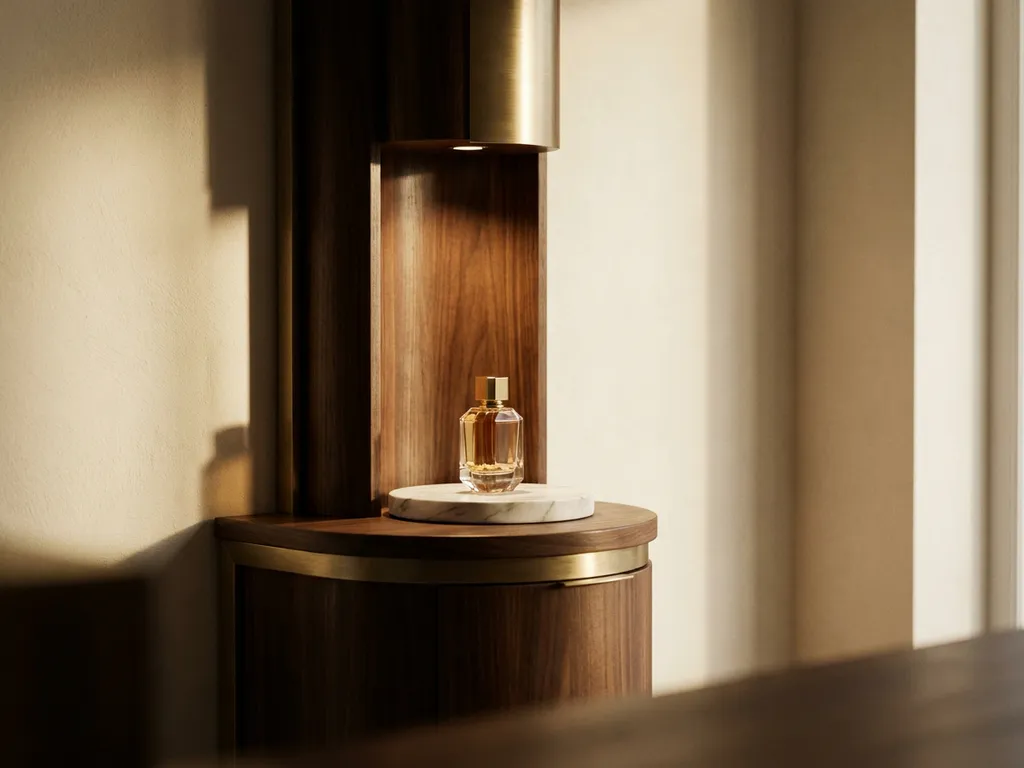
Metal finishes — particularly brass, chrome, and matte black powder-coat — are widely used in luxury POS design because they age well, photograph cleanly, and carry strong associations with craftsmanship. Timber and joinery bring warmth and tactility, making them a frequent choice for beauty, wellness, and lifestyle brands seeking an artisanal feel.
Acrylic, when used at sufficient thickness and with polished edges, can deliver a premium result — particularly for transparent or backlit applications. The critical distinction is in the specification: a luxury retail fixture uses materials at a gauge and finish that would not be considered for a standard commercial display. Moulding techniques also allow for complex curved forms that add sculptural quality to a unit, further reinforcing the sense of bespoke manufacture.
Brand identity translates into a physical display through the disciplined application of visual language — colour, typography, form, texture, and proportion — in three-dimensional space. A luxury brand in-store display is not a decorated shelf unit; it is an architectural expression of the brand, built to the same standards as any other brand touchpoint.
The process begins with a thorough understanding of the brand's existing identity system: its colour palette, material preferences, typographic hierarchy, and the emotional associations it seeks to create. These inputs inform every structural and graphic decision, from the profile of a display's edge detail to the weight of its branded signage.
Consistency is the defining test. If a shopper already knows the brand from its packaging, advertising, or digital presence, the display should feel immediately familiar — an extension of that world rather than a departure from it. Brands that treat their in-store display as a separate creative exercise, disconnected from their broader identity, typically produce displays that feel generic regardless of the materials used.
Lighting plays a critical role in luxury display design by directing attention, enhancing material quality, and creating the atmosphere that separates a premium in-store experience from a standard retail environment. In a luxury context, lighting is a design element in its own right, not an afterthought.
Integrated LED lighting within a display unit allows for precise illumination of hero products, creating contrast and depth that draws the shopper's eye. Warm white light tends to suit beauty, fragrance, and skincare displays, where it enhances skin tone associations and creates a flattering, aspirational environment. Cooler, more clinical light suits technology or personal care categories where clarity and precision are the desired cues.
Backlighting through frosted acrylic panels, edge-lit graphic panels, and concealed under-shelf strips are all techniques used in high-end retail display design to create a sense of depth and craft. The key principle is that the light source itself should rarely be visible — the effect should be felt, not traced back to a visible fitting.
Balancing exclusivity with shopper engagement in a luxury in-store display means creating an environment that feels aspirational and considered, while still inviting interaction. A display that is too closed or precious will deter shoppers; one that is too accessible risks undermining the brand's premium positioning.
The most effective luxury displays manage this balance through considered zoning. Hero products are elevated, spotlit, and presented in a way that signals they are not everyday commodities — but they remain reachable, testable, and discoverable. Testers, sampling zones, and tactile surfaces are integrated into the design in a way that feels curated rather than promotional.
Shopper insight plays a meaningful role here. Understanding how a target shopper moves through a category, what they reach for first, and how long they dwell at a fixture informs the spatial logic of the display. A luxury brand in-store experience should feel effortless to navigate, even when the underlying design is highly structured.
A brief for a luxury retail display should include the brand's identity guidelines, target retail environment, product range and hierarchy, budget parameters, installation timeline, and any compliance requirements set by the retailer. A detailed brief is the single most important factor in ensuring the final display delivers on the brand's expectations.
Beyond the basics, a strong brief for a luxury retail display should address the following:
A brief that addresses all of these points gives a design and manufacturing partner the information needed to develop concepts that are commercially viable, brand-accurate, and executable at the required quality level — without costly revisions later in the process.
Pivotal is a full-service retail design company that manages the complete lifecycle of a luxury in-store display — from initial concept and CAD development through to manufacturing, installation, and compliance. For brands seeking a single, accountable partner for their luxury retail fixtures, Pivotal offers:
In 2025, Pivotal installed over 2,000 new retail and brand experiences, with 15 new global brands choosing Pivotal as their in-store partner. That scale of delivery, combined with a design-led approach, makes Pivotal a trusted partner for brands where in-store presence is a strategic priority. To discuss your next luxury display project, connect with the Pivotal team directly.