
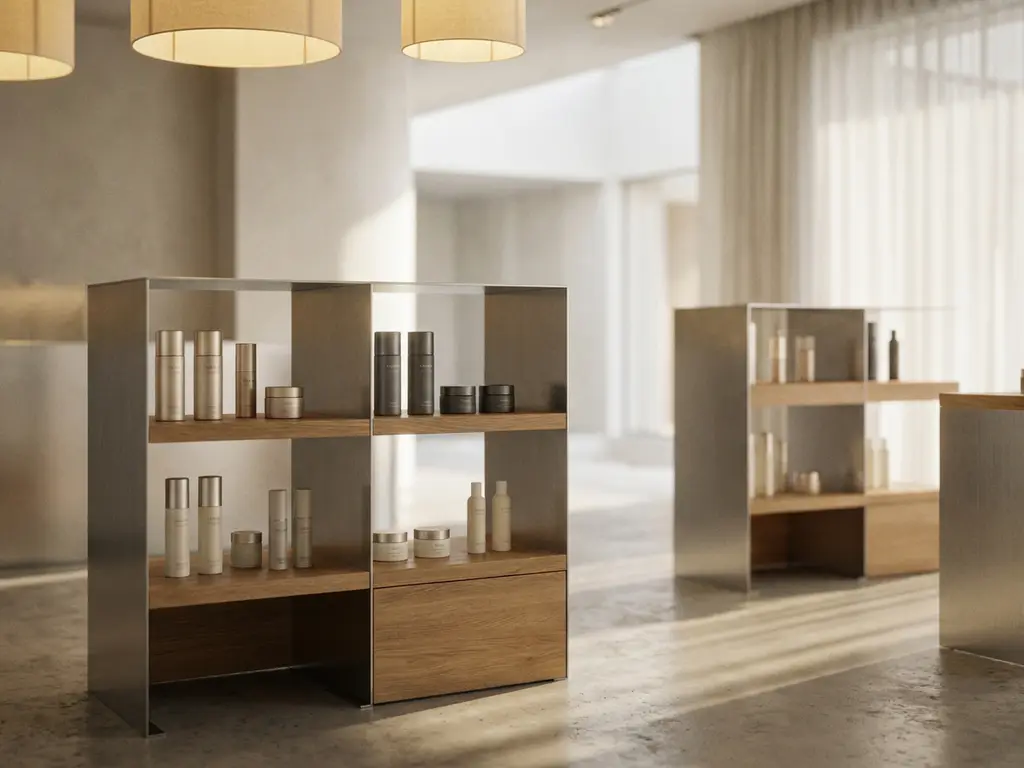
A retail display design is future-proof when it is built to adapt — to changing campaigns, evolving shopper behaviour, shifting brand priorities, and tightening sustainability requirements. Rather than treating a display as a single-use asset, future-proof design treats the fixture as a long-term investment that can be updated, reconfigured, or repurposed without a complete rebuild. The sections below address the most important decisions that determine whether a display remains relevant for months or years to come.
A future-proof retail display design is one that remains commercially effective beyond its initial deployment. It achieves this through a combination of modular construction, durable material specification, adaptable graphic formats, and alignment with category strategy rather than short-term campaign cycles. Longevity is not accidental — it is engineered from the brief stage.
Several distinct factors contribute to a display's ability to remain relevant over time. These include the physical structure's capacity to be reconfigured, the quality and sustainability of the materials used, and the degree to which the design anticipates future shopper expectations. When these elements are considered together at the outset, brands avoid the cost and disruption of repeated replacement and gain a fixture that continues to deliver return on investment long after installation.
The most common reason retail displays become obsolete prematurely is that they were designed around a specific campaign rather than a broader category need. A display built exclusively around a seasonal promotion has a fixed lifespan. One built around a product category, with swappable graphic panels and adjustable shelving, can serve a brand across multiple campaigns and product launches without structural change.
Modular retail display design extends in-store display longevity by allowing individual components to be updated, replaced, or rearranged without replacing the entire fixture. A modular structure separates the permanent frame from the variable elements — such as shelving units, graphic panels, and product holders — so that changes in product range or brand messaging require only targeted modifications rather than full rebuilds.
From a commercial standpoint, modularity significantly reduces the cost of maintaining a consistent in-store presence across multiple retail environments. A brand operating across pharmacy chains, department stores, and supermarkets may require slightly different configurations in each environment. A modular system accommodates those variations from a single base design, reducing both manufacturing costs and installation time.
Modular design also supports phased rollouts. A brand launching a new product line can introduce updated components into existing fixtures rather than commissioning entirely new displays. This approach protects the initial capital investment while keeping the in-store presence current and aligned with evolving brand strategy.
Material choice is one of the most decisive factors in retail fixture design longevity. High-traffic retail environments subject displays to continuous physical contact, cleaning, and repositioning. Materials that are not specified for these conditions will deteriorate quickly, undermining both the aesthetic quality of the display and the brand image it represents.
Durable materials such as powder-coated steel, solid acrylic, and quality-grade joinery maintain their appearance under sustained use. In contrast, lower-cost alternatives — thin-gauge plastics, unfinished MDF, or lightweight laminates — may be appropriate for short-term temporary displays but are not suitable for permanent or semi-permanent fixtures where longevity is a requirement.
Material selection also affects the display's capacity to be repurposed. Fixtures constructed from robust, standardised materials are far more likely to be refurbished or adapted for a second lifecycle than those built from single-use substrates. This consideration connects directly to both cost efficiency and sustainability objectives, which are increasingly central to retail POS design briefs in 2026.
Retail display design adapts to changing shopper behaviour by building in flexibility at the structural and graphic level, and by grounding the original brief in shopper insight rather than assumption. Displays designed with a fixed interpretation of how shoppers will interact with them are the most vulnerable to obsolescence as behaviour evolves.
Shopper behaviour in physical retail continues to shift in response to broader cultural and technological change. Shoppers increasingly research products digitally before entering a store, which means the role of the in-store display has moved from pure information delivery toward confirmation, experience, and emotional connection. Displays that provide a tactile, engaging, and brand-coherent experience are more likely to remain effective as this trend continues.
Designing for adaptability means building displays that can accommodate new product formats, updated messaging hierarchies, or revised navigation logic without structural alteration. Adjustable shelving heights, interchangeable header panels, and flexible product-holding systems all contribute to a fixture's capacity to respond to shifts in how shoppers engage with a category.
A retail display should be designed for a category first, with campaign-level flexibility built in as a secondary layer. Category-led design produces a fixture that serves the brand's long-term shelf presence and product range, while campaign-specific elements — such as seasonal graphics, promotional messaging, or limited-edition product holders — are treated as interchangeable components within that permanent structure.
Campaign-only displays have a defined end date. Once the promotion concludes, the display is either removed or replaced, generating waste and cost. A category display, by contrast, remains in situ and continues to drive brand visibility and shopper engagement between campaign peaks. The financial case for category-led design is straightforward: the capital cost of the fixture is amortised across multiple campaign cycles rather than a single activation.
This does not mean campaign displays have no place in a retail strategy. Temporary promotional units serve a specific purpose, particularly for product launches or high-traffic seasonal periods. The important distinction is that temporary displays should be specified as such from the outset, with material and construction choices that reflect their intended lifespan, rather than permanent fixtures being repurposed beyond their designed life.
Sustainability is a structural requirement of future-proof retail display design, not an optional addition. Retailers and brand owners face increasing pressure from both regulatory frameworks and consumer expectation to demonstrate responsible sourcing, reduced material waste, and end-of-life accountability in their in-store environments. A display that cannot meet these standards will face growing barriers to placement in major retail environments.
Sustainable retail display design operates across three stages: material selection, manufacturing process, and end-of-life planning. At the material stage, this means specifying recycled content, responsibly sourced timber, or materials with established recycling pathways. At the manufacturing stage, it means minimising waste through precision cutting, efficient production planning, and the avoidance of over-specification. At the end-of-life stage, it means designing displays that can be disassembled, refurbished, or recycled rather than sent to landfill.
Longevity itself is a sustainability outcome. A display that remains in-store for three years instead of one generates significantly less material waste and requires fewer resources to maintain the brand's in-store presence. Future-proof design and sustainable design are, in this respect, the same objective approached from different directions. Brands that commission long-lasting retail fixtures are simultaneously reducing their environmental footprint and improving their return on investment.
Pivotal is a full-service retail design company that partners with brands to create in-store display solutions built for long-term commercial performance. From initial concept through to manufacture and installation, Pivotal's approach integrates every factor that determines whether a display remains effective beyond its first deployment.
In 2025 alone, Pivotal installed over 2,000 new retail and brand experiences, with in-store engineers visiting a store every 34 minutes. That operational scale reflects a depth of real-world retail knowledge that directly informs every design decision. If your brand is ready to invest in future-proof retail display design, speak to the Pivotal team today.