
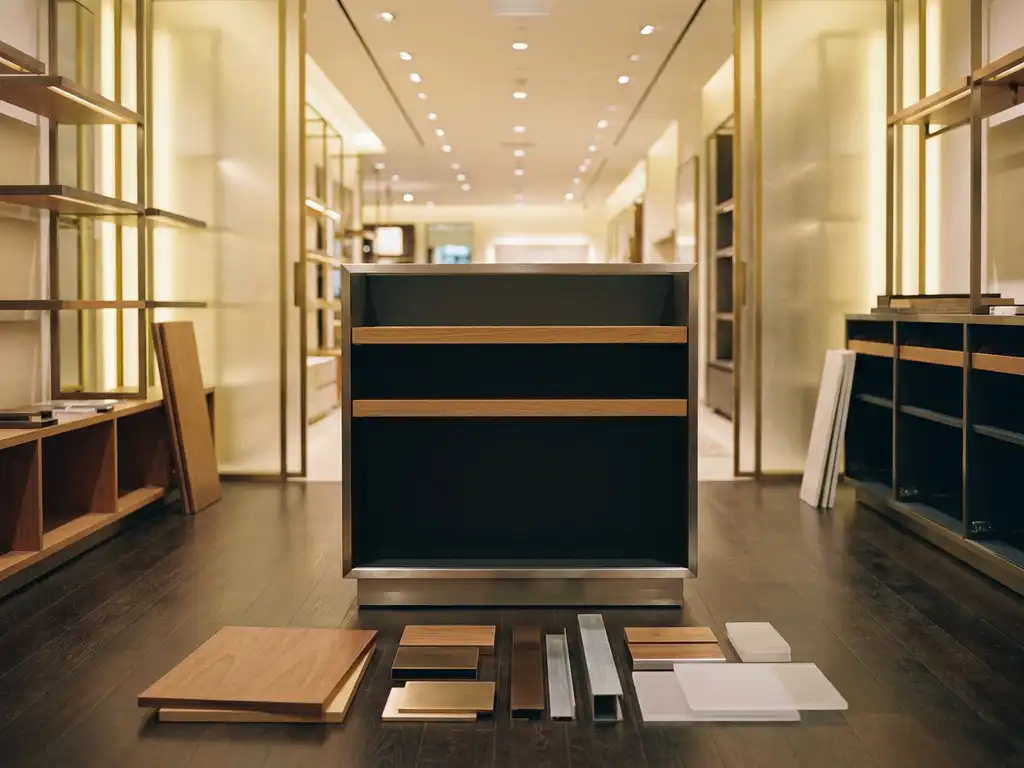
Future-proofing a visual merchandising strategy in 2026 means building flexibility, shopper relevance, and sustainability into every display decision — not just responding to trends as they emerge. Brands that treat visual merchandising as a long-term strategic asset, rather than a series of short-term campaigns, consistently outperform those that react rather than plan. The questions below unpack the key decisions shaping effective in-store strategy this year.
Visual merchandising in 2026 is defined by the convergence of physical experience, brand storytelling, and operational efficiency. Retailers and brand owners are moving away from generic, category-standard displays toward environments that create a genuine emotional connection at the point of purchase. The emphasis is on purposeful design that earns its space on the shop floor.
Several shifts are reshaping how brands approach in-store display this year. Fixture design is becoming more modular, allowing brands to adapt displays across different retail formats without a full redesign. Shopper engagement is being prioritised over product volume — fewer, better-presented SKUs are outperforming cluttered bays. And the integration of brand identity into physical structure, rather than relying on print graphics alone, is becoming a key differentiator in competitive retail environments.
For brand owners operating across pharmacy, department store, or specialist retail channels, these changes require a more strategic approach to how display briefs are written and how supplier relationships are structured.
Shopper behaviour directly determines which visual merchandising decisions drive conversion and which are ignored. Understanding how shoppers navigate a category, what draws their attention, and what prompts a decision to purchase should sit at the foundation of every display brief. Merchandising that is designed without this insight tends to serve the brand's preferences rather than the shopper's needs.
In 2026, shoppers are more deliberate. Research conducted before entering a store means that by the time a customer reaches a fixture, they often have a shortlist in mind. The role of the display shifts from introducing a product to confirming a decision — or disrupting it in favour of a better-presented alternative. This places significant weight on clarity of communication, ease of navigation, and the quality of the physical experience at the fixture itself.
Shopper insight should inform decisions at every stage of the design process, from the height and orientation of key messaging to the tactile quality of materials used in premium categories. Brands that invest in understanding dwell time, sightlines, and purchase triggers consistently produce displays that perform better across retail partners.
A genuinely future-proof visual merchandising strategy is one that can adapt to changing retail conditions, new product ranges, and evolving shopper expectations without requiring a complete rebuild. It is built on modular thinking, material quality, and a design process that accounts for long-term use rather than a single campaign cycle.
Future-proofing begins at the brief stage. Brands that define not just the immediate requirement but the likely evolution of that requirement over two to three years give their design and manufacturing partners the context needed to build in flexibility. A fixture designed to accommodate range extensions, for example, avoids the cost and disruption of a full replacement when a new product line launches.
Three principles consistently distinguish durable strategies from short-term ones:
Brands that treat their in-store display investment as infrastructure rather than expenditure are better positioned to maintain a consistent presence across retail partners as conditions change.
Sustainability requirements are now shaping material selection, production methods, and end-of-life planning for every display and fixture brief. Retailers are increasingly imposing sustainability criteria on the brands they stock, meaning that environmentally responsible design is no longer optional for brands seeking to maintain or expand their in-store presence.
In practical terms, this means designers and manufacturers must consider the full lifecycle of a display from the outset. Material choices are evaluated not just on aesthetics and durability but on recyclability, recycled content, and the carbon footprint of production. Joinery and woodwork from certified sustainable sources, reduced use of single-use plastics, and designs that facilitate disassembly and material recovery are all becoming standard expectations rather than differentiators.
For brand owners, sustainability requirements also affect how display longevity is planned. A fixture designed to last three to five years, with components that can be updated rather than replaced entirely, delivers better environmental performance than an annual replacement cycle. This aligns commercial and environmental interests — reducing both waste and long-term procurement cost.
A brand should refresh its in-store fixtures when the underlying structure remains fit for purpose but surface elements — graphics, colour, finish, or product configuration — no longer reflect current brand positioning or range requirements. A full redesign is warranted when the fixture's structural logic no longer serves the shopper journey, the retail environment has changed significantly, or the brand itself has undergone a fundamental repositioning.
The decision is primarily commercial. A refresh is lower cost and faster to execute, making it appropriate for brands managing frequent campaign cycles or seasonal updates. However, a refresh applied to a structurally compromised or poorly performing fixture delays rather than resolves the underlying problem — and accumulates cost over time.
The fixture footprint still works within the allocated retail space. The structural materials are in good condition. Shopper navigation through the fixture is logical. The primary issue is visual rather than functional — outdated graphics, an old brand identity, or a product range that has grown but can still be accommodated within the existing structure.
The fixture was built for a product range or retail format that no longer exists. Retailer compliance requirements have changed and the current structure cannot be modified to meet them. Shopper engagement data or sales performance indicates that the fixture is underperforming structurally, not just visually. A brand relaunch or category expansion requires a fundamentally different approach to how product is presented and communicated.
An end-to-end retail design partnership plays a central role in long-term visual merchandising strategy by removing the fragmentation that occurs when design, manufacturing, and installation are managed through separate suppliers. When a single partner holds accountability across the full project lifecycle, strategic decisions made at concept stage are carried through accurately to the finished fixture on the shop floor.
Fragmented supply chains introduce risk at every handover point. A design produced by one agency, manufactured by another, and installed by a third is subject to interpretation errors, compliance gaps, and timeline delays that erode both quality and commercial performance. An integrated partner that employs its own fitters and manages production in-house can maintain design intent from brief to installation.
For brands operating across multiple retail partners or managing complex rollouts, this consistency is particularly valuable. Retail environments vary significantly between pharmacy, department store, and grocery formats, and a partner with direct experience across these channels can anticipate retailer-specific requirements before they become problems on site.
Pivotal is a UK-based, full-service retail design company that manages the complete journey from concept through to installed fixture. For brands looking to strengthen their in-store presence with a strategy built for the long term, Pivotal offers:
In 2025 alone, Pivotal installed over 2,000 new retail and brand experiences, with in-store engineers visiting a store every 34 minutes. That operational scale, combined with strategic design capability, makes Pivotal a trusted partner for brands serious about in-store performance. To discuss how your visual merchandising strategy can be built to last, get in touch with the Pivotal team.