
To future-proof an in-store brand experience strategy, brands must build adaptability into every layer of their retail presence — from fixture design and shopper insight processes to sustainability commitments and review cycles. The goal is not to predict every shift in shopper behaviour, but to create a retail framework that can evolve without requiring a complete rebuild each time the market changes. The questions below address the key strategic pillars that determine whether a physical retail experience remains competitive over time.
Future-proofing a retail brand experience means designing an in-store strategy that remains effective, relevant, and commercially strong as shopper expectations, retail environments, and market conditions evolve. Rather than optimising for a single moment in time, a future-proof approach builds in the flexibility to adapt displays, messaging, and formats without starting from scratch each cycle.
For brand owners and retail experience managers, this translates into practical decisions made at every stage of the design and development process. It means choosing materials and display structures that can be updated or reconfigured, investing in shopper insight that informs long-term direction, and working with retail design partners who understand both the creative and operational demands of physical retail. A future-proof in-store brand experience strategy does not eliminate the need for periodic refresh — it ensures that refreshes are efficient, cost-effective, and strategically coherent.
Several converging trends are reshaping what shoppers expect from a physical retail environment in 2026. Shoppers increasingly expect in-store experiences to be intuitive, visually engaging, and values-aligned — meaning the aesthetic quality of a display, the clarity of its messaging, and the environmental credentials of its materials all factor into brand perception at the point of purchase.
Key trends influencing the physical retail future include:
Understanding these trends is not sufficient on its own. The strategic value lies in translating them into specific design and display decisions that align with a brand's identity and commercial objectives.
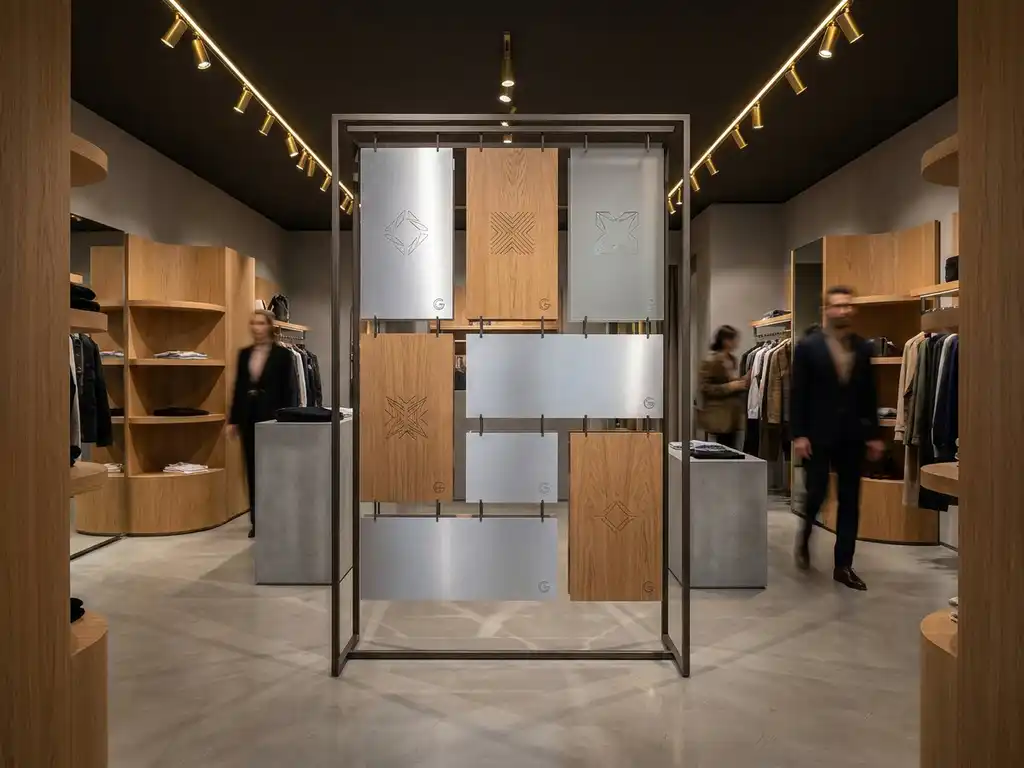
Flexibility in in-store display design is achieved through modular construction, material selection, and a design brief that anticipates future use cases from the outset. A display that can be reconfigured for different product lines, updated with new graphics, or adapted across different retail environments delivers significantly greater long-term value than a fixed, single-purpose unit.
Practically, this means working with designers who approach each brief with longevity in mind. Structural decisions — such as the choice between joinery, metalwork, or acrylic components — should be evaluated not only on aesthetic and cost grounds, but on how easily the unit can be modified or refreshed. Graphic panels that can be swapped without replacing the entire fixture, for example, allow brands to update seasonal messaging or product focus without incurring full production costs.
Rapid prototyping plays an important role here. Testing a display concept at the prototype stage allows brands to identify design limitations before committing to a full production run, reducing the risk of investing in a solution that cannot adapt as requirements change. The most effective retail design future-proofing happens before manufacturing begins, not after.
Shopper insight is the foundation of a durable in-store brand experience strategy. Without a clear, evidence-based understanding of how shoppers navigate retail environments, interact with displays, and make purchase decisions, even the most visually impressive fixture risks missing its commercial purpose.
Long-term retail strategy benefits from shopper insight in two distinct ways. First, it informs the initial design brief — ensuring that display placement, sightlines, messaging hierarchy, and interactive elements are aligned with actual shopper behaviour rather than assumptions. Second, it provides the benchmarks against which future performance can be measured, making it possible to identify when a display is underperforming and why.
Brands that embed shopper insight into their retail experience strategy — rather than treating it as a one-off pre-launch exercise — are better positioned to make incremental improvements that compound over time. This is particularly relevant for brands operating across multiple retail environments, where shopper behaviour may vary significantly between a pharmacy setting and a department store context.
Sustainability is no longer a supplementary consideration in retail display design — it is a strategic requirement for brands that want their in-store presence to remain credible and competitive. A future-proof retail experience integrates sustainable materials, responsible production processes, and end-of-life planning into the design brief from the beginning, rather than retrofitting environmental credentials after the fact.
This matters commercially as well as ethically. Retailers are applying increasing scrutiny to the environmental impact of branded fixtures and displays within their stores, and brand owners face growing pressure to demonstrate that their in-store presence aligns with broader corporate sustainability commitments. Displays built from responsibly sourced materials, designed for disassembly, or manufactured with reduced waste are increasingly a prerequisite for placement in major retail environments.
Sustainability also intersects with the flexibility principle discussed earlier. Displays designed for longevity and reconfiguration inherently generate less waste than those built for a single campaign cycle. Choosing a retail design partner with genuine materials expertise — across options such as sustainably sourced wood, recycled acrylic, and low-impact metalwork — ensures that environmental performance does not come at the expense of aesthetic quality or structural integrity.
A brand should review its in-store strategy when there is a measurable shift in shopper behaviour, a significant change in the competitive retail environment, a new product launch or brand repositioning, or when existing displays are no longer performing against their commercial objectives. In practice, most brands operating in active retail environments benefit from a structured review at least annually.
The trigger for a refresh does not always need to be a problem. Proactive reviews — conducted in response to new shopper insight data, retailer feedback, or emerging category trends — allow brands to make targeted updates before performance declines. This is more cost-effective than waiting for a display to become visibly outdated or commercially ineffective before acting.
Compliance is also a practical driver. Retailers regularly update their fixture guidelines, planogram requirements, and sustainability standards. A brand that reviews its in-store strategy in alignment with these retailer cycles is better positioned to maintain prime placement and avoid costly last-minute modifications.
Pivotal works with brand owners and retail experience managers to design, develop, and deliver in-store display solutions built for long-term commercial performance. As a full-service retail design partner, Pivotal manages the entire project lifecycle — from initial concept and shopper insight through to CAD, prototyping, manufacturing, and on-site installation by their own employed fitters.
For brands looking to future-proof their physical retail presence, Pivotal provides:
Whether you are launching a new product line, refreshing an existing fixture estate, or rethinking your approach to in-store brand experience strategy, Pivotal provides the expertise and capability to deliver. Start the conversation with the Pivotal team today.