
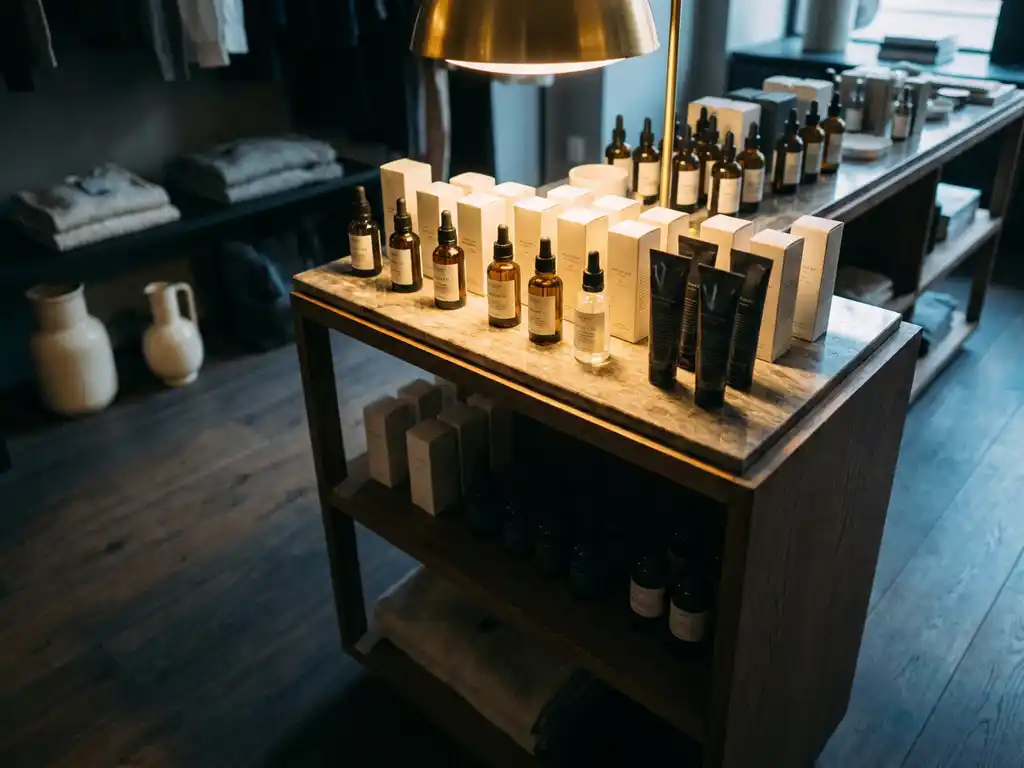
Lighting directly shapes the in-store shopping experience by influencing how shoppers perceive products, navigate spaces, and make purchasing decisions. The right retail lighting design creates atmosphere, directs attention, and reinforces brand identity — all of which drive dwell time and conversion at the point of sale. The sections below address the most important questions brands and retailers should be asking about in-store lighting strategy.
Retail lighting influences shopper behaviour by affecting mood, pace, and product perception. Bright, high-contrast lighting tends to increase alertness and encourage purposeful purchasing, while warmer, softer illumination slows movement and promotes browsing. In-store lighting also signals brand values — a luxury retailer and a discount grocer use light very differently, and shoppers respond to those cues instinctively.
Beyond atmosphere, lighting directly affects where shoppers look and how long they stay. Strategic illumination draws the eye toward hero products, promotional zones, and point of sale displays, effectively guiding the shopper journey without physical barriers. Poorly lit areas, by contrast, are frequently overlooked regardless of the quality of the product on display. For brand owners investing in in-store presence, lighting is not a finishing detail — it is a core element of commercial strategy.
Retail stores typically use a combination of ambient, accent, task, and decorative lighting, each serving a distinct function. Ambient lighting provides the overall base illumination across the sales floor. Accent lighting highlights specific products or displays. Task lighting supports functional areas such as fitting rooms or service counters. Decorative lighting contributes to the brand aesthetic and overall environment.
The most effective retail lighting design layers these types deliberately rather than relying on a single source. The interplay between ambient and accent lighting, in particular, creates the visual hierarchy that guides shoppers through a space and draws attention to priority merchandise. LED technology now dominates across all four categories, offering flexibility in colour temperature, dimming capability, and energy efficiency that previous lamp types could not match.
Colour temperature, measured in Kelvin, determines whether light appears warm, neutral, or cool — and this has a direct impact on how products look and feel to shoppers. Warm light (below 3000K) enriches reds, oranges, and skin tones, making it well suited to beauty, fashion, and food environments. Cool light (above 4000K) enhances whites, blues, and metallics, lending itself to technology, jewellery, and clinical settings.
Choosing the wrong colour temperature can actively work against a product. A skincare range displayed under cool white light may appear clinical rather than premium. A food product under warm amber light may appear more appetising than the same item under harsh fluorescent illumination. For brands operating across multiple retail environments, ensuring that fixtures and displays are designed with lighting conditions in mind is essential to maintaining consistent product presentation.
Ambient lighting is the general, background illumination that ensures the entire retail space is adequately lit for safe navigation and comfortable browsing. Accent lighting is directional and focused, used to draw attention to specific products, displays, or architectural features. The key distinction is function: ambient lighting sets the baseline, accent lighting creates emphasis.
In a well-designed retail environment, ambient lighting alone is insufficient. Without accent lighting, the visual field is flat and undifferentiated — nothing stands out, and shoppers have no visual cues to guide their attention. Accent lighting, typically delivered through spotlights, track lighting, or integrated fixture illumination, creates the contrast that makes a product or display visually compelling. The ratio between ambient and accent light levels determines how dramatic or subtle that contrast appears, and this ratio is a deliberate design decision rather than an afterthought.
Point of sale lighting works by creating a zone of higher brightness or visual contrast around a display, separating it from the surrounding environment and drawing the shopper's eye. This can be achieved through overhead spotlighting directed at the display, integrated lighting built into the fixture itself, or backlighting used to illuminate graphics and brand messaging from behind.
Integrated lighting within the display unit is particularly effective because it places the light source as close to the product as possible, reducing shadows and ensuring consistent illumination regardless of the store's ambient conditions. This approach also gives brand owners greater control over how their products appear across different retail environments, where ambient lighting quality can vary considerably. When designing point of sale displays, considering the lighting strategy from the outset — rather than retrofitting it — produces significantly stronger results in terms of product visibility and shopper engagement.
The primary sustainability considerations for retail lighting are energy consumption, lamp longevity, and end-of-life recyclability. LED lighting has largely addressed the first two: LEDs consume significantly less energy than fluorescent or halogen alternatives and have a considerably longer operational lifespan, reducing both running costs and the frequency of replacement. For brands and retailers with sustainability commitments, specifying LED across all in-store lighting is now a baseline expectation rather than a differentiator.
Beyond the lamp type, sustainability-conscious retail lighting design considers the efficiency of the overall system. Dimming controls, occupancy sensors, and daylight-responsive systems reduce energy use during lower-traffic periods without compromising the shopper experience. Material choices in lighting fixtures and display units also carry environmental implications, and brands working with responsible manufacturing partners can ensure that lighting components are specified and sourced with end-of-life recovery in mind.
Pivotal brings together retail display design, manufacturing, and installation into a single, managed process — ensuring that lighting strategy is considered at every stage, not added as an afterthought. For brands seeking to maximise the impact of their in-store presence, this integrated approach delivers measurable advantages:
In 2025 alone, Pivotal installed over 2,000 retail and brand experiences, with in-store engineers visiting a store every 34 minutes. That operational scale reflects the trust that major consumer brands place in Pivotal's end-to-end capability. To discuss how retail display design can work harder for your brand, get in touch with the Pivotal team today.