
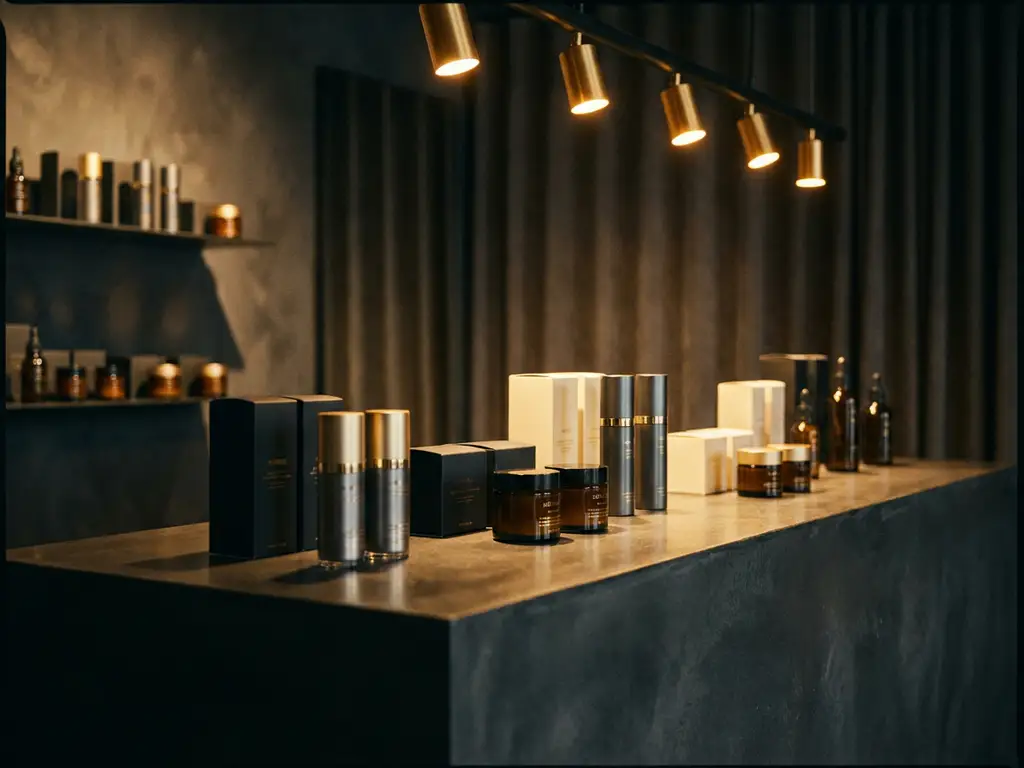
Lighting directly affects visual merchandising by shaping how shoppers perceive products, navigate a store, and make purchasing decisions. The right lighting draws attention to key displays, enhances product appearance, and creates an atmosphere that reinforces brand identity. Used strategically, it is one of the most powerful and cost-effective tools available to retail designers and brand owners.
The impact extends beyond simple illumination. Lighting influences mood, dwell time, and conversion at the point of purchase, making it a core consideration in any serious retail display strategy. The sections below address the most important questions surrounding lighting in visual merchandising, from the types of lighting available to how retailers can align their approach with sustainability goals.
The main types of lighting used in visual merchandising are ambient lighting, accent lighting, task lighting, and decorative lighting. Each serves a distinct function within the retail environment. Ambient lighting provides overall illumination, accent lighting highlights specific products or displays, task lighting supports practical activities such as reading labels, and decorative lighting contributes to atmosphere and brand storytelling.
In practice, effective retail lighting design layers these types to create a coherent and purposeful environment. Ambient lighting establishes the baseline brightness of a store, while accent lighting — typically delivered through spotlights, track lighting, or LED strips — draws the eye to featured products or promotional areas. Decorative lighting, such as pendant fixtures or illuminated signage, reinforces brand identity and contributes to the overall shopping atmosphere.
LED technology now dominates across all four categories. It offers precise control over direction and intensity, performs consistently over long periods, and supports the sustainability commitments that are increasingly central to retail brand values in 2026.
Lighting influences shopper behaviour by directing attention, affecting mood, and shaping the perceived value of products. Brighter lighting in specific zones increases product visibility and encourages shoppers to stop and engage. Lower, warmer lighting in other areas can slow the pace of movement and encourage browsing, which tends to increase dwell time and, by extension, the likelihood of purchase.
Research in retail environments consistently shows that shoppers respond to lighting cues in ways they are largely unaware of. A well-lit display at the point of purchase signals importance and quality. Poorly lit products, by contrast, can appear less appealing regardless of their actual quality or packaging design.
Lighting also plays a role in shaping the emotional tone of a retail space. A pharmacy environment benefits from clean, clinical brightness that communicates trust and efficacy. A premium beauty counter demands warmer, more flattering light that makes both the products and the shopper look their best. Aligning lighting choices with the emotional expectations of the target shopper is a fundamental principle of effective retail display design.
Colour temperature is a measure of the warmth or coolness of a light source, expressed in Kelvin (K). In retail, it matters because it directly affects how products look, how shoppers feel in a space, and whether the store environment aligns with brand positioning. Warm light (below 3,000K) creates an inviting, premium atmosphere, while cool light (above 4,000K) conveys precision, cleanliness, and modernity.
The choice of colour temperature should be deliberate and category-specific. In food retail, warmer tones enhance the appearance of fresh produce and baked goods, making products look more appetising. In health and pharmacy settings, cooler, neutral tones reinforce clinical credibility. In fashion and lifestyle retail, the colour temperature of fitting room and display lighting can significantly affect how clothing colours render, which has a direct impact on purchase confidence.
Consistency matters too. Mismatched colour temperatures across a store create visual incoherence and can undermine the carefully crafted brand identity expressed through fixtures, graphics, and display materials. When commissioning a retail display, specifying the intended lighting environment as part of the design brief ensures that materials, finishes, and colours are selected to perform correctly under the actual in-store conditions.
Lighting interacts with display materials and finishes by altering how colours, textures, and surfaces appear to shoppers. Glossy materials reflect light and can create highlights that draw the eye, while matte finishes absorb light and produce a more understated, premium appearance. Translucent materials such as acrylic can be backlit or edge-lit to create luminous effects that significantly increase visual impact at the point of sale.
This interaction means that the choice of display material cannot be made in isolation from the lighting environment. A metallic finish that looks striking under warm accent lighting may appear flat or cold under fluorescent ambient light. Similarly, a printed graphic that is vibrant in a studio setting may lose contrast and saturation under the specific colour temperature of a particular retail chain.
Experienced retail display designers account for this relationship during the development process. Prototyping and testing displays under representative lighting conditions before full production is a reliable way to avoid costly discrepancies between design intent and in-store reality. Materials including acrylic, metalwork, and printed substrates all behave differently depending on the light source, intensity, and direction they are exposed to.
Products that benefit most from accent lighting at the point of purchase are those where visual appeal, perceived quality, or detail are central to the purchase decision. This includes premium beauty and skincare products, jewellery, watches, spirits and wine, high-end confectionery, and technology accessories. In these categories, accent lighting elevates the product from the surrounding environment and signals that it deserves closer attention.
The principle behind this is straightforward. Shoppers make rapid judgements about product value based on visual cues, and a product that is well-lit appears more considered and desirable than one that sits in ambient shadow. For brands investing in bespoke point of sale displays, integrating accent lighting directly into the fixture amplifies this effect considerably.
Categories where tactile engagement is part of the purchase journey, such as cosmetics or skincare, benefit particularly from lighting that flatters the product and the shopper simultaneously. A display that makes a foundation or a moisturiser look luminous and premium under controlled light creates a more compelling case for purchase than packaging alone can achieve. This is why brands such as those in the prestige beauty sector invest significantly in the lighting specification of their in-store displays.
Retailers can balance effective lighting with sustainability goals by specifying LED technology throughout, using lighting controls to reduce energy consumption outside peak trading hours, and designing displays that maximise the efficiency of the light sources used. LED lighting delivers the quality and flexibility required for strong visual merchandising while consuming significantly less energy than older fluorescent or halogen alternatives.
Beyond the technology itself, the design of the display plays a role. Reflective internal surfaces within a fixture can amplify the effect of a single light source, reducing the number of fittings required without compromising visual impact. Modular display systems that allow lighting components to be replaced or upgraded independently extend the usable life of a fixture, reducing the volume of material that reaches end of life.
Sustainability in retail lighting is increasingly a commercial expectation rather than an optional credential. Retailers and brand owners operating in sectors such as beauty, health, and lifestyle are under growing pressure from consumers and regulators alike to demonstrate responsible sourcing and energy use. A lighting strategy that delivers strong visual merchandising outcomes while meeting measurable sustainability criteria is not a compromise; it is the standard that forward-thinking brands now expect from their in-store design partners.
Pivotal brings together retail design expertise, materials knowledge, and end-to-end manufacturing capability to create display solutions where lighting is considered from the outset, not added as an afterthought. Working with brand owners and marketing teams across beauty, health, lifestyle, and beyond, Pivotal develops bespoke in-store experiences that perform under real retail conditions.
For brand owners seeking a retail display partner that understands the relationship between lighting, materials, and shopper behaviour, Pivotal offers the capability and experience to deliver. Get in touch with the Pivotal team to discuss your next in-store project.