
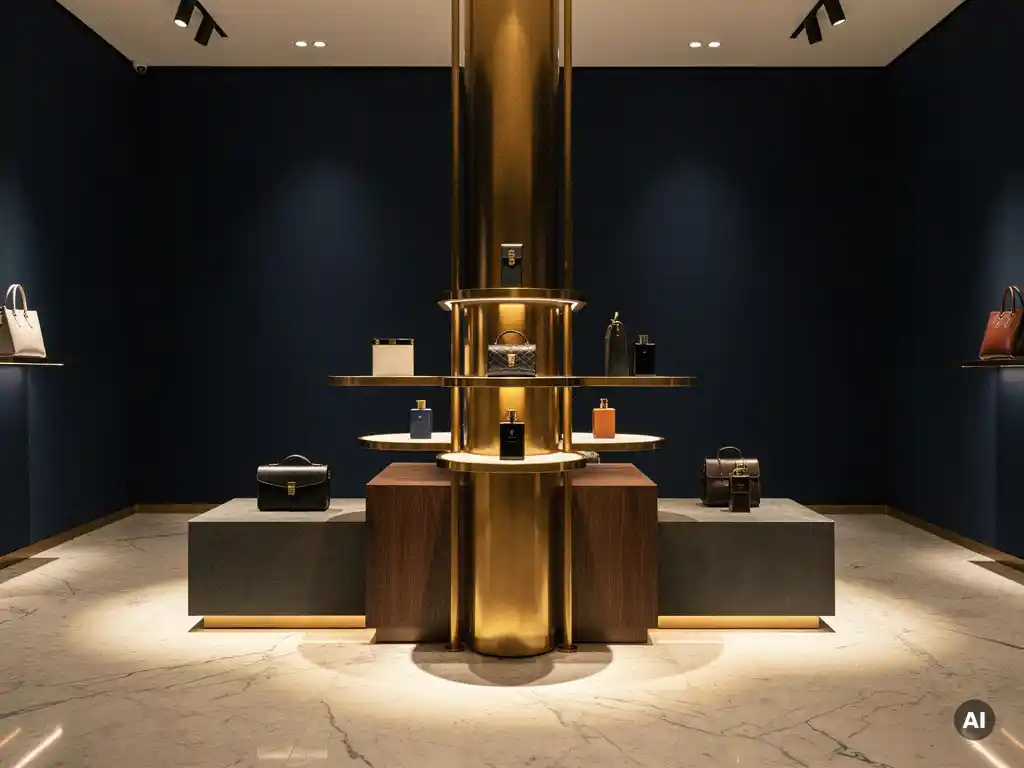
Store design communicates brand values to shoppers through a deliberate combination of spatial layout, visual identity, materials, colour, and display strategy. Every physical element inside a store functions as a non-verbal signal, telling shoppers who the brand is, what it stands for, and why they should trust it. The sections below examine each of these design levers in detail, from foundational identity cues to multi-location consistency.
The design elements that most directly convey brand identity are spatial architecture, lighting, signage, fixtures, materials, and sensory cues such as sound and scent. Each element works as part of a coordinated system. When these components are aligned, they produce a coherent brand impression that shoppers absorb instinctively, without conscious analysis.
Lighting is one of the most powerful and frequently underestimated tools in retail store design. Warm, diffused lighting signals luxury and intimacy; cool, high-contrast lighting signals clinical precision or value efficiency. Fixture design carries similar weight. A brand that invests in bespoke, handcrafted display units communicates craftsmanship and exclusivity. A brand that uses modular, interchangeable components communicates accessibility and practicality.
Signage and typography extend the brand's visual language from digital and print channels into the physical environment. When typefaces, colour palettes, and graphic treatments are consistent with a brand's broader identity, they reinforce recognition and trust. When they deviate, they introduce friction that erodes shopper confidence. Every touchpoint inside the store, from the entrance threshold to the checkout counter, contributes to the cumulative brand impression shoppers carry with them when they leave.
Store layout shapes brand perception by controlling how shoppers move through a space, what they encounter first, and how long they spend with key products or messages. A well-designed layout guides the shopper journey deliberately, ensuring that the most brand-defining moments occur at the right points in the path to purchase.
Open, spacious layouts with wide aisles and generous product spacing signal premium positioning. Compact, densely merchandised layouts communicate abundance and value. Neither approach is inherently superior; what matters is alignment between the layout strategy and the brand's core promise. A premium skincare brand that crowds its fixtures undermines its own positioning, regardless of how strong its packaging design may be.
Destination zones, hero product areas, and curated discovery sections are layout tools that brands use to deepen engagement. Placing a signature product or brand story moment at a natural pause point in the shopper's journey creates an opportunity for the brand to communicate its values directly, without the shopper needing to seek out that information. Effective retail store design treats the layout as a narrative structure, with a beginning, middle, and resolution that mirrors the brand's identity from entry to exit.
Point-of-sale display is the most concentrated form of brand storytelling in the physical retail environment. At the moment of purchase decision, a well-designed POS unit communicates product benefits, brand personality, and emotional cues simultaneously, often within a two-to-three-second window of shopper attention.
Effective POS design does more than showcase a product. It contextualises it. A display that incorporates brand imagery, considered use of typography, and materials consistent with the product's positioning tells a story about who the product is for and what it represents. This is particularly critical in competitive retail environments where multiple brands are competing for attention within the same category aisle.
Permanent and temporary display formats serve different storytelling functions. Permanent fixtures establish long-term brand presence and reinforce identity through consistent visual language. Temporary POS units, often deployed for promotional campaigns or seasonal activity, allow brands to introduce new narratives, test creative approaches, and respond to market moments with agility. The strongest in-store brand communication strategies use both formats in coordination, maintaining a stable identity while creating moments of fresh engagement.
Colour and materials are among the fastest-acting communication tools in retail store design. Shoppers process colour within milliseconds of entering a space, forming immediate associations with brand character before reading a single word of copy. Materials communicate through texture, weight, and finish, conveying quality, sustainability, or innovation at a tactile level.
Colour psychology in retail is well established. Deep, saturated tones such as navy, forest green, and burgundy signal heritage, authority, and premium quality. Bright, high-energy palettes communicate accessibility and excitement. Neutral, pared-back tones, particularly those drawing from natural references, signal simplicity, transparency, and ethical positioning. The critical discipline is consistency: a brand's in-store colour palette must align with its digital and packaging identity to avoid dissonance.
Material choices carry comparable weight. Natural materials, including wood, stone, and unfinished metal, signal authenticity and environmental awareness. High-gloss acrylic and polished chrome suggest modernity and innovation. Recycled and reclaimed materials make an explicit statement about sustainability values. Brands that invest in bespoke material specifications for their fixtures and displays demonstrate a level of intentionality that shoppers perceive as a proxy for product quality. The material language of a store is, in effect, the brand's physical handwriting.
Yes, store design can communicate sustainability values clearly and credibly, but only when the design choices are substantive rather than superficial. Shoppers are increasingly attuned to the difference between genuine environmental commitment and aesthetic greenwashing. Brands that use sustainable materials, responsible manufacturing processes, and transparent communication within their retail environments build trust; those that apply green visual cues without underlying substance risk damaging it.
Substantive sustainability communication in store design operates at several levels. Material selection is the most visible: fixtures and displays made from FSC-certified timber, recycled plastics, or low-VOC finishes make a credible statement that shoppers can see and, in some cases, touch. Energy-efficient lighting systems, modular display units designed for disassembly and reuse, and reduced packaging at point of sale are further signals that reinforce a brand's environmental positioning.
Transparency amplifies these signals. In-store messaging that explains the provenance of materials or quantifies environmental impact, such as the percentage of recycled content in a display unit, converts a design decision into a brand story. For retail chain owners managing multiple locations, embedding sustainability into the store design standard ensures that environmental values are communicated consistently across the entire estate, not just in flagship locations.
Store design needs to be consistent at the level of brand identity while allowing for contextual adaptation at the level of individual locations. Shoppers who visit a brand across multiple sites expect to encounter the same visual language, quality standard, and spatial logic. Significant deviations between locations undermine brand trust and dilute the cumulative impression that retail store design is designed to build.
The practical framework for multi-location consistency is a distinction between fixed brand elements and flexible local variables. Fixed elements, including colour palette, fixture design, signage standards, and display architecture, must be applied uniformly. Flexible variables, such as product range, promotional content, and certain spatial configurations, can be adjusted to reflect local market conditions, store footprint, or demographic profile without compromising brand integrity.
For retail chain operators managing large portfolios, consistency at scale requires robust design standards, reliable supply chains for fixtures and displays, and disciplined installation processes. The investment in getting this right is significant, but so is the return. A shopper who experiences a consistent, well-executed brand environment across multiple visits, in multiple locations, develops a level of familiarity and trust that is difficult for any single touchpoint to achieve in isolation.
Pivotal is a full-service retail design partner that helps brands translate their identity into compelling, consistent physical store experiences. For retail chain owners and brand managers seeking to strengthen how their stores communicate, Pivotal delivers across every dimension discussed in this article:
If your brand is ready to ensure that every store location communicates your values with clarity and consistency, contact Pivotal to discuss your next retail design project.
The timeline varies significantly depending on the scope of the project, the number of locations involved, and the complexity of the design brief. A single-location refresh focusing on fixtures, signage, and display architecture can often be completed within 8–16 weeks from concept to installation, while a full multi-location rollout may span several months. Working with an end-to-end retail design partner who manages both design and installation in-house can compress timelines considerably by removing handoff delays between suppliers.
The most common mistake is treating individual design elements in isolation rather than as part of a coordinated system. A brand might invest heavily in premium packaging or strong digital branding but then deploy mismatched fixtures, inconsistent typography, or generic lighting in-store, creating a disconnect that shoppers sense even if they can't articulate it. Every physical element inside a store should be evaluated against the same brand brief, ensuring that lighting, materials, colour, layout, and display all reinforce the same core message.
A practical starting point is to conduct an in-store audit using the eyes of a first-time visitor, ideally someone unfamiliar with your brand. Ask them to describe the brand's personality, price positioning, and values based solely on what they see and experience in the space, then compare their responses against your intended brand positioning. Gaps between perception and intention highlight exactly where the design is failing to communicate effectively. Structured shopper feedback, mystery shopping programmes, and conversion data by store zone can also surface specific areas where the environment is underperforming.
Yes, and the evidence is well established across retail categories. Store layout directly influences dwell time and the number of products a shopper encounters, both of which are correlated with basket size. POS display placement and design quality affect conversion rates at the point of decision, often significantly in competitive category aisles. Brands that invest in coherent, well-executed retail environments consistently outperform those that treat store design as a secondary consideration, because shopper trust, which good design builds, is a reliable predictor of purchase behaviour.
If budget is constrained, focus first on the highest-impact touchpoints: the store entrance, the hero product or brand story zone, and the point of sale. These are the moments in the shopper journey where brand perception is formed and purchase decisions are made, so improvements here deliver the greatest return. Lighting is often the most cost-effective lever available, as relamping or repositioning fixtures can dramatically shift the atmosphere and perceived quality of a space without requiring structural changes.
The most reliable way to maintain consistency at scale is to develop a comprehensive retail design standards document that specifies fixed brand elements in precise, measurable terms, including exact colour references, approved material specifications, fixture dimensions, signage templates, and installation standards. Distributing this document alone is not sufficient; consistency also requires a supply chain that can reliably reproduce those specifications and an installation process with quality checkpoints at each location. Consolidating to a single retail design partner who manages manufacturing, logistics, and installation removes many of the variables that cause brand drift across a portfolio.
Absolutely. Premium brand perception is driven by the quality and coherence of design decisions, not by the size of the space. In smaller formats, the discipline of curation becomes even more important: fewer products displayed with greater intentionality, higher-quality materials on fixtures, and carefully controlled lighting can create a sense of considered luxury that a large but poorly designed space cannot achieve. Some of the most effective premium retail environments are compact precisely because restraint and selectivity are themselves signals of confidence and brand authority.