
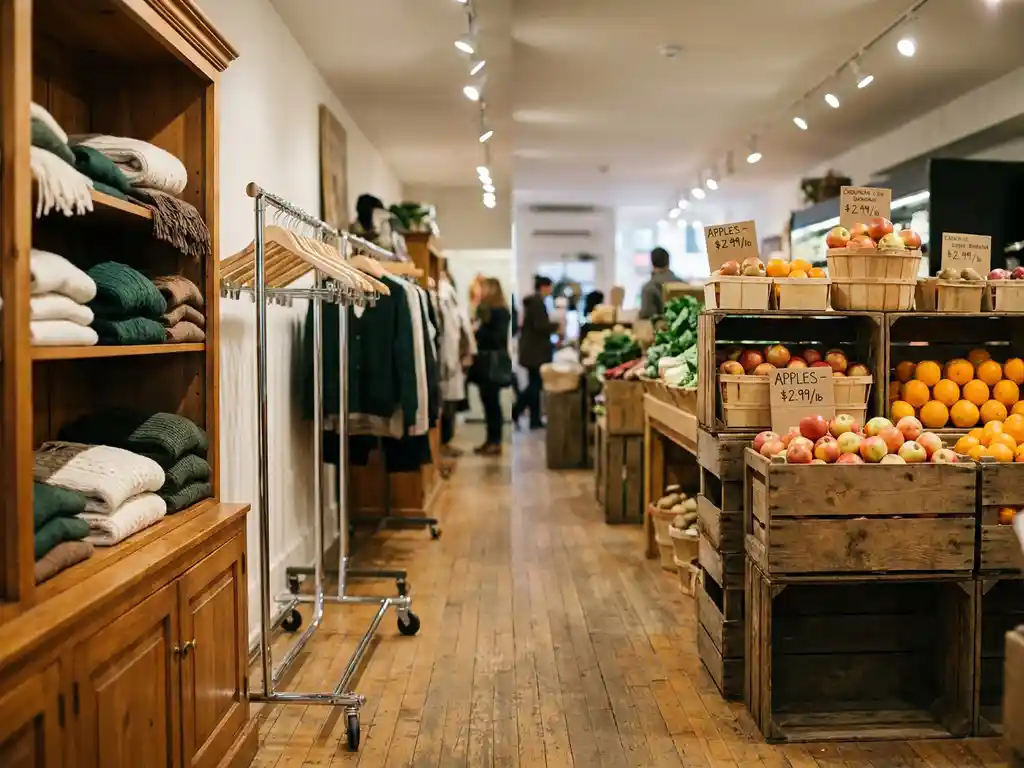
Visual merchandising differs between grocery and fashion retail primarily in its objectives, pace, and shopper psychology. Grocery retail prioritises navigation, convenience, and purchase efficiency, while fashion retail focuses on aspiration, brand storytelling, and emotional engagement. The physical environment, fixture design, and point of sale strategy each reflect these contrasting priorities in measurable ways. The sections below address the most important practical questions brands face when developing a merchandising strategy across either format.
In grocery retail, visual merchandising decisions are driven by dwell time, category flow, and the need to facilitate fast, habitual purchasing. Shoppers enter with a list and a purpose. In fashion retail, decisions are driven by inspiration, aspiration, and the desire to create an emotional connection between the shopper and the brand. The environment itself is part of the product proposition.
Grocery retailers prioritise planogram compliance, shelf-level visibility, and promotional hierarchy. Space is allocated by sales velocity, category adjacency, and supplier agreements. Every centimetre of shelf space is commercially justified. Fashion retailers, by contrast, allocate space to brand narrative and seasonal storytelling. A display that communicates a lifestyle or mood carries as much strategic weight as one that drives immediate unit sales.
For brands operating in either environment, these distinctions have direct implications for how display materials are briefed, designed, and deployed. A solution effective in a pharmacy aisle will not translate directly to a fashion boutique, and vice versa.
Grocery shoppers are largely mission-driven. They follow established routes through the store, make rapid decisions at shelf level, and are highly responsive to price, placement, and promotional cues. Fashion shoppers are more exploratory. They browse without a fixed destination, respond to visual stimuli, and make decisions based on aspiration, fit, and perceived identity.
This behavioural difference shapes everything from traffic flow to fixture height. Grocery environments are designed to reduce friction and increase basket size through strategic product placement. Fashion environments are designed to slow the shopper down, encourage interaction with products, and build emotional investment in the brand.
Understanding these behavioural patterns is essential before any display or fixture solution is developed. A merchandising approach that ignores how shoppers move and decide in a given environment will underperform regardless of the quality of the creative execution.
In grocery retail, point of sale (POS) material functions primarily as a communication tool at the moment of decision. Its role is to highlight price, reinforce promotional mechanics, and differentiate a product within a densely populated category. In fashion retail, POS serves a broader brand-building function, reinforcing identity, communicating seasonal themes, and elevating the perceived value of the product.
Grocery POS is typically high-volume, short-cycle, and compliance-dependent. It must work at speed across large estate rollouts and be legible from a distance in a busy environment. Fashion POS tends to be lower volume, higher specification, and longer in lifespan. Materials, finishes, and construction quality are scrutinised because they directly reflect brand positioning.
Brands entering either channel for the first time often underestimate how different the POS brief needs to be. A luxury skincare brand placing product in a pharmacy environment, for example, must balance the compliance demands of a grocery-adjacent format with the premium aesthetic standards its brand requires.
Grocery fixtures are standardised, modular, and built for operational efficiency. Gondola shelving, clip strips, and dump bins dominate the format because they are easy to restock, reconfigure, and audit at scale. Fashion fixtures are bespoke, brand-specific, and designed to communicate identity as much as to hold product. The fixture is part of the brand experience, not simply a functional container.
In grocery, fixtures must accommodate high SKU counts, withstand frequent restocking, and comply with retailer guidelines on dimensions and placement. Durability and practicality take precedence. Temporary secondary displays such as free-standing units and pallet wraps are common tools for promotional periods, designed to be erected quickly and removed cleanly at the end of a campaign.
In fashion, fixtures are typically permanent or semi-permanent installations that define the in-store environment for a season or longer. Materials such as joinery, metalwork, and acrylic are selected to reflect brand values. The fixture brief often begins with the brand's visual identity and works backwards to structural and manufacturing requirements, rather than the reverse.
Despite their differences, grocery and fashion retail share several core visual merchandising principles. Hierarchy of communication, shopper sightlines, colour contrast, and the strategic use of negative space apply across both environments. The most effective displays in either format guide the shopper's eye to the most commercially important product first.
Consistency between the brand's broader marketing and its in-store execution is equally important in both sectors. A shopper who encounters a brand online, on television, or in outdoor advertising should recognise the same visual language when they encounter it at shelf or on a display unit. Inconsistency at point of purchase undermines the investment made in brand-building channels.
Sustainability is another principle gaining traction across both formats. Retailers in grocery and fashion are increasingly setting requirements around the materials used in display construction, the recyclability of temporary POS, and the carbon footprint of installation logistics. Brands that build sustainability into their display briefs from the outset are better positioned to meet retailer requirements and align with shopper expectations.
Temporary display solutions are appropriate when the objective is tied to a specific campaign window, a product launch, or a promotional period. They are designed to be installed quickly, deliver impact for a defined duration, and be removed or replaced without disruption to the wider store environment. Permanent solutions are justified when the brand has a long-term presence in a location and requires a fixture that communicates authority and investment.
In grocery retail, the majority of secondary display activity is temporary by nature, aligned to promotional calendars agreed with the retailer. In fashion retail, permanent shop-in-shop installations and branded fixture programmes are more common, particularly for brands with dedicated floor space within a department store or specialist retailer.
The decision between temporary and permanent should be driven by commercial objectives, retailer agreements, and budget allocation rather than creative preference alone. A well-executed temporary unit that delivers measurable uplift during a campaign period can outperform a permanent fixture that lacks the flexibility to evolve with the brand.
Pivotal works with brand owners and marketing teams to develop display and fixture solutions that are precisely calibrated to their retail environment, whether that is a grocery multiple, a pharmacy chain, or a fashion department store. The approach covers the full project lifecycle, from initial concept and retail design development through to manufacturing, installation, and compliance. Key capabilities include:
Pivotal installed over 2,000 retail and brand experiences in 2025, with in-store engineers visiting a store every 34 minutes. Brands that require a partner capable of managing complexity at scale, across multiple retail formats, benefit from that depth of operational experience. To discuss a current brief or explore how Pivotal can support your in-store strategy, get in touch with the team.