
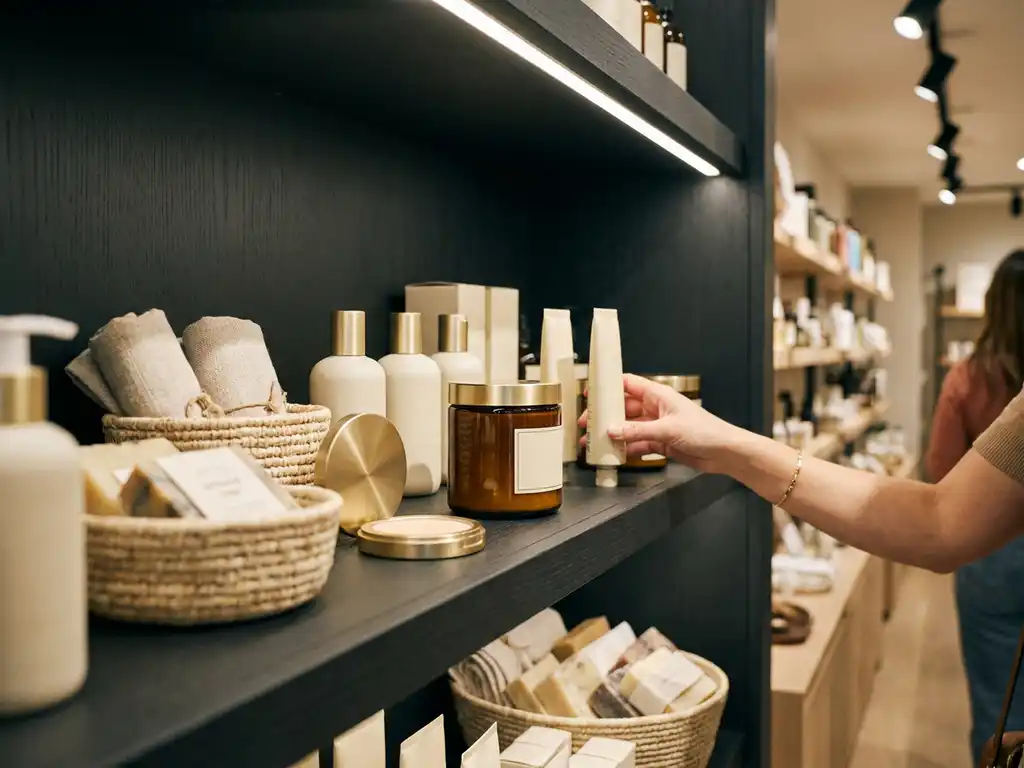
Visual merchandising increases sales by influencing purchase decisions at the point of sale, where shoppers are most receptive to brand messaging. Effective in-store display design directs attention, communicates product value, and creates the emotional context that converts browsing into buying. The questions below unpack exactly how each element of visual merchandising contributes to that outcome.
The in-store elements that most directly drive purchase decisions are product placement, lighting, signage, fixture design, and colour. Each of these shapes how a shopper perceives a product before they pick it up. When these elements work together within a coherent retail display, they create a persuasive environment that guides behaviour without the shopper being consciously aware of it.
Point of sale materials play a particularly significant role. Well-executed POS materials communicate price, promotion, and brand positioning at precisely the moment a shopper is deciding. Fixtures that position products at eye level, or that group complementary items together, reduce friction and increase the likelihood of an unplanned purchase. Signage that uses clear hierarchy — headline benefit, supporting detail, call to action — mirrors the way shoppers process information quickly in a busy retail environment.
Tactile engagement is another underestimated driver. When shoppers can interact with a product through a well-designed display, dwell time increases. Longer dwell time correlates directly with higher conversion. This is why physical retail, when designed thoughtfully, continues to outperform digital channels for impulse and discovery purchases.
Product placement affects shopper behaviour by controlling where attention lands and in what sequence. Products positioned at eye level receive significantly more consideration than those placed above or below it. End-of-aisle displays, gondola headers, and checkout fixtures capture attention during natural pauses in the shopper journey, making them disproportionately effective for driving incremental sales.
Placement also communicates brand status. A brand featured on a dedicated, well-crafted fixture signals quality and confidence. Conversely, a brand that blends into a standard shelf environment risks being overlooked entirely, regardless of product merit. For brands operating in competitive categories such as beauty, health, or lifestyle, the physical position of a display within a store can be as commercially significant as the product itself.
Proximity to complementary products also matters. Placing a skincare brand adjacent to a complementary product category creates a logical shopping journey that increases basket size. Retailers and brand owners who align on placement strategy, rather than treating it as a logistical afterthought, consistently see stronger in-store performance.
Permanent retail displays are fixed or semi-permanent fixtures designed for long-term use, typically built from durable materials such as metal, wood, or acrylic. Temporary displays are short-term installations, often used to support a product launch, seasonal campaign, or promotional period, and are usually constructed from lighter materials with a shorter lifespan in mind.
Permanent fixtures represent a higher upfront investment but deliver sustained brand presence over time. They are appropriate for core product ranges with consistent retail distribution, and they reinforce brand identity through consistent visual language across multiple store locations. Materials such as joinery, metalwork, and moulded components give permanent displays a premium feel that elevates the perceived value of the products they carry.
Temporary displays offer speed and flexibility. They are ideal for limited-edition launches, seasonal promotions, or testing a new retail environment before committing to a permanent solution. When designed well, a temporary display can generate significant impact without the cost of a permanent build. The key is ensuring that even short-term executions maintain brand consistency and build quality — a poorly finished temporary display can undermine brand perception rather than support it.
Visual merchandising supports brand identity by translating a brand's values, aesthetics, and positioning into a physical environment that shoppers can see, touch, and experience. Every element of a retail display — colour palette, material choice, typography, fixture shape, and lighting — communicates something about the brand before a word is read or a product is handled.
Consistency is central to this. A brand that maintains a coherent visual language across all its retail touchpoints builds recognition and trust over time. Shoppers who encounter the same brand across multiple retail environments — a pharmacy, a department store, a specialist retailer — develop a stronger sense of brand familiarity, which directly influences purchase confidence.
Bespoke display design is the most effective vehicle for this. Off-the-shelf fixtures rarely accommodate the specific proportions, material finishes, or structural requirements that a brand's identity demands. Custom-designed and manufactured displays allow brand owners to control every visual variable, ensuring the in-store experience reflects the brand's broader positioning with precision.
Sustainability plays an increasingly central role in retail display design, driven by both regulatory pressure and the expectations of environmentally conscious shoppers and retail partners. Brands are now routinely evaluated on the environmental credentials of their in-store materials, manufacturing processes, and end-of-life disposal plans. Sustainability is no longer a differentiator — it is becoming a baseline requirement for many major retailers.
In practical terms, this means selecting materials with lower environmental impact, designing displays for disassembly and reuse, and working with manufacturers who operate transparent supply chains. Responsibly sourced timber, recycled metals, and water-based finishes are increasingly standard in well-specified retail display projects. Longevity is also a sustainability consideration: a permanent fixture that lasts five years has a lower environmental cost per use than a temporary display that is discarded after a single campaign.
For brand owners, investing in sustainable retail display design also carries commercial benefit. Retailers such as Boots and major supermarket groups are actively prioritising brand partners who can demonstrate environmental responsibility. A well-articulated sustainability position, backed by material and process choices, strengthens a brand's relationship with its retail partners and resonates with shoppers who factor environmental values into their purchase decisions.
A brand should invest in a full retail display redesign when its current fixtures no longer reflect the brand's positioning, when a significant product range change is planned, or when in-store performance has plateaued despite strong product quality. A display that was designed several years ago may no longer align with the brand's current visual identity or the expectations of today's shoppers.
Other clear triggers include entering a new retail channel, expanding distribution to new store formats, or responding to a competitor that has significantly raised the standard of in-store presentation within the category. A redesign is also warranted when existing fixtures are structurally compromised, difficult to merchandise, or failing compliance requirements set by the retailer.
The most commercially astute approach is to treat retail display design as an ongoing investment rather than a one-time cost. Brands that regularly audit their in-store presence and refresh fixtures in line with brand evolution consistently maintain stronger shelf presence and shopper engagement than those who treat display design as a set-and-forget exercise.
Pivotal is a UK-based, full-service retail design company that partners with brand owners, marketing directors, and retail experience managers to create in-store display solutions that drive measurable commercial outcomes. From the first concept through to on-site installation, Pivotal manages the entire project lifecycle in-house, eliminating the coordination risk that comes with using multiple agencies.
In 2025 alone, Pivotal installed over 2,000 new retail and brand experiences, with in-store engineers visiting a store every 34 minutes. Fifteen new global brands chose Pivotal as their in-store partner that year. If your brand is ready to strengthen its in-store presence, get in touch with the Pivotal team to discuss your next retail display project.