
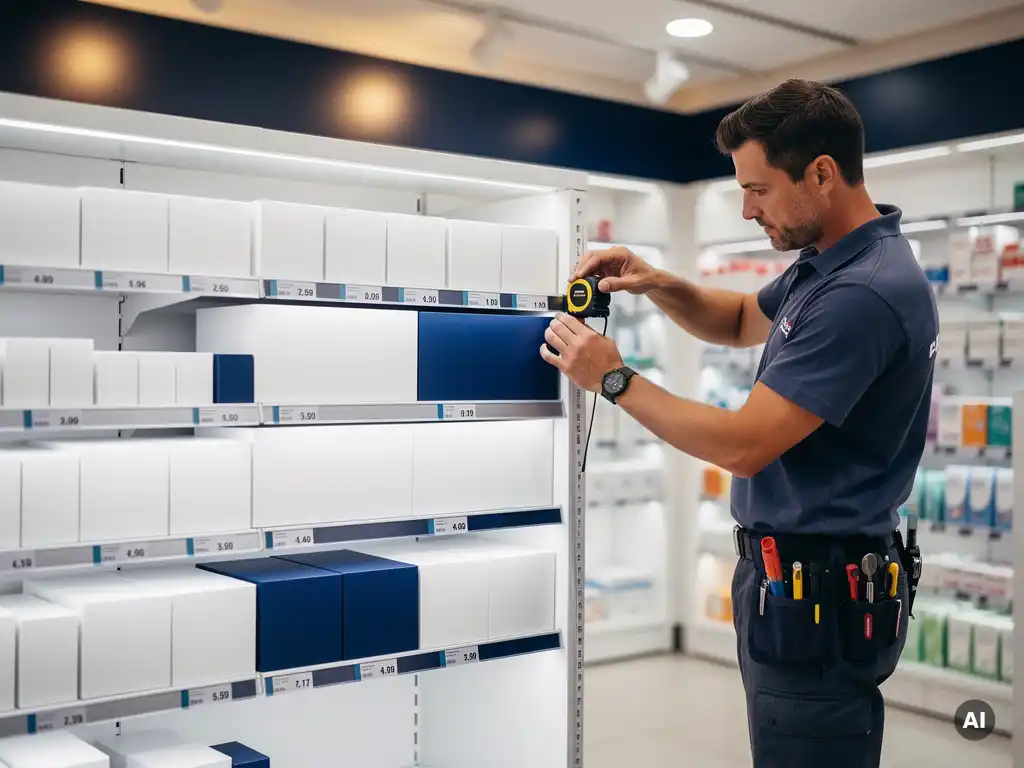
POS display compliance in UK retail environments is governed by a combination of national advertising regulations, trading standards legislation, and retailer-specific approval processes. Brands must satisfy both legal requirements set by bodies such as the Advertising Standards Authority and the operational rules enforced by individual retail partners. The sections below address the most common compliance questions brands and their agencies face when planning, producing, and installing point of sale displays.
POS displays in the UK must comply with the UK Code of Non-broadcast Advertising and Direct & Promotional Marketing (CAP Code), administered by the Advertising Standards Authority (ASA). Displays must not make misleading claims, use prohibited imagery, or breach sector-specific rules covering areas such as alcohol, health products, and cosmetics. Trading Standards legislation also applies where pricing or promotional claims are shown.
Beyond the CAP Code, several regulatory frameworks intersect depending on the product category. Displays promoting medicines or health claims must align with Medicines and Healthcare products Regulatory Agency (MHRA) guidance and the EU-derived regulations retained in UK law. Alcohol brands face restrictions under the Portman Group Code of Practice, which prohibits messaging that appeals primarily to under-18s or links alcohol to social or sexual success. Food and beverage brands must comply with the Advertising Standards Authority's nutrient profiling rules, particularly where products are high in fat, salt, or sugar.
Pricing and promotional claims on displays are subject to the Consumer Protection from Unfair Trading Regulations 2008, which prohibit misleading price comparisons or exaggerated discount claims. Any "was/now" pricing must be substantiated with accurate reference pricing data. Brands operating in pharmacy environments face additional scrutiny from the General Pharmaceutical Council, which sets standards for how health products can be promoted within dispensing and retail pharmacy settings.
Every major UK retailer operates its own set of display guidelines that brands must satisfy before a POS unit is approved for installation. These retailer-specific rules govern everything from structural specifications and material standards to branding hierarchy, fixture positioning, and, in some cases, the precise wording permitted on display panels. Non-compliance with these guidelines typically results in rejection before the display reaches the shop floor.
Retailers such as Boots, Superdrug, Tesco, and Sainsbury's publish brand and display guidelines for their supplier partners. These documents define permitted fixture footprints, height restrictions, shelf-edge labelling formats, and the process for submitting display concepts for approval. Some retailers require brands to use pre-approved fixture systems or to work within a category management framework that limits how much branded space a single supplier can occupy.
Approval processes vary in complexity. Pharmacy retailers tend to apply more rigorous scrutiny to health and beauty displays, often requiring sign-off from both commercial and compliance teams. Department stores may impose stricter aesthetic standards to maintain a consistent floor environment. Brands entering a new retail partnership should request the retailer's brand compliance pack at the earliest stage of the design process, as late-stage amendments to tooling or print materials carry significant cost and time implications.
Yes. Size and placement restrictions for in-store displays are determined by a combination of retailer floor plans, health and safety legislation, and fire safety regulations. Retailers allocate defined display footprints within their store layouts, and any fixture that exceeds the approved dimensions or obstructs sightlines, emergency exits, or aisle widths will be rejected or removed. These restrictions are non-negotiable and apply regardless of commercial agreements.
The Regulatory Reform (Fire Safety) Order 2005 requires that all retail environments maintain clear escape routes and unobstructed access to fire-fighting equipment. Display units positioned in aisle ends, entrances, or high-traffic zones must not compromise these requirements. Retailers carry responsibility for fire safety compliance on their premises and will enforce removal of any fixture that creates a risk, regardless of brand investment.
Beyond safety legislation, retailers manage display placement through planogram systems that define exactly where each fixture category sits within the store. Brands are typically allocated a precise location within a category bay, and any deviation requires formal approval from the retailer's space planning team. Freestanding display units (FSDUs) in high-footfall areas such as checkouts or entrance zones are subject to the most stringent placement controls and often require a separate commercial agreement.
Temporary POS displays, typically used for promotional campaigns with a defined end date, face less structural scrutiny than permanent fixtures but are subject to the same advertising and claims regulations. Permanent displays undergo more rigorous retailer approval processes because they represent a long-term commitment to floor or shelf space, require greater structural integrity, and must meet higher durability and safety standards under the retailer's supplier agreements.
Temporary displays, such as cardboard FSDUs, counter units, and promotional shelf barkers, are often fast-tracked through retailer approval because they use pre-approved formats or standard structural templates. However, the content they carry, including promotional claims, pricing, and imagery, must still satisfy CAP Code requirements and any sector-specific regulations. A temporary display promoting a "limited-time offer" must still carry substantiated pricing claims and comply with any category-specific restrictions.
Permanent fixtures are treated as capital investments by retailers and typically require a more detailed submission process, including CAD drawings, material specifications, weight load data, and evidence of structural testing. Retailers may also require ongoing maintenance agreements to ensure permanent displays remain compliant with health and safety standards throughout their operational life. Brands planning permanent installations should build compliance review time into the project schedule from the outset.
If a POS display fails a retailer compliance check, the brand is typically required to amend the design, resubmit for approval, and absorb any associated costs. Depending on the stage at which the failure is identified, this can mean redesigning print artwork, modifying structural components, or, in severe cases, scrapping manufactured units entirely. Compliance failures identified after installation can result in the display being removed from the shop floor at the brand's expense.
The financial and reputational consequences of a compliance failure scale with the size of the rollout. A rejection identified at the prototype stage is manageable. A failure identified across a national rollout of several hundred stores represents a significant commercial exposure. Retailers may also impose penalties or restrict future display submissions from brands with a history of non-compliant submissions.
ASA complaints against display content are handled separately from retailer approval processes. If a competitor, consumer, or retailer raises a complaint about a claim made on a POS display, the ASA will investigate and can require the brand to remove or amend the display, issue a public ruling, and, in repeat cases, refer the matter to Trading Standards for formal enforcement action. Brands should treat compliance as a pre-production discipline, not a post-installation check.
On-site compliance responsibility is shared between the brand, the installation team, and the retailer. The brand is responsible for ensuring the display has received all necessary approvals before installation begins. The installation team is responsible for placing the display in the approved location, within the approved footprint, and in accordance with the retailer's operational guidelines. The retailer retains ultimate authority over what remains on the shop floor and can require removal at any point.
In practice, compliance on-site depends heavily on the competence and retailer knowledge of the installation team. Fitters operating without formal retailer approval, or without familiarity with store-specific requirements, create significant compliance risk. Retailers increasingly require installation teams to be pre-approved and to carry documentation confirming the display has passed internal review before entering the store.
Brands working with professional installation partners benefit from teams that understand both the physical requirements of the installation and the procedural expectations of individual retail partners. Where a display is installed incorrectly, in the wrong location, or without the required documentation, the retailer may refuse to allow the installation to proceed, resulting in wasted resource and delayed campaign activation.
Pivotal manages compliance as an integrated part of the design, manufacturing, and installation process, reducing risk at every stage of a POS project. With retailer-approved fitting teams and a track record of over 2,000 retail and brand experiences installed in 2025, Pivotal brings the operational knowledge that compliance-critical projects demand.
Brands that treat compliance as an afterthought risk delays, cost overruns, and lost retail presence. Working with a partner that embeds compliance into every stage of the process is the most effective way to protect campaign investment and maintain retailer relationships. Contact Pivotal to discuss your next POS display project and ensure compliance is built in from day one.