
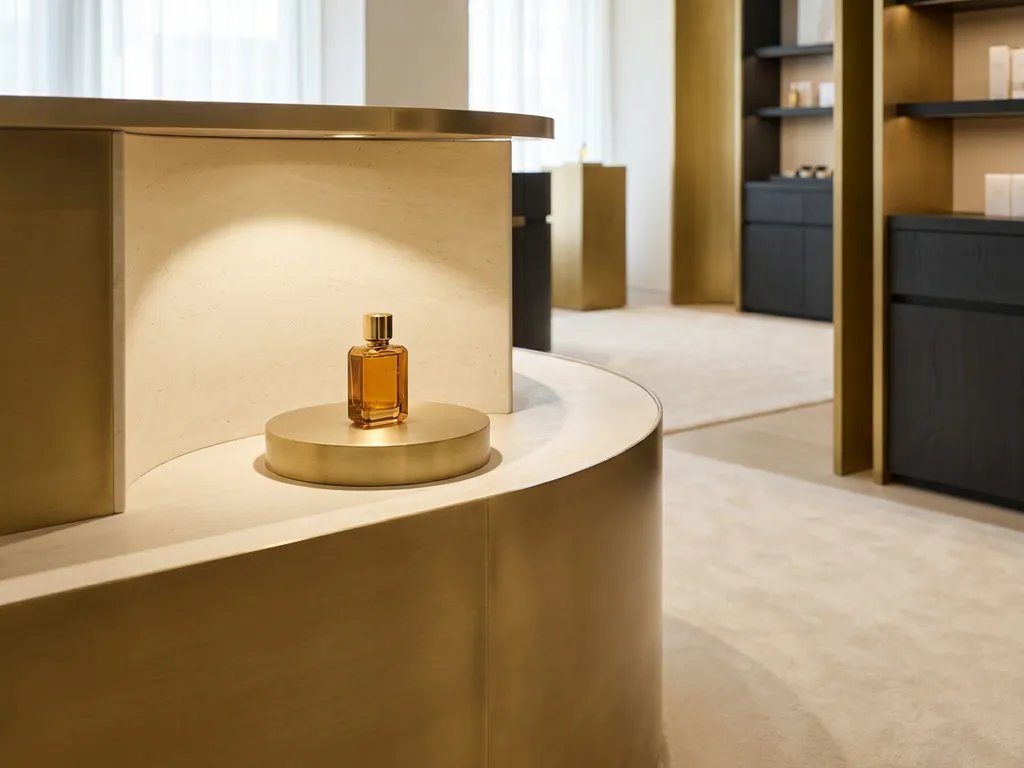
Effective retail display design is built on six core principles: visual hierarchy, brand consistency, shopper psychology, material selection, sustainability, and strategic display type. Together, these principles determine whether a display captures attention, communicates value, and converts a browsing shopper into a buyer. The sections below address each principle in depth, giving brand owners and retail marketers a practical framework for evaluating and improving their in-store presence.
Visual hierarchy in retail display design refers to the deliberate arrangement of elements — height, colour, scale, and typography — to direct a shopper's eye from the most important information to the least. An effective hierarchy ensures that a shopper absorbs the brand, the product, and the call to action in the correct sequence, without conscious effort.
In practice, this means placing hero products or brand messaging at eye level, using scale to signal importance, and reserving peripheral or lower zones for secondary products and supporting information. Colour contrast draws attention to focal points, while consistent spacing prevents visual clutter that causes shoppers to disengage. A display without clear hierarchy forces shoppers to make sense of competing visual signals simultaneously, which typically results in reduced dwell time and lower conversion.
For brands operating across multiple retail environments, maintaining a consistent visual hierarchy across different fixture formats ensures that shoppers recognise the structure intuitively, regardless of the store format they are shopping in.
Brand consistency in retail display design means applying the same visual language — colours, typography, tone, materials, and structural design — across every in-store touchpoint. It reinforces brand recognition, builds shopper trust, and ensures that the physical display accurately reflects the brand's identity as communicated across other channels.
Inconsistency between a brand's packaging, digital presence, and in-store display creates a disconnect that undermines credibility, particularly in high-consideration categories such as beauty, health, and wellness. Shoppers who encounter a display that does not feel coherent with the brand they know are less likely to engage with it or attribute it to the correct brand at a glance.
Brand consistency also matters at a commercial level. When a brand rolls out displays across multiple retail accounts or geographic regions, consistent design execution protects brand equity and ensures that the in-store experience meets the same standard regardless of location. This is especially important for internationally recognised brands placing in-store retail displays across a wide network of retail partners.
Shopper psychology directly influences retail display decisions by informing how physical environments affect purchasing behaviour. Factors such as colour association, tactile engagement, spatial flow, and sensory cues all shape how a shopper feels about a product before they consciously evaluate it. Effective retail POS design accounts for these psychological mechanisms rather than treating the display as a purely functional fixture.
Colour is one of the most immediate psychological triggers. Warm tones create urgency and draw attention, while cooler palettes communicate trust and calm — a distinction that is particularly relevant in pharmacy or wellness retail environments. Similarly, the perceived quality of a display's materials communicates product value; a premium brand displayed on low-quality fixtures sends a contradictory signal that erodes perceived worth.
Shopper flow is another critical consideration. Research in retail merchandising consistently shows that shoppers follow predictable movement patterns in-store. Positioning displays at natural decision points — aisle ends, category boundaries, or checkout adjacencies — increases the likelihood of engagement. The physical design of the display itself, including open shelving that invites handling or interactive elements that encourage exploration, can meaningfully extend dwell time and increase the probability of purchase.
The best materials for retail displays depend on the display's intended lifespan, the retail environment, the brand aesthetic, and the structural requirements of the product being merchandised. Acrylic, metal, timber, and MDF are the most commonly used materials, each offering distinct advantages in terms of durability, finish quality, and cost efficiency.
Material selection should also account for the retail environment itself. A display in a pharmacy must withstand frequent restocking and cleaning, while a display in a department store may prioritise visual impact over robustness. Matching the material specification to the real-world demands of the environment prevents premature deterioration and protects the brand's in-store image.
Sustainability is now a fundamental consideration in retail display design, driven by both regulatory pressure and the expectations of brand owners, retailers, and shoppers. In 2026, brands that cannot demonstrate responsible material sourcing and end-of-life planning for their in-store fixtures face increasing scrutiny from retail partners and environmentally conscious consumers.
Sustainable retail display design involves several interconnected decisions. Material selection plays a central role: responsibly sourced timber, recycled metals, and bio-based or recyclable substrates reduce the environmental impact of manufacturing. Equally important is designing for disassembly, ensuring that display components can be separated and recycled at the end of their retail life rather than sent to landfill as a composite unit.
Longevity is also a sustainability consideration. A well-engineered permanent display that remains in service for several years represents a significantly lower environmental footprint than a series of short-lived temporary units producing equivalent commercial output. Brands should evaluate the full lifecycle of a display, not only its upfront production cost, when assessing sustainability credentials. For brand owners seeking a retail design partner who integrates sustainability into the manufacturing process, this is a commercially and reputationally significant capability to assess during supplier selection.
A brand should invest in a permanent display when it has a confirmed, long-term presence in a retail location, a stable product range, and a need to communicate authority and quality at the point of purchase. Temporary displays are the appropriate choice for campaign-led activity, product launches, seasonal promotions, or trial placements where flexibility and speed to market are priorities.
The distinction carries meaningful commercial implications. Permanent displays require a higher upfront investment in materials and engineering but deliver a lower cost-per-day over their lifespan and communicate brand permanence to shoppers. They are particularly effective in pharmacy, department store, and specialist retail environments where category ownership is a strategic objective.
Temporary displays, by contrast, enable brands to respond quickly to market opportunities, test new retail environments, or support a specific promotional window without committing to a long-term fixture. They are typically constructed from lighter materials and designed for rapid installation and removal. The trade-off is that repeated use of temporary displays across multiple campaign cycles can accumulate costs that approach or exceed the investment required for a permanent solution.
The decision should be guided by three questions: How long will the product range remain stable? How established is the brand's presence in this retail account? And what level of display quality do the retail environment and target shopper expect? Answering these questions honestly prevents both under-investment in permanent fixtures and over-commitment to short-term solutions.
Pivotal is a full-service retail design partner that applies all six of these principles across every project it delivers. Working with brands across beauty, health, wellness, fashion, and lifestyle sectors, Pivotal manages the complete display design and development process from initial concept through to a manufactured and installed solution. Key capabilities include:
For brand owners and marketing directors seeking a single partner capable of delivering effective retail display design without the complexity of managing multiple suppliers, Pivotal provides the end-to-end capability and sector expertise to bring in-store ambitions to life. Get in touch with Pivotal to discuss your next retail display project.