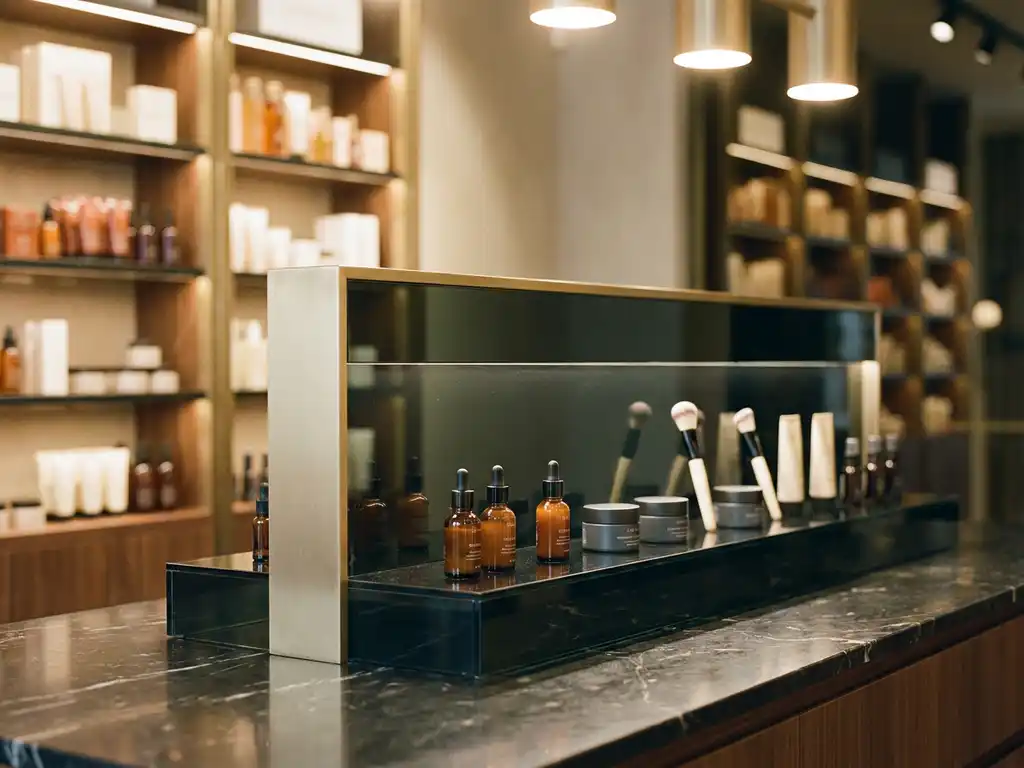
A counter display unit (CDU) is a compact, freestanding or counter-mounted retail display designed to hold and present products at or near the point of sale. CDUs are purpose-built to drive impulse purchases by placing products within easy reach of shoppers at the moment of transaction. This article addresses the most common questions brands and retailers ask when considering CDUs as part of their in-store strategy.
CDUs are best suited to small, lightweight products that benefit from high visibility at the point of purchase. Items that rely on impulse purchase behaviour, repeat buying, or trial are particularly well-matched to the counter display unit format. Common product categories include cosmetics, skincare, confectionery, batteries, accessories, and health supplements.
The defining characteristic of a CDU-compatible product is its size relative to the display footprint. Because counter display units occupy limited counter space, they are most effective when the product itself is compact enough to be stacked, slotted, or hung without obscuring sightlines. Products with strong visual branding or distinctive packaging benefit most, as the CDU functions as a miniature brand billboard at the checkout or service counter.
Brands in the beauty and personal care sector use CDUs extensively, particularly for travel-size ranges, promotional SKUs, or new product launches where trial is the primary objective. Health and pharmacy retailers similarly favour CDUs for over-the-counter products positioned near tills, where proximity to the transaction moment significantly increases conversion.
CDUs are typically placed at checkout counters, service desks, pharmacy dispensing points, and high-traffic display areas near entrances or category aisles. The placement strategy is deliberate: positioning a counter display unit where shopper dwell time is highest maximises exposure and encourages unplanned purchases.
The checkout counter remains the most common location for a CDU in retail. At this point, shoppers are stationary, attentive, and already in a buying mindset. This makes the counter display unit one of the most commercially effective formats in the retail POS display toolkit.
Beyond the till point, CDUs are also used effectively at beauty counters, pharmacy consultation areas, and brand activation zones within department stores. In grocery and convenience retail, they appear near self-checkout terminals and customer service desks. The common thread across all placements is proximity to a moment of decision, whether that is a transaction, a consultation, or a brand interaction.
CDUs are manufactured from a range of materials depending on the intended lifespan, brand aesthetic, and budget. The most common materials include corrugated cardboard, acrylic, injection-moulded plastic, metal, and wood or MDF. The choice of material directly affects durability, print quality, and the premium perception of the display.
Corrugated cardboard is widely used for temporary or promotional CDUs due to its low cost and ease of customisation through litho or digital print. These are typically deployed for campaign-led activations with a defined shelf life. At the other end of the spectrum, acrylic and metal CDUs are engineered for long-term use, offering a premium finish that reinforces brand positioning in prestige retail environments such as department stores or specialist beauty retailers.
Sustainable material choices are increasingly a factor in CDU specification. Brands with environmental commitments are specifying recycled or FSC-certified materials, water-based inks, and designs that allow for easy disassembly and recycling at end of life. This shift reflects broader sustainability goals without compromising the visual impact required to perform at the point of sale.
A CDU (counter display unit) is a structured display designed for counter placement, often with compartments, tiers, or slots to organise multiple product variants. A PDQ (pretty darn quick) is a simpler, typically corrugated display designed for rapid deployment directly from the shipping box, with minimal assembly required. The key distinction is structural complexity and intended use case.
CDUs are generally more engineered in their construction. They are designed to present products in a specific, brand-controlled arrangement and are often reusable across multiple campaign cycles. A PDQ, by contrast, prioritises speed and ease of replenishment. The product ships inside the display itself, and the retailer simply opens the box, folds out the front panel, and places it on the counter.
From a brand investment perspective, CDUs represent a higher upfront cost but deliver greater longevity and brand consistency. PDQs are cost-effective for short-term promotions, seasonal launches, or wide distribution across many store locations where installation resources are limited. Many brands use both formats strategically, deploying PDQs for national rollouts and CDUs for flagship or premium retail environments where presentation standards are higher.
A CDU is designed and produced through a structured process that begins with a creative brief and moves through concept development, CAD design, prototyping, material specification, manufacturing, and quality assurance before installation. The most effective counter display units are developed with both brand objectives and retailer requirements in mind from the outset.
The design phase involves translating a brand's visual identity into a three-dimensional structure that performs within the constraints of the intended retail environment. This includes consideration of counter dimensions, weight limits, product weight and size, and any retailer-specific compliance requirements. CAD modelling allows the design team to validate structural integrity and spatial fit before any physical prototype is produced.
Rapid prototyping is a critical step in CDU production. Physical samples allow brand and retail teams to assess the display in context, make adjustments to shelf configuration, graphic placement, or material finish, and sign off with confidence before committing to full production volumes. From prototype approval, manufacturing timelines vary depending on material complexity, print specification, and order quantity.
CDUs are among the most effective retail display formats for driving incremental sales at the point of purchase. Their placement in high-dwell locations, combined with strong brand visibility and product accessibility, creates the conditions for impulse conversion. The effectiveness of a counter display unit depends on the quality of its design, the relevance of the product to the shopper at that location, and how well it integrates with the surrounding retail environment.
Industry experience consistently shows that well-positioned, well-designed point of sale displays outperform shelf-only product placement for categories where impulse behaviour is a significant driver of purchase. A CDU that clearly communicates the product benefit, presents the range in an accessible way, and aligns visually with the brand creates a compelling micro-environment that commands attention even in busy retail settings.
Effectiveness is also influenced by compliance. A CDU that is correctly positioned, fully stocked, and maintained in good condition will consistently outperform one that is poorly placed or allowed to deplete without replenishment. This is why brands investing in permanent or semi-permanent CDUs typically pair the display investment with a structured installation and maintenance programme to protect in-store performance over time.
Pivotal is a UK-based retail design partner that manages the full CDU lifecycle from initial concept through to in-store installation and ongoing compliance. Working with brands across beauty, health, and lifestyle sectors, Pivotal delivers counter display units that are engineered for commercial performance and built to represent the brand with precision.
If your brand is planning a CDU rollout or reviewing your current retail display strategy, speak to the Pivotal team about how a bespoke counter display unit can strengthen your presence at the point of sale. Get in touch with Pivotal to start the conversation.