
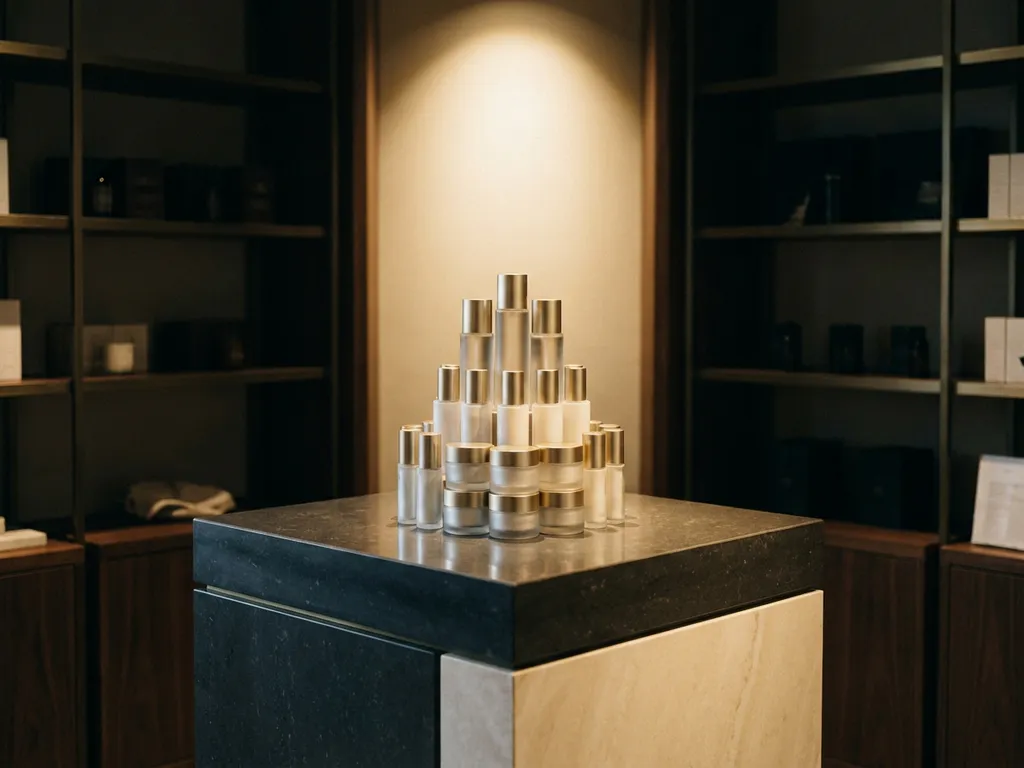
A focal point in a retail display is the dominant visual element that draws a shopper's eye first, anchoring their attention and directing them toward the most important product or message. It is the deliberate hierarchy within a display that prevents visual chaos and guides purchasing decisions. The questions below unpack how focal points are created, positioned, and evaluated across different display formats.
A focal point directs shopper attention because the human eye instinctively seeks order in a visual field. When presented with multiple stimuli simultaneously, the brain prioritises the element that stands out most clearly — whether through scale, contrast, colour, or isolation. A well-constructed focal point exploits this tendency to move shoppers from passive browsing to active engagement.
In a retail environment, shoppers make rapid decisions. Research consistently shows that dwell time at a fixture is short, which means a display has only a matter of seconds to communicate its core message. A strong focal point compresses that communication into a single, unmistakable visual cue. It tells the shopper where to look, what the product is, and why it matters — before they have consciously processed the surrounding context.
Without a focal point, the eye moves aimlessly across a fixture. Competing elements of equal visual weight create confusion, and confused shoppers disengage. The focal point is therefore not a decorative choice — it is a functional mechanism that protects conversion at the shelf.
A strong focal point in a retail display is created by combining contrast, hierarchy, and intentional negative space to isolate and elevate the hero product or brand message. No single element achieves this in isolation; it is the deliberate relationship between components that produces a dominant visual anchor.
The most effective focal points typically rely on one or more of the following:
The most effective retail display design integrates these elements during the concept phase rather than applying them retrospectively. When structural, graphic, and material decisions are made with the focal point in mind from the outset, the result is a cohesive display that communicates clearly at every shopper touchpoint.
The focal point serves the same strategic purpose in both permanent and temporary displays, but the approach to creating it differs significantly based on lifespan, material constraints, and commercial objectives. Permanent fixtures prioritise durability and brand consistency, while temporary displays must achieve immediate visual impact within tighter material and cost parameters.
In a permanent fixture, such as a branded pharmacy gondola or a department store beauty counter, the focal point is typically built into the structural design itself. It may be expressed through a backlit header panel, a recessed display zone, or an elevated central shelf that anchors the entire unit. Because the fixture will occupy the same space for an extended period, the focal point must remain relevant across product rotations and seasonal changes.
Temporary point of sale displays, by contrast, are often deployed for product launches, promotional periods, or seasonal campaigns. Here, the focal point is more likely to be graphic-led — a bold visual or headline that communicates urgency and novelty. The structural form may be simpler, but the focal point must work harder and faster, as the display will be encountered by shoppers who have no prior familiarity with it.
Understanding this distinction is essential when briefing a retail design partner, as the design strategy, material specification, and production timeline will differ substantially between the two formats.
A focal point should be positioned at natural eye level for the target shopper, typically between 120cm and 160cm from the floor for a standing adult. This zone is where visual attention is highest and where shoppers are most likely to pause and engage. Positioning the focal point outside this range significantly reduces its effectiveness.
Beyond vertical placement, horizontal positioning also matters. In most Western retail environments, shoppers scan fixtures from left to right, meaning the centre or slightly right of centre is the strongest horizontal position for a focal point. However, this can vary by category and store layout, particularly in environments where shopper flow is managed through aisle direction or fixture placement.
For multi-tiered displays, the focal point should anchor the upper-central zone of the fixture, with supporting products and secondary messaging arranged to radiate outward and downward. This creates a natural visual journey that begins at the focal point and then guides the shopper through the full product range without overwhelming them at the first point of contact.
When a retail display lacks a clear focal point, shoppers experience visual noise rather than visual direction. The eye has no natural resting place, attention is distributed evenly and therefore shallowly across the fixture, and the likelihood of meaningful engagement drops considerably. The result is a display that is seen but not processed.
This is a common failure mode in retail merchandising, particularly when multiple stakeholders contribute to a display brief. Brand teams may prioritise product range breadth, marketing teams may want maximum graphic coverage, and commercial teams may push for high SKU density. When these demands are not mediated by a clear design hierarchy, the focal point is sacrificed to competing priorities.
The commercial consequences are direct. A display without a focal point fails to communicate a clear brand message, reduces the likelihood of impulse purchase, and can undermine the perceived quality of the brand itself. Shoppers associate visual clarity with brand confidence; a cluttered or directionless display signals the opposite.
Retailers and brands test focal point effectiveness through a combination of shopper observation, eye-tracking research, and in-store performance data. The most direct method is structured observation, where trained researchers monitor how shoppers interact with a display — noting where the eye first lands, how long attention is held, and whether engagement leads to product handling or purchase.
Eye-tracking technology offers a more precise version of this analysis, mapping exactly where shoppers look across a fixture and for how long. This data can validate whether the intended focal point is performing as designed or whether an unintended element is capturing attention instead.
Sales data provides the most commercially relevant measure. If a display refresh coincides with a measurable uplift in the featured product's sell-through rate, the focal point is likely contributing to that outcome. Conversely, flat or declining performance after a display installation warrants a review of the visual hierarchy.
Rapid prototyping and pre-production testing also play a role. Evaluating a physical mock-up in a simulated retail environment before full production allows design teams to assess whether the focal point reads correctly at distance, under store lighting, and within the surrounding fixture context. This approach reduces the risk of costly post-installation adjustments and is a standard part of a rigorous retail display development process.
Pivotal is a UK-based retail design company that works with brands from initial concept through to manufactured and installed display solutions. For brands seeking to strengthen their in-store presence, Pivotal's end-to-end service addresses focal point design as a structural and strategic priority from the outset, not as an afterthought.
If your brand is planning a new retail display or refreshing an existing fixture, speak with the Pivotal team to discuss how considered focal point design can drive measurable in-store results. Contact Pivotal to begin the conversation.