
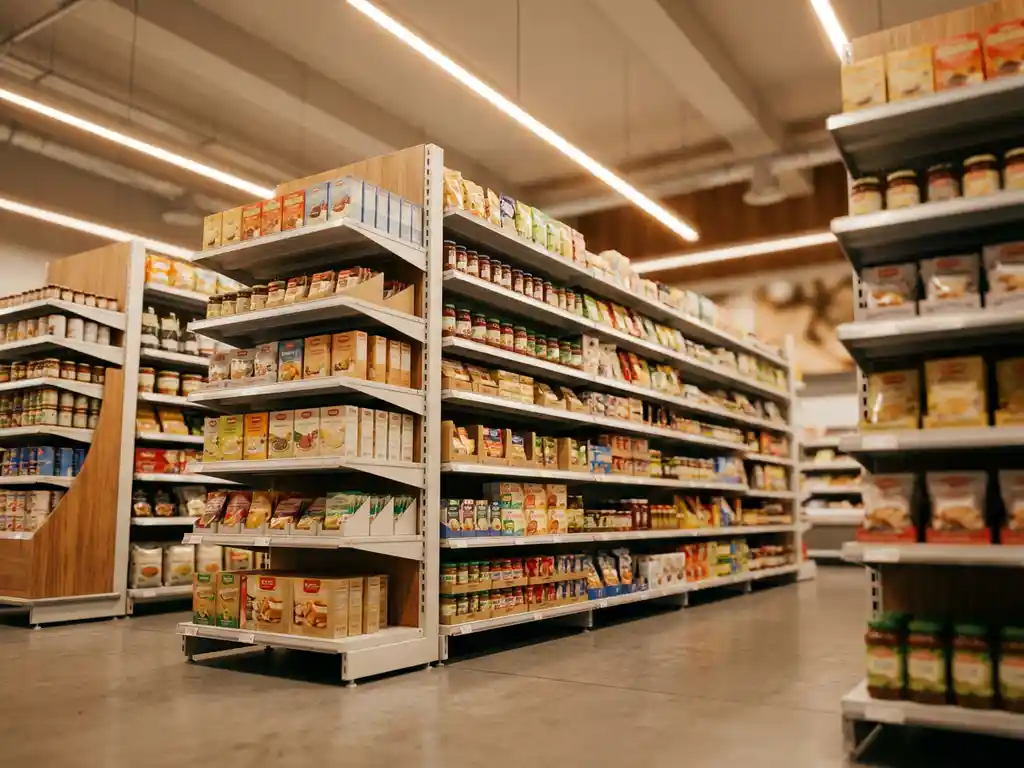
A gondola in retail is a freestanding, double-sided shelving unit used on the shop floor to display and merchandise products. Gondola shelving is the backbone of most modern retail environments, from supermarkets and pharmacies to department stores and convenience retailers. This article unpacks how gondola units are structured, how they influence shopper behaviour, and when a custom display solution delivers greater commercial impact.
Gondola shelving units are used to organise, display, and merchandise products in open retail floor space. They allow retailers to maximise floor capacity, create structured shopping aisles, and present products at eye level in a way that drives browsing and purchase. Gondola units are the primary retail fixtures in grocery, pharmacy, health and beauty, and general merchandise environments.
Because gondola units are freestanding and modular, retailers can reconfigure them to adapt to seasonal range changes, new product launches, or category resets. Their double-sided design means a single unit serves two aisles simultaneously, making them highly efficient from a space and stock management perspective.
For brands, gondola shelving represents the primary battleground for visibility. The position of a product on a gondola shelf, including its height, facing count, and proximity to complementary products, directly affects how often shoppers notice and engage with it. Gondola space is therefore both a logistical tool for the retailer and a commercial asset for the brand.
A gondola unit is made up of several structural and functional components that work together to support product display. The core parts are the base, the upright panels, the shelves, and the shelf brackets. Each element can typically be adjusted or replaced, giving gondola shelving its modular flexibility.
Understanding these components matters for brands because each one presents a potential touchpoint for communication. Back panels, headers, and shelf edges are all surfaces where in-store display material can be integrated to reinforce brand identity within the gondola structure.
A gondola bay is a single section of shelving within a run of gondola units, while a gondola end is the display face at the terminal point of an aisle. Gondola ends, also called endcaps, face outward into cross-traffic zones and are among the highest-footfall positions on the shop floor. Gondola bays sit within the aisle itself and form the continuous shelving run between two endcaps.
The commercial distinction between these two positions is significant. Gondola ends attract substantially more shopper attention because they intercept traffic from multiple directions. Retailers typically charge brands a premium for endcap space, and the position is frequently used for promotional activity, new product launches, or high-margin categories.
Gondola bays, by contrast, are where category range is merchandised in full. Shoppers who enter an aisle are already in a considered browsing mindset, making bay placement important for brands that benefit from comparison shopping or that require shelf presence across a full range. Both positions require different approaches to in-store display and POS strategy.
Gondola placement directly influences how shoppers navigate a store, which products they encounter, and how long they spend in each category. The position of a gondola unit within the store layout, and a product's position within that unit, shapes purchase decisions before a shopper has consciously engaged with any single brand.
Retailers design gondola layouts to control traffic flow, typically routing shoppers past high-margin or high-frequency categories. Products placed at eye level on gondola shelves consistently outperform those positioned at floor level or above shoulder height, because eye-level placement aligns with the natural scan path of a browsing shopper.
Gondola ends sit at the intersection of aisles and receive passive exposure from shoppers who may not enter the aisle at all. This makes endcap positioning particularly effective for impulse categories, promotional lines, and brand awareness objectives. The first and last bays of an aisle also benefit from elevated dwell time, as shoppers slow at entry and exit points.
For brands operating across multiple retail environments, understanding how gondola placement varies by retailer is essential. A position that performs well in one store format may not translate directly to another, which is why shopper insight and category analysis should inform any gondola strategy.
The most effective POS displays for gondola shelving are those that integrate with the unit's existing structure without disrupting the retailer's planogram. Shelf-edge strips, header cards, back panel graphics, and clip strips are among the most commonly used formats because they attach directly to gondola components and require no additional floor space.
The choice of POS format should be driven by the retailer's compliance requirements, the category context, and the brand's communication objective. A new product launch may justify a more prominent endcap structure, while a mature brand maintaining shelf presence may achieve strong results through well-executed shelf-edge and header material.
A brand should invest in a custom display when standard gondola shelving cannot adequately communicate the product's value, differentiate it from competitors, or support the physical requirements of the product itself. Custom displays are particularly justified for premium products, complex category entries, or launches where brand experience is central to conversion.
Gondola shelving is a shared environment. A product sitting within a standard bay competes directly with adjacent brands on the same terms. A custom display unit, whether a freestanding display unit, a branded endcap, or a semi-permanent fixture, creates a distinct brand environment that removes the product from direct visual competition.
Custom displays also offer structural advantages that gondola shelving cannot. Products that require specific angles, lighting integration, interactive elements, or tactile demonstration benefit from purpose-built solutions. In categories such as prestige beauty, fragrance, and premium health, the display itself communicates brand positioning before the shopper reads a single word of copy.
The investment calculus should account for the volume of stores, the duration of the display programme, and the expected uplift in conversion. A well-designed custom display amortised across a significant store estate and a sustained campaign period often delivers a stronger return than ongoing gondola rental fees, particularly when the display reinforces a brand story that generic shelving cannot tell.
Pivotal is a full-service retail design and display partner that works with brands across the full spectrum of in-store environments, from gondola-integrated POS through to bespoke freestanding display solutions. The team manages every stage of the process in-house, which means faster delivery, tighter quality control, and a single point of accountability from concept to installation.
In 2025, Pivotal's in-store engineers visited a store every 34 minutes and installed over 2,000 new retail and brand experiences, reflecting the scale and operational depth the business brings to every client programme. If your brand is ready to move beyond standard gondola space and create a display experience that genuinely connects with shoppers, get in touch with the Pivotal team to discuss your brief.