
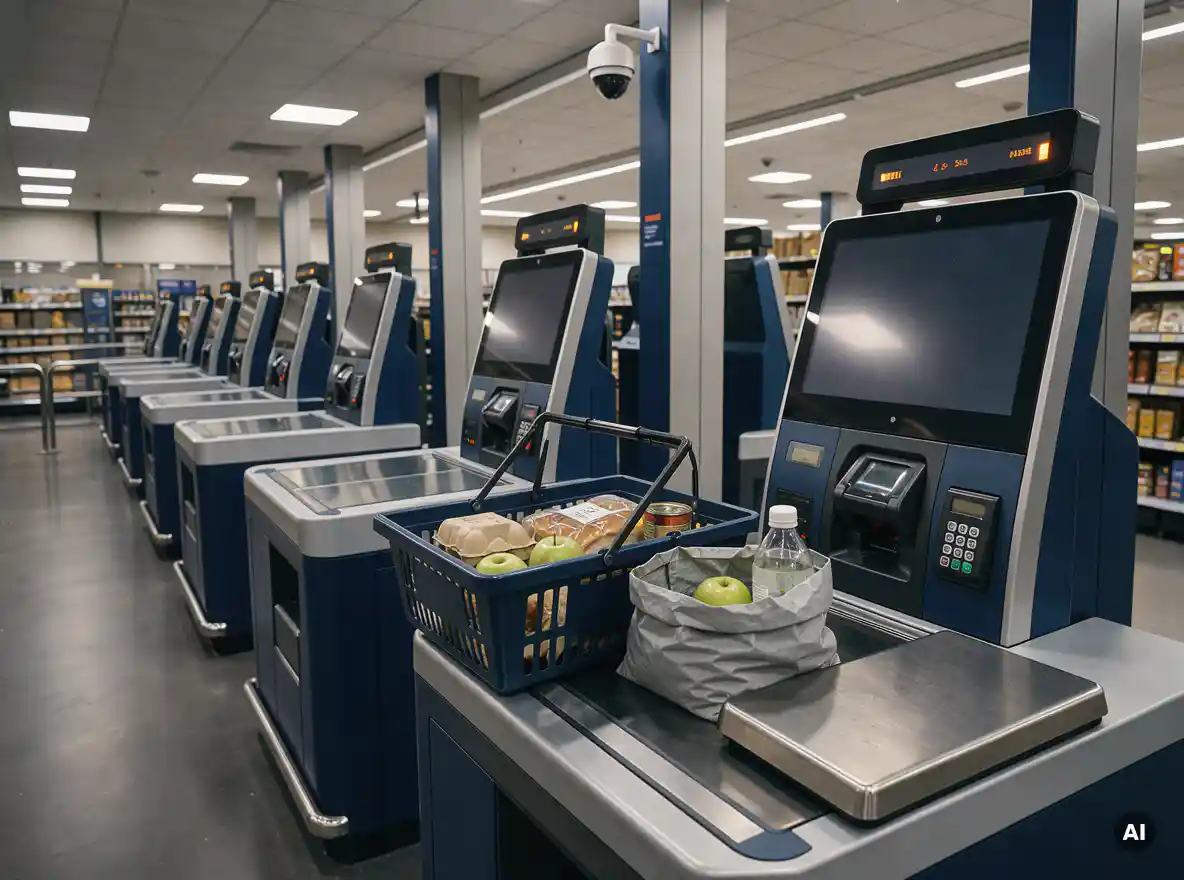
Self-checkout theft is the deliberate or opportunistic taking of goods at an unattended scan point without paying full value, typically through unscanned items, switched barcodes, or misidentified produce. Effective retail loss prevention combines detection technology, deliberate store design, trained staff and consistent measurement. The sections below address the most common questions retailers ask about each.
The most common self-checkout theft methods are the "banana trick" (scanning a cheaper product code for a costlier item), skipping items entirely, switching barcodes between products, and leaving items in the bagging area or trolley base. Some incidents are deliberate, while others stem from genuine scanning errors.
Retailers should distinguish between three categories, as each requires a different response:
Separating intent from error matters commercially. Treating honest mistakes as theft damages customer relationships, while ignoring deliberate behaviour erodes margin.
Self-checkouts are more vulnerable to shrinkage because they remove the direct oversight of a trained cashier, shift the scanning task to the customer, and reduce the social deterrent present at a staffed till. Fewer eyes on each transaction means errors and fraud are both harder to detect.
Several structural factors compound the risk. Staff attention is divided across multiple terminals, so intervention is often reactive. Weight-based verification can be inconsistent for lightweight or irregular products. Unattended peak periods also create queues, and pressure on assistants to clear queues quickly can lead to approvals without a proper basket check.
For retailers focused on retail loss prevention, the lesson is that the checkout environment itself, not just the individual customer, shapes outcomes. Physical design, device placement and service flow all influence behaviour before any technology intervenes.
Technology that helps detect self-checkout theft includes computer vision cameras that match scanned items to what is placed in the bagging area, intelligent weight sensors, AI-driven exception alerts, and analytics that flag unusual transaction patterns. Combined, these systems identify mismatches in real time and prompt intervention.
The principal options are:
Technology performs best when its alerts are routed to a person who can respond promptly and courteously. A detection system without a clear response process generates data but does not reduce loss.
Store layout and signage deter theft by placing self-checkouts in clear sight of staff, limiting concealed approach routes, and communicating that transactions are monitored. Well-positioned terminals, controlled entry points and unambiguous messaging reduce both opportunity and ambiguity, which lowers deliberate and accidental loss alike.
Practical design considerations include:
Fixtures and point-of-sale units influence behaviour near the checkout, particularly for compact, high-value items positioned as impulse purchases. Purpose-built, lockable or visibility-optimised displays help protect these lines without discouraging purchase. Brands and retailers working on this should treat fixture design as a loss prevention measure, not only a merchandising one.
Retailers should staff self-checkout areas with a dedicated, visible host who can assist and monitor, and train that person in both customer service and exception handling. The aim is early, polite intervention, supported by clear escalation procedures, rather than confrontation after a loss occurs.
Effective staffing and training programmes typically address:
Staff who understand why exceptions occur, and who feel supported when they intervene, make more consistent decisions than those working to informal rules.
Retailers can measure whether theft reduction is working by tracking shrink as a percentage of sales, intervention and alert rates, exception volumes per terminal, and customer experience indicators over a consistent baseline period. Comparing stores or terminals with and without a new measure isolates its effect.
A robust measurement framework includes:
Trial changes in a limited number of stores first, then scale what the data supports. Retail loss prevention improves most reliably when each measure is tested, recorded and refined.
Pivotal designs, manufactures and installs in-store environments that support commercial performance and protect high-value products, working with brands and retailers across pharmacy, beauty and wider consumer sectors. In 2025, Pivotal installed over 2,000 new retail and brand experiences, supported by in-house fitters who visited a store every 34 minutes.
To discuss fixtures and in-store solutions that strengthen your approach to loss prevention, contact Pivotal today and begin planning your next retail project.