
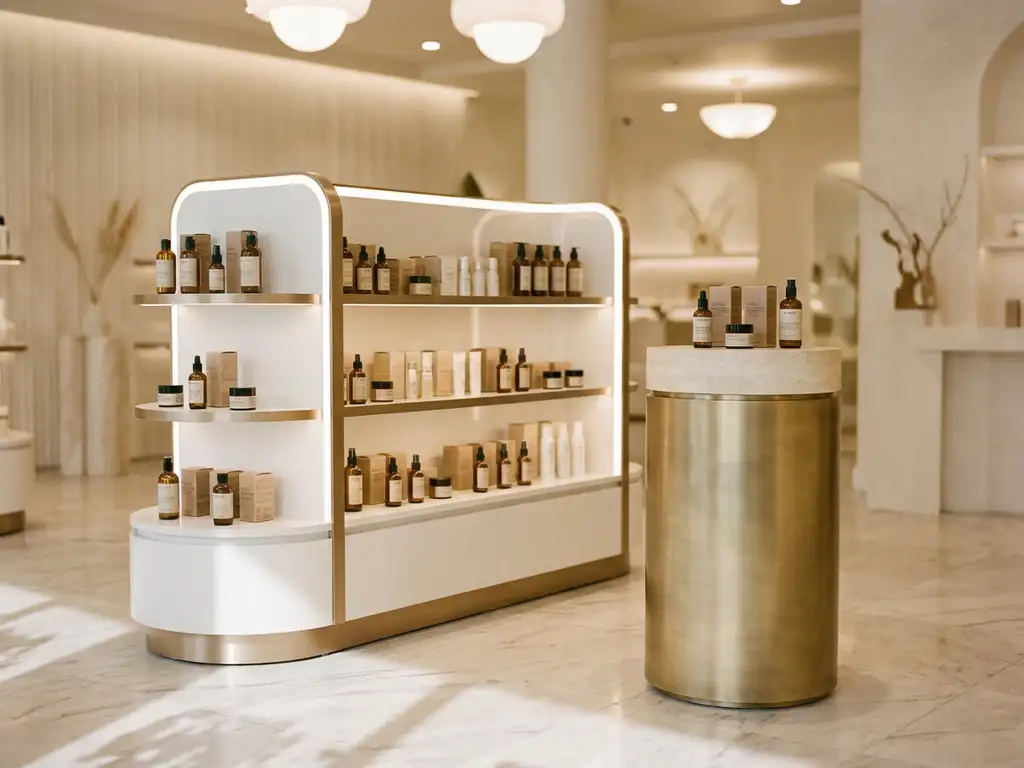
A gondola and a freestanding display unit (FDU) are two distinct types of retail fixtures that serve different commercial purposes. A gondola is a permanent, double-sided shelving unit that forms the backbone of a retail store's layout, whereas a freestanding display unit is a branded, self-contained structure placed independently on the shop floor to promote specific products. Understanding the distinction matters because the wrong choice can cost a brand both visibility and sales.
The sections below address the most common questions brands and retailers ask when evaluating these two formats, from structural differences and material choices through to placement strategy.
A gondola is a double-sided, floor-standing shelving unit that forms the primary structural framework of most supermarkets, pharmacies, and general merchandise stores. Unlike wall-mounted shelving or standalone display tables, gondola shelving is designed to create the aisles that shoppers navigate, making it a foundational element of a store's planogram rather than a supplementary display tool.
Gondola units are typically retailer-owned and managed. Brands that secure gondola space are, in effect, renting shelf positions within a fixed structure they have limited control over. The shelves are adjustable, but the overall aesthetic, colour, and form belong to the retailer. This means that while gondola shelving offers high footfall exposure, it provides relatively little opportunity for brand differentiation at the point of purchase.
In high-volume retail environments such as supermarkets and pharmacy chains, gondola display space is competitive and often governed by category management agreements. Brands must work within the retailer's planogram guidelines, which can restrict the use of bespoke signage, branded headers, or custom shelf configurations.
A freestanding display unit is used to create a dedicated, branded presence for a specific product or product range within a retail environment, independent of the store's standard shelving infrastructure. FDUs are positioned on the shop floor to intercept shoppers at high-traffic points, drive impulse purchase decisions, and communicate brand identity at the point of sale.
Unlike gondola shelving, an FDU is brand-owned and brand-designed. It allows the brand to control every aspect of the customer-facing experience, from structural form and materials through to graphics, lighting, and product sequencing. This makes FDUs particularly effective for product launches, seasonal promotions, and premium product ranges where brand perception directly influences purchase behaviour.
Common applications for freestanding display units include:
The fundamental difference between gondola display and freestanding display units lies in ownership, creative control, and commercial intent. Gondolas are retailer infrastructure built for category organisation and maximum product density. FDUs are brand assets built for differentiation, storytelling, and targeted shopper engagement at the point of purchase.
From a design perspective, gondola shelving prioritises functional uniformity. Units are standardised across a store to create visual consistency and operational efficiency. The retailer determines the overall look, and individual brands contribute shelf-level POS materials such as shelf strips, wobblers, or header cards within that fixed framework.
Freestanding display units, by contrast, are engineered around the brand brief. The structure, footprint, height, material palette, and graphic treatment are all determined by the brand and its design partner. This allows for a level of creative expression that gondola space simply cannot accommodate. An FDU can incorporate curved forms, illuminated panels, interactive elements, or premium material finishes that position a product range as distinct from its competitors on the adjacent gondola.
In purpose, gondolas serve the retailer's category strategy. FDUs serve the brand's commercial and marketing objectives. Both have a role in a well-executed retail environment, but they operate at different levels of the shopper journey.
A brand should choose a freestanding display unit over gondola space when differentiation, brand storytelling, or promotional urgency cannot be achieved within the constraints of standard retailer shelving. FDUs are the stronger commercial choice when the brand needs to own the shopper experience rather than participate within a shared retail fixture.
Specific scenarios where an FDU delivers stronger returns than gondola positioning include:
Freestanding display units are constructed from a range of materials selected according to the display's intended lifespan, aesthetic requirements, retail environment, and sustainability commitments. Common materials include acrylic, metal, wood, MDF, and moulded plastics, often used in combination to achieve both structural integrity and visual impact.
Permanent FDUs designed for long-term placement in department stores, pharmacies, or premium retail environments typically use higher-grade materials such as powder-coated steel frames, solid timber joinery, or precision-cut acrylic panels. These constructions are built to withstand repeated restocking, shopper interaction, and the wear of a busy retail floor over an extended period.
Temporary and semi-permanent FDUs, often deployed for promotional campaigns or product launches, may use corrugated board, lightweight metal, or injection-moulded components to reduce cost and allow for efficient logistics and installation at scale. Rapid prototyping techniques, including CAD modelling and physical sample production, allow brands and their design partners to test structural performance and visual execution before committing to full production runs.
Sustainability is an increasingly significant factor in material selection. Brands operating in sectors such as beauty, health, and wellness are under growing pressure to demonstrate responsible sourcing and end-of-life disposal planning for their retail display units. This has driven greater use of recyclable metals, FSC-certified timber, and reduced-plastic construction methods within the FDU category.
Placement decisions for freestanding display units are driven by a combination of shopper behaviour data, retailer planogram agreements, and brand commercial objectives. The goal is to intercept shoppers at moments of high receptivity, typically at store entry points, aisle ends, till queues, or category adjacencies where a related purchase decision is already being made.
Retailers control the available floor space and will typically require brands to submit FDU placement proposals as part of a broader commercial negotiation. High-traffic positions such as gondola end caps, promotional bays, and feature areas near store entrances command premium placement fees but deliver disproportionately higher shopper exposure. Brands with strong retailer relationships and compelling shopper insight data are better positioned to secure these locations.
From the brand's perspective, placement strategy should be informed by the shopper journey within the specific retail format. A pharmacy environment such as Boots UK presents a different traffic flow and purchase mindset compared to a supermarket or a fashion retailer. Understanding category adjacencies, dwell time, and shopper mission type allows brands to place FDUs where they are most likely to convert attention into action.
Compliance is a critical consideration in placement planning. FDUs must meet retailer health and safety requirements, fire egress regulations, and aisle width standards. Working with an experienced retail design partner ensures that display units are engineered to comply with these requirements before they reach the shop floor, avoiding costly delays or on-site rejections.
Pivotal works with brand owners and marketing teams to determine the most effective display format for their retail objectives, then designs, manufactures, and installs it as a single end-to-end service. Whether a brand requires a permanent freestanding display unit for a pharmacy rollout or a temporary in-store display campaign across multiple retail locations, Pivotal manages the full project lifecycle without the need for multiple suppliers.
Brands that need to move from a gondola display strategy to a more differentiated point of sale display approach will find in Pivotal a partner capable of delivering at every stage. To discuss your next in-store display project, get in touch with the Pivotal team today.