
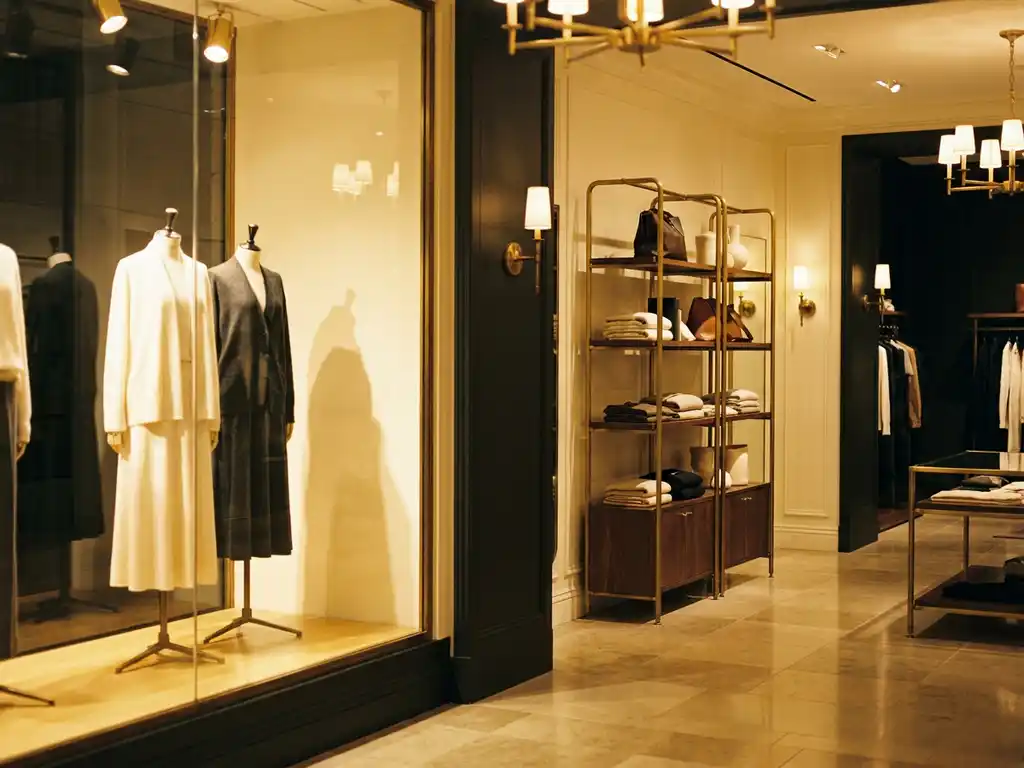
Window displays and in-store merchandising serve fundamentally different commercial purposes. A window display is an external brand communication tool designed to attract footfall and generate curiosity before a shopper enters the store. In-store merchandising operates inside the retail environment, guiding shopper behaviour, reinforcing brand identity, and driving purchase decisions at the point of sale. Understanding the distinction allows brands to allocate creative investment more precisely and deliver a stronger, more coherent retail experience at every stage of the shopper journey.
Window displays target shoppers who have not yet committed to entering the store, making their primary goal conversion from passer-by to visitor. In-store merchandising targets shoppers who are already present, making its primary goal conversion from browser to buyer. The two formats address consecutive stages of the same shopper journey, and each requires a distinct strategic approach to be effective.
A window display must communicate a brand proposition in seconds, often to a shopper in motion. It competes with surrounding retail environments, digital screens, and general street noise. Its success is measured in footfall, dwell time in front of the window, and store entry rates.
In-store merchandising operates under different conditions. The shopper has already chosen to enter. The objective shifts to navigation, product discovery, and purchase motivation. Effective in-store retail display connects a shopper with the right product at the right moment, whether through fixture placement, signage hierarchy, or tactile product interaction.
Effective window display design is built on immediate visual impact, a single clear message, and strong brand recognition from a distance. The most successful window displays communicate one idea with confidence rather than attempting to showcase an entire product range. Simplicity, contrast, and scale are the dominant design principles at work.
Because window displays are viewed from outside, often through glass and at varying distances, legibility takes priority. Typography must be large and high-contrast. Colour palettes should reflect the brand while creating separation from the surrounding retail environment. Lighting plays a critical role, particularly in evening trading hours, where an illuminated window becomes a significant competitive advantage.
Seasonal relevance and campaign alignment are equally important. A window display that reflects a current campaign or cultural moment creates coherence between a brand's wider marketing activity and its physical retail presence. This alignment strengthens brand recall and reinforces the shopper's decision to engage further inside the store.
In-store merchandising influences purchase decisions by controlling what shoppers see, in what order, and in what context. Fixture placement, product adjacency, signage, and point of sale display all shape the path to purchase. Research consistently shows that a significant proportion of purchase decisions are made inside the store, making the in-store environment one of the most commercially valuable touchpoints a brand can invest in.
Effective in-store merchandising achieves several outcomes simultaneously. It directs shopper attention to priority products or promotional lines. It communicates product benefits at the moment of consideration. It creates a branded environment that builds trust and familiarity, particularly in categories such as beauty, health, and wellness where shopper confidence directly affects conversion.
The physical and tactile nature of in-store retail also provides something digital channels cannot replicate. Shoppers can interact with products, read packaging, and experience a brand through texture, scent, and spatial design. This sensory engagement is a powerful driver of both immediate purchase and longer-term brand loyalty.
Brands should not use identical creative across window displays and in-store merchandising, though both should share a consistent visual identity. The viewing conditions, communication goals, and shopper mindset differ significantly between the two formats, and creative that performs well in one context will frequently underperform in the other.
Window display creative is designed for distance, speed, and emotional impact. It needs to stop a shopper in their tracks and communicate a single, compelling message. In-store merchandising creative is designed for proximity, consideration, and information. It supports a shopper who is already engaged and needs product detail, brand narrative, or a reason to choose one product over another.
The most effective approach treats both formats as part of a unified campaign while adapting the execution to suit each context. A brand launching a new product line, for example, might use the window to generate intrigue and the in-store display to deliver the full product story and drive conversion.
Window displays and in-store merchandising differ considerably in the materials and production methods they require, reflecting the different durability, visibility, and handling demands of each format. Window displays often use larger-format, high-impact materials built for visual drama rather than repeated shopper interaction. In-store displays must withstand daily handling, restocking, and the physical demands of a live retail environment.
Window installations frequently incorporate large-format print, acrylic fabrication, illuminated elements, and structural props designed to create a theatrical effect. These are often temporary or seasonal, built to a campaign timeline and then replaced or refreshed. Production prioritises visual quality and installation speed.
In-store fixtures and point of sale display demand greater material durability. Joinery, metalwork, moulding, and engineered acrylic are commonly used in permanent or semi-permanent retail display solutions. These materials must maintain their appearance under consistent handling, variable lighting, and the wear associated with high-footfall retail environments. Rapid prototyping plays an important role in validating designs before full production, reducing risk and ensuring fit-for-purpose outcomes.
Brands should prioritise window display investment when the primary objective is driving store entry, building brand awareness in a new location, or amplifying a time-sensitive campaign. In-store merchandising investment becomes the priority when the objective is increasing basket size, improving conversion rates, or strengthening the brand's presence at the point of purchase across a retail estate.
For brands with established retail distribution, in-store merchandising typically delivers the stronger commercial return because it operates at the moment of purchase decision. A well-designed point of sale display or branded fixture can directly influence which product a shopper selects from a competitive shelf environment.
Window displays deliver greater value for brands entering new retail partnerships, launching flagship environments, or running high-profile seasonal campaigns where footfall generation is the primary commercial goal. In practice, the most commercially effective brands invest in both, treating them as complementary tools within a broader retail design strategy rather than competing budget lines.
Pivotal is a UK-based, full-service retail design company that partners with brands to create, manufacture, and install both window display and in-store merchandising solutions. Working with brands across beauty, health, fashion, and lifestyle, Pivotal manages the full project lifecycle from initial concept through to on-site installation, carried out by its own employed fitters.
Whether the objective is a high-impact window campaign or a permanent in-store fixture programme, Pivotal brings the expertise to deliver both with precision and commercial intent. Get in touch with the Pivotal team to discuss how a joined-up approach to retail display can strengthen your brand's performance in-store.