
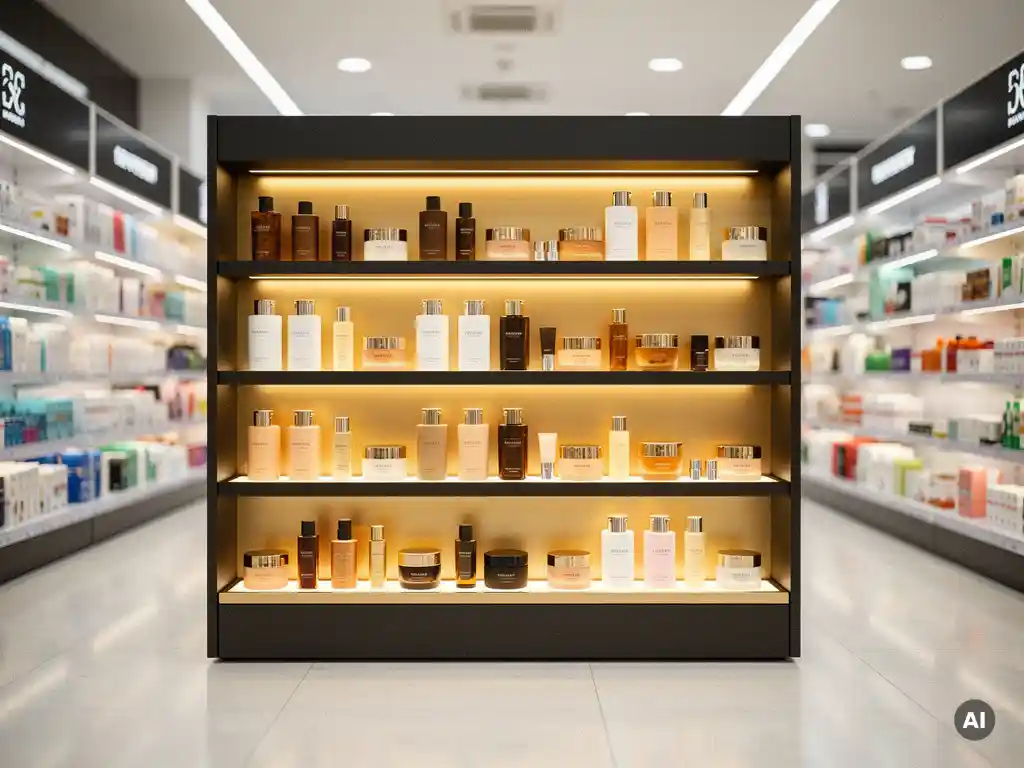
Point of sale plays a central role in trade marketing strategy by converting brand investment into measurable action at the moment a shopper makes a purchasing decision. For brand owners and marketing directors, POS in trade marketing is not a tactical afterthought; it is the physical execution layer that determines whether retailer shelf space translates into sales. The sections below address the most pressing questions brands ask when building or refining a retail POS strategy.
Point of sale is the final and most commercially critical touchpoint in a trade marketing strategy. While trade marketing encompasses everything from retailer negotiations and promotional planning to category management, POS materials are the mechanism that activates those agreements on the shop floor, directing shopper attention, communicating value, and driving conversion at the point of purchase.
A well-integrated trade marketing strategy treats POS not as a standalone execution but as the physical expression of the brand's commercial objectives. Promotional pricing, new product launches, seasonal campaigns, and category leadership positions all require physical in-store presence to be effective. Without POS, trade investment risks remaining invisible to the shopper, regardless of how strong the retailer relationship or the above-the-line media spend.
Brands that align their POS strategy with broader trade marketing goals, including ranging decisions, planogram compliance, and retailer-specific promotional calendars, consistently achieve stronger in-store performance than those that treat display as a last-minute production requirement.
Trade marketing uses a broad range of POS materials, each suited to specific retail environments, campaign objectives, and budget parameters. The primary categories include permanent fixtures, semi-permanent display units, temporary POS, and digital or interactive displays, with selection driven by the brand's channel strategy and the retailer's store format.
The most commonly deployed POS materials in trade marketing include:
The most effective trade marketing POS strategies combine formats, using permanent fixtures to establish brand equity and temporary displays to activate promotional moments throughout the year.
POS influences shopper behaviour by interrupting the default purchasing pattern and directing attention to a specific product or brand at the moment of decision. Research in shopper psychology consistently shows that a significant proportion of purchase decisions, particularly in categories such as beauty, snacking, and personal care, are made or confirmed in-store, making point of purchase display a direct lever on conversion.
Effective POS works through several behavioural mechanisms. Visibility is the first: a display that stands out from the surrounding shelf environment captures attention before a shopper has consciously engaged with the category. Messaging then does the work of communicating a reason to choose, whether that is a price promotion, a product benefit, or a brand story. Finally, physical placement guides the shopper toward the product, reducing friction in the path to purchase.
In premium categories, POS also functions as a signal of brand quality. A well-crafted display communicates investment, care, and credibility, factors that influence perceived product value before the shopper has read a single word of copy. This is why brands operating in pharmacy, department store, and specialist retail environments invest in high-specification materials and bespoke design rather than generic display solutions.
POS (point of sale) and POP (point of purchase) are closely related terms that are often used interchangeably, but they describe subtly different concepts. POS refers specifically to the location or moment at which a transaction occurs, and by extension, the materials placed at that location. POP is a broader term that encompasses all branded display activity designed to influence the shopper within the retail environment, not only at the till.
In practice, the distinction matters most when planning where and how to deploy display materials. A counter unit positioned at the checkout is POS in the strictest sense. A freestanding display placed mid-aisle, a branded gondola end, or a category feature zone are more accurately described as POP: they influence purchase intent before the shopper has committed to buying anything.
For trade marketing purposes, both terms fall under the same strategic umbrella. Brands and their retail design partners typically use POP to describe the full range of in-store display activity, while POS is retained for materials and formats specifically associated with the transaction environment. Understanding this distinction helps brands allocate display budgets more precisely across the shopper journey.
POS designed for retail environments must meet specific compliance requirements set by each retailer before it can be approved for installation. These requirements typically govern dimensions, materials, fixings, weight limits, fire safety standards, and brand guidelines, and they vary significantly between retailers, store formats, and even individual store types within the same chain.
The compliance process begins at the design stage. Brands that engage their retail design partner early, before concepts are finalised, avoid the costly cycle of redesign and resubmission that results from non-compliant prototypes. Key compliance considerations include:
Working with a retail design partner whose installation teams are retailer-approved significantly reduces compliance risk. It ensures that design decisions made on paper translate correctly into the physical retail environment, without the delays or penalties that non-compliant installations can trigger.
The decision between permanent and temporary POS displays depends on three primary factors: the duration of the commercial objective, the level of retailer commitment secured, and the brand's long-term category strategy. Permanent displays are appropriate when a brand holds confirmed, long-term shelf or floor space. Temporary displays are the right tool for promotional periods, product launches, or trial activations where flexibility is required.
Permanent fixtures represent a higher upfront investment but deliver sustained brand presence and typically stronger returns over time. They are most appropriate when a brand has secured a dedicated space within a retailer, such as a branded bay in a pharmacy or a fixture in a department store beauty hall. Permanent displays reinforce brand equity, improve shopper navigation within the category, and reduce the cost per impression over an extended deployment period. They also signal to the retailer a long-term commercial commitment, which can strengthen the trading relationship.
Temporary displays offer speed and flexibility. They are designed to be produced, deployed, and removed within a defined campaign window, typically aligned with a promotional mechanic, seasonal moment, or new product introduction. For brands testing a new retail channel or launching into a retailer for the first time, temporary POS allows commercial validation before committing to a permanent fixture investment. The trade-off is that temporary materials are generally less robust and may require more frequent replacement across a national rollout.
Many brands operate both in parallel, using permanent fixtures to anchor category presence and layering temporary POS on top to activate specific promotional moments throughout the retail calendar. This hybrid approach maximises both brand visibility and campaign agility.
Pivotal is a full-service retail design partner that supports brands at every stage of their POS and trade marketing strategy, from initial concept through to compliant, on-site installation. For brand owners and marketing directors looking to strengthen their in-store presence, Pivotal provides:
In 2025, Pivotal's in-store engineers visited a store every 34 minutes and installed over 2,000 new retail and brand experiences, a scale of delivery that reflects genuine operational capability, not just design ambition. If you are planning a POS programme for 2026 and need a partner who can manage the full lifecycle without the complexity of multiple suppliers, contact Pivotal to discuss your project.