Retail display units are commonly constructed from a core set of materials: acrylic, metal, wood and wood composites, cardboard, and foamboard. The right material depends on the display's purpose, location, expected lifespan, and the brand experience it needs to deliver. Material selection is one of the most consequential decisions in the retail display design process, influencing everything from durability and aesthetics to cost and environmental impact. The sections below address the most common questions brand owners and retail managers face when specifying display materials.
Permanent retail displays are best suited to metal, solid wood, MDF, and high-grade acrylic. These materials offer the structural integrity, finish quality, and longevity required for fixtures that will remain in-store for extended periods, often years. They withstand repeated customer interaction, cleaning cycles, and the physical demands of a live retail environment without deteriorating in appearance.
Metal, particularly steel and aluminium, is a preferred choice for permanent in-store fixtures because of its strength-to-weight ratio and versatility in fabrication. Steel provides robustness for heavy-load applications such as gondola units and branded bays, while aluminium is favoured where weight is a consideration, such as in modular or freestanding display systems.
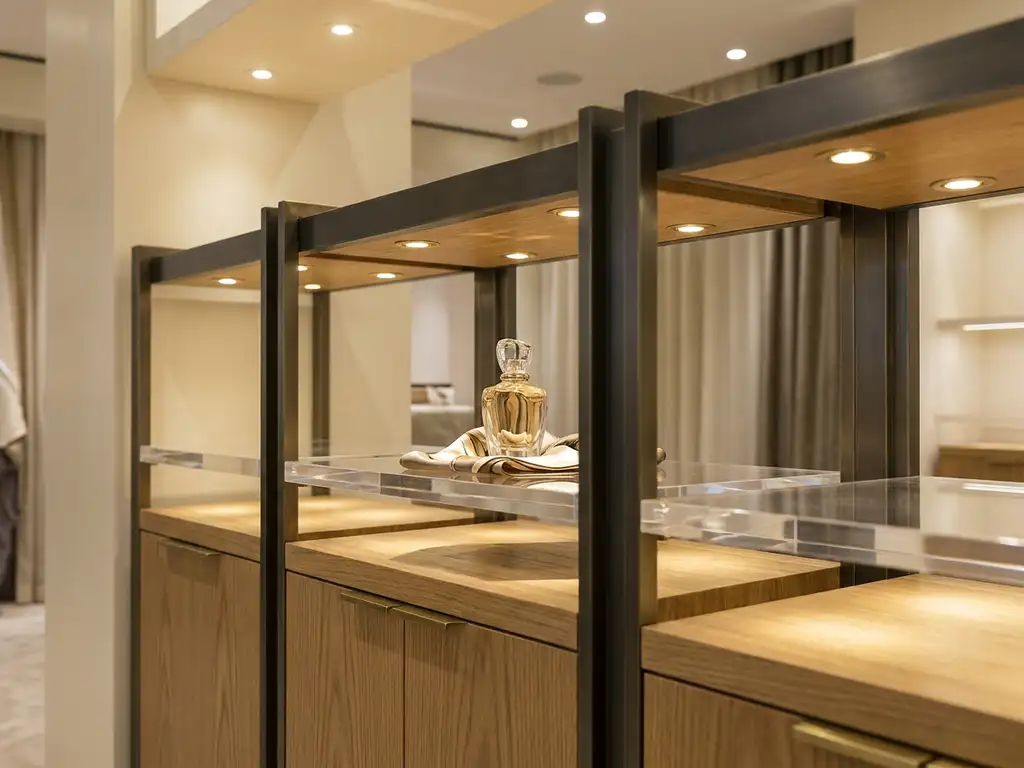
Wood and engineered wood products like MDF and plywood deliver a premium, tactile quality that resonates strongly in beauty, lifestyle, and fashion retail environments. They accept a wide range of surface finishes, from paint and veneer to laminate and lacquer, making them highly adaptable to brand guidelines. For brands seeking a sophisticated in-store presence, wood-based construction remains a benchmark material in permanent fixture design.
The most common materials used in temporary point of sale displays are corrugated cardboard, foamboard, and lightweight plastics such as PET and polypropylene. These materials are cost-effective, quick to produce, and easy to transport and install, making them well-suited to promotional campaigns, seasonal activations, and new product launches with defined in-store windows.
Corrugated cardboard is the dominant material in temporary POS display production. It is printable, recyclable, and available in a range of structural grades to support different load requirements, from shelf-edge strips to full-height floor-standing units. Foamboard offers a lightweight alternative with a cleaner, more rigid surface, often used for header cards, shelf talkers, and branded standees.
Lightweight plastics are increasingly used in semi-permanent temporary displays where a more premium finish is required without the cost of a full permanent fixture. These materials bridge the gap between short-run cardboard executions and longer-life display investments, giving brands flexibility when trialling new retail formats or entering new retail channels.
Acrylic is used in retail display units for product risers, display cases, shelf trays, signage holders, and branded point of purchase stands. Its optical clarity, versatility in fabrication, and ability to be formed into complex shapes make it one of the most widely specified materials across both permanent and semi-permanent retail display applications.
One of acrylic's defining properties is its glass-like transparency, which allows products to remain the visual focus while the display structure recedes. This quality makes it particularly effective in beauty, fragrance, and luxury retail, where product presentation is central to the brand experience. Acrylic can also be produced in a full range of colours, finishes, and opacities, giving designers significant creative latitude.
From a fabrication standpoint, acrylic is laser-cut, CNC-routed, heat-formed, and bonded with precision, enabling intricate geometries and tight tolerances that other materials cannot achieve at the same cost. It is also relatively lightweight compared to glass, reducing both shipping costs and installation complexity. These practical advantages, combined with its visual impact, explain why acrylic remains a staple retail display material across sectors.
Material choice directly determines the environmental footprint of a retail display, affecting recyclability, embodied carbon, production waste, and end-of-life disposal. Selecting materials with strong sustainability credentials, such as FSC-certified timber, recycled metals, or recyclable plastics, is one of the most effective ways to reduce the environmental impact of in-store display programmes.
Cardboard and paper-based materials score well on recyclability and are biodegradable, making them a responsible choice for short-run temporary displays. However, when coated with laminates or mixed with non-recyclable adhesives, their recyclability is compromised. Specifying mono-material constructions or clearly separable components significantly improves end-of-life outcomes.
For permanent fixtures, the sustainability calculation is different. A well-constructed metal or timber display that remains in service for several years has a lower per-use environmental impact than a series of cheaper, short-life alternatives that require repeated production and disposal. Durability, repairability, and the potential for refurbishment are therefore important sustainability criteria when specifying materials for long-term retail fixture programmes.
The retail industry is under increasing pressure from both brand owners and consumers to demonstrate responsible sourcing and circular design thinking. Material selection is where that commitment becomes tangible, and it is an area where an experienced retail design partner can provide meaningful guidance from the earliest stages of a project brief.
The key difference between metal and wood in retail fixture construction is their structural behaviour and aesthetic output. Metal offers superior load-bearing capacity, precision engineering tolerances, and a contemporary, industrial aesthetic. Wood delivers warmth, tactile quality, and design flexibility in surface finishing, making it the preferred choice where brand experience and premium feel are the primary drivers.
Steel and aluminium are the dominant metals in retail fixture manufacturing. Steel is used where structural strength is paramount, such as in wall-mounted bays, gondola shelving systems, and heavy-duty freestanding units. Aluminium is preferred for modular systems, exhibition structures, and applications where weight reduction matters. Both metals can be powder-coated, anodised, or brushed to achieve a wide range of decorative finishes, and both offer excellent dimensional stability over time.
Solid timber, MDF, plywood, and veneered board each serve distinct roles in retail joinery. MDF is the most widely used engineered wood product in display construction due to its smooth surface, dimensional consistency, and ease of machining. Solid timber and veneer are reserved for premium applications where the natural grain and material authenticity form part of the brand narrative. Wood-based fixtures are particularly prevalent in beauty, fashion, and lifestyle retail, where the warmth of the material reinforces a curated, considered shopping environment.
Material selection is one of the primary cost drivers in retail display unit production. Raw material costs, fabrication complexity, finishing requirements, and transportation weight all vary significantly between material types. Choosing the right material for the display's purpose and lifespan is therefore not only an aesthetic decision but a commercial one, with direct implications for unit cost, total programme spend, and return on investment.
Cardboard and foamboard are the lowest-cost options at the material level, but they require higher volumes to achieve competitive unit pricing and have limited reuse potential. Acrylic sits in the mid-range, with cost influenced by thickness, forming complexity, and print or finish specification. Metal and timber are typically the highest-cost materials in display construction, but their durability means the cost is amortised over a longer service life, often making them more economical on a cost-per-use basis.
Fabrication method also has a significant bearing on cost. CNC routing, injection moulding, and precision metalwork all carry tooling or setup costs that must be factored into the total project budget. For brands commissioning display programmes at scale, these fixed costs represent a smaller proportion of unit cost, improving overall programme economics. Smaller runs require careful material and process selection to maintain cost efficiency without compromising quality or brand standards.
Pivotal brings together design expertise, manufacturing capability, and in-depth material knowledge to guide brands through every stage of the retail display specification process. As a full-service retail design partner, Pivotal supports clients with:
With over 2,000 retail and brand experiences installed in 2025 alone, Pivotal has the scale, expertise, and manufacturing infrastructure to deliver in-store display units that perform commercially and reflect brand values with precision. To discuss your next retail display project, get in touch with the Pivotal team.