
A retail loss prevention policy should define shrinkage risks, assign responsibilities, set staff procedures, specify incident reporting protocols, and establish review cycles. It combines physical controls such as store layout and secure displays with operational controls such as training, audits, and escalation routes. The policy must be specific, measurable, and enforceable across every location. The sections below set out each component in turn.
Shrinkage risks are identified by comparing stock records against physical counts, then tracing discrepancies to their source: external theft, internal theft, administrative error, or supplier fraud. A structured risk assessment of each store, category, and process reveals where losses concentrate and which controls will have the greatest impact.
A thorough assessment typically draws on four sources of evidence:
High-value, small-format, and highly resaleable items such as health and beauty products, fragrance, and premium skincare are consistently attractive targets. Risk assessments should therefore weigh product value, size, and ease of concealment alongside footfall and staffing levels.
A retail loss prevention policy should cover its scope and objectives, risk categories, roles and responsibilities, physical security measures, staff procedures, incident reporting, and review arrangements. Each element must be documented clearly enough that any store manager can apply it consistently without interpretation.
The essential components are:
The policy should also state legal and safety boundaries clearly, including that staff must never put themselves at risk to intervene, and that all actions comply with data protection and employment law.
Store layout and displays support loss prevention by maximising visibility, controlling access to high-risk stock, and making concealment difficult. Open sightlines, well-positioned service points, and purpose-built fixtures deter opportunistic theft while keeping products accessible and attractive to genuine shoppers.
Fixture height is the first consideration. Perimeter units can be taller, but central gondolas should sit low enough for staff to see across the floor. Place the till or customer service point where it commands a view of the entrance and the highest-risk categories. Avoid creating dead ends or enclosed aisles, and position high-value products away from exits and close to staffed areas.
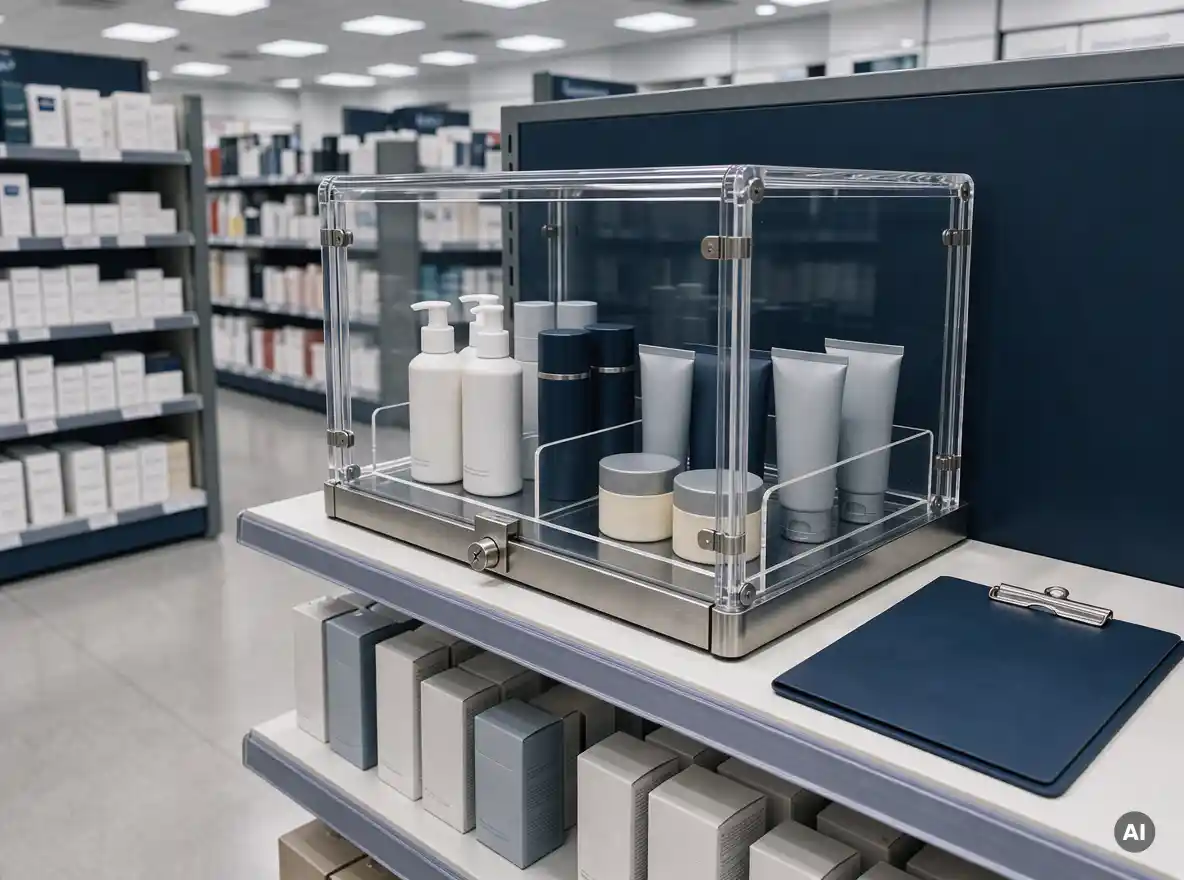
Display fixtures should balance security with shopper engagement. Options include lockable cabinets, tethered testers, limited facings that make gaps immediately obvious, and gravity-feed or controlled dispensing units for small, high-value lines. Well-engineered point of sale and bespoke fixtures can integrate these controls without compromising brand presentation, which matters most in pharmacy and beauty environments where premium products sit alongside everyday lines.
Loss prevention requirements should be specified at the design brief stage. Retrofitting security onto an existing display is usually costlier and less effective than building it into the concept.
The policy should set out clear procedures for customer engagement, cash and stock handling, refunds, key control, and stockroom access, supported by induction and refresher training. Trained staff are the most effective deterrent, because visible, attentive service discourages theft more reliably than equipment alone.
Core procedures to document include:
Training should begin at induction and be reinforced regularly, covering how to recognise suspicious behaviour, how to respond safely, and how to document incidents. Staff must understand that the priority is personal safety. Policies should also explain the consequences of internal policy breaches, applied consistently and fairly, to protect against internal shrinkage.
Theft incidents should be reported immediately through a defined channel, recorded in a standard format, and escalated according to severity. The policy must state who has authority to act, what evidence to preserve, and when to involve the police, so that responses are safe, lawful, and consistent.
A workable incident procedure follows this sequence:
Consistent reporting is what makes the data useful. Underreported incidents distort risk assessments and lead to misallocated security budgets, so the policy should make reporting simple and expected for every team member.
A loss prevention policy should be reviewed at least annually, with additional reviews after significant incidents, store refits, new product launches, or changes in legislation. Regular review ensures controls reflect current shrinkage patterns rather than historical assumptions.
Triggers that warrant an immediate review include:
Each review should compare shrinkage results against targets, test whether procedures are followed in practice, and gather frontline feedback. Physical controls also degrade over time. Locks wear, fixtures loosen, and graphics and merchandising drift from the original plan, so periodic inspection and maintenance of in-store fixtures form part of an effective review cycle.
Pivotal designs, manufactures, installs, and maintains in-store fixtures and displays, allowing loss prevention requirements to be built into the physical environment from the first concept. Our own employed fitters and project teams manage the full lifecycle, so security and brand presentation are resolved together. In 2025, Pivotal installed over 2,000 new retail and brand experiences, and our engineers visited a store every 34 minutes.
To discuss how your next display or fixture programme can reduce shrinkage while strengthening in-store impact, contact Pivotal to arrange a consultation with our design team.