
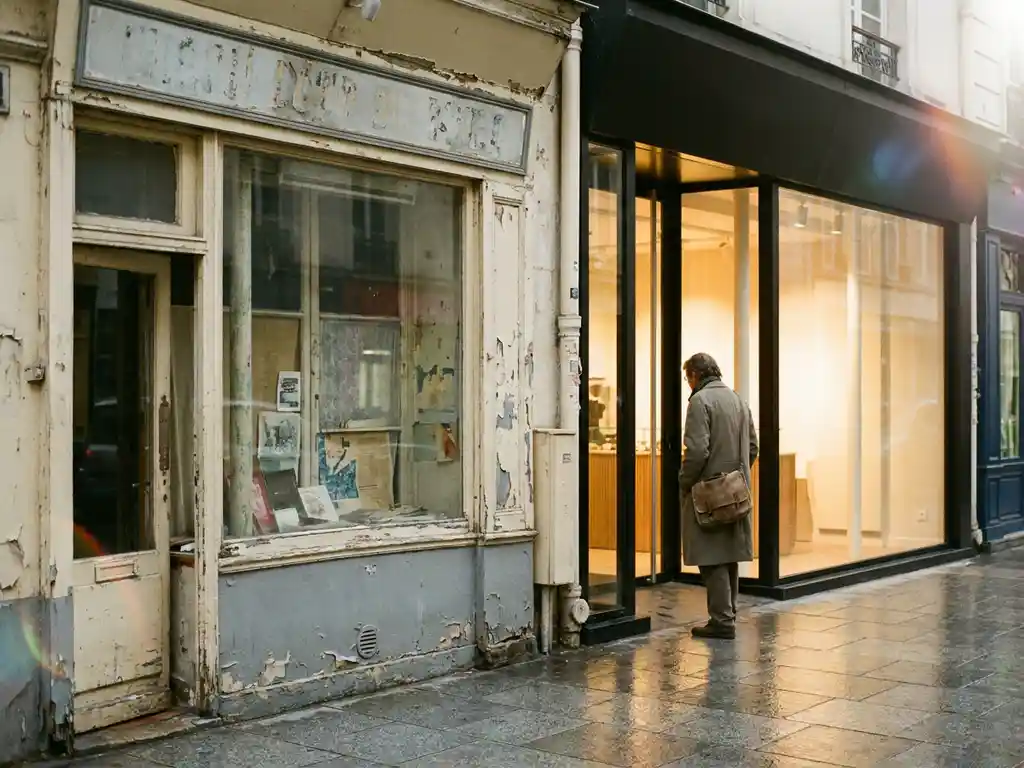
A brand should invest in redesigning its retail experience when the current in-store presentation no longer reflects the brand's positioning, fails to engage shoppers effectively, or underperforms against commercial objectives. This applies equally to brands launching new product lines, entering new retail environments, or responding to shifts in shopper behaviour. The questions below address the most common decision points brands face when evaluating a retail design investment.
The clearest signs that a retail experience needs redesigning are declining shopper engagement at the fixture, reduced conversion rates at the point of purchase, and a visible disconnect between the in-store display and the brand's current identity. If your display looks dated, is structurally worn, or no longer communicates your product's key benefits clearly, it is already working against you.
Beyond the visual, operational indicators matter too. Fixtures that are difficult for retail staff to maintain, that suffer frequent compliance failures, or that cannot accommodate product range updates are a practical liability. Shoppers make purchasing decisions in seconds at the fixture. If the display does not communicate clearly and quickly, the opportunity is lost regardless of how strong the product itself is.
Brands should also pay attention to competitive context. If rival brands in the same category have refreshed their in-store presence and yours has not, the contrast alone can erode perceived brand value. A retail experience redesign is not always about being broken — it is often about remaining competitive.
A well-executed retail experience redesign directly influences shopper behaviour by improving fixture navigation, increasing dwell time, and reinforcing brand trust at the point of purchase. Shoppers are more likely to engage with a display that is visually coherent, well-organised, and clearly communicates product benefits — all of which contribute to higher conversion rates in-store.
Physical retail design works on both rational and emotional levels. Clear product hierarchy, intuitive layout, and strong brand graphics reduce the cognitive effort required to make a purchasing decision. Simultaneously, premium materials, considered lighting, and tactile elements create an emotional connection that digital channels cannot replicate. This is the enduring advantage of the physical retail environment.
Redesigning a display also signals brand confidence to the shopper. An updated, well-maintained fixture communicates that the brand is active, invested, and credible. In categories such as beauty, health, and wellness — where trust is a significant purchase driver — this perception has direct commercial value.
The most common triggers for a retail display redesign are a product range refresh, a brand identity update, entry into a new retail channel, or a scheduled fixture replacement cycle. Brands also redesign in response to poor in-store performance data, retailer feedback, or a strategic decision to elevate the brand's physical presence ahead of a key trading period.
Internal triggers typically include a rebrand, the launch of a new product line, or a change in marketing strategy that requires the in-store experience to align with updated brand guidelines. Budget cycles and planned capital investment programmes also drive redesign activity, particularly for brands with a significant number of fixtures across multiple retail locations.
External triggers include retailer-led range reviews, category resets, and changes to planogram requirements. Competitive activity — such as a rival brand investing heavily in a fixture refresh — can also accelerate a brand's decision to redesign. Regulatory changes affecting product labelling or display requirements in certain categories, such as pharmacy or food and beverage, may also necessitate a structural update to existing fixtures.
The cost of redesigning a retail display or fixture varies considerably depending on the complexity of the design, the materials specified, the volume of units required, and whether the project involves a temporary or permanent solution. There is no universal price point — a bespoke permanent fixture for a premium beauty brand will carry a fundamentally different investment level than a short-term promotional POS unit.
Key cost drivers include the design and development phase, prototyping, material selection, manufacturing, logistics, and installation. Brands that engage a full-service retail design partner benefit from greater cost control across the entire project lifecycle, as all stages are managed within a single supply chain rather than across multiple suppliers. This reduces the risk of budget overruns and timeline slippage.
It is also worth framing the investment in commercial terms. A high-performing fixture that drives measurable uplift at the point of purchase generates a return that justifies the capital outlay. The more relevant question is not what a redesign costs in isolation, but what the cost of an underperforming display is over time — in lost sales, missed brand impressions, and eroded shopper trust.
A temporary retail display is designed for short-term use, typically supporting a promotional campaign, seasonal activation, or new product launch over a period of weeks or months. A permanent display is a long-term fixture intended to form part of the retailer's ongoing category layout, built to a higher specification and designed to perform over an extended period, often several years.
The distinction affects every aspect of the design and specification process. Temporary displays are generally constructed from lighter materials — corrugated card, foamboard, or lightweight plastics — with a focus on speed to market and cost efficiency. Permanent fixtures demand greater structural integrity, more durable materials such as acrylic, metal, or hardwood joinery, and a higher level of finish to withstand daily shopper interaction and regular restocking.
Strategically, the two serve different objectives. Temporary displays are effective for driving trial, creating urgency, and supporting campaign activity at a specific point in the retail calendar. Permanent fixtures build long-term brand equity in-store, anchor a brand's position within a category, and provide a consistent shopper experience across multiple retail locations. Many brands use both in parallel — a permanent fixture as the foundation, supported by temporary POS activations throughout the year.
A retail experience redesign project should involve brand marketing, trade marketing, and commercial or category teams on the client side, alongside a retail design partner with end-to-end capabilities covering design, manufacturing, and installation. Retailer stakeholders — including category managers and visual merchandising teams — should also be engaged early to ensure the proposed solution meets planogram requirements and in-store operational standards.
On the client side, misalignment between marketing ambition and commercial constraints is one of the most common causes of project delays. Involving the right internal stakeholders from the outset — including those responsible for budget sign-off and retailer relationship management — ensures that the brief is realistic, the timeline is achievable, and the final solution can be executed at scale.
From a supply chain perspective, working with a single partner who manages design, prototyping, manufacturing, and installation reduces the coordination burden significantly. It also ensures that the design intent is preserved throughout the production process, rather than being diluted as the project passes between multiple agencies and suppliers.
Pivotal is a UK-based, full-service retail design company that manages the complete redesign process — from initial concept and CAD development through to manufacturing, installation, and ongoing maintenance. In 2025 alone, Pivotal installed over 2,000 new retail and brand experiences, with in-store engineers visiting a store every 34 minutes. For brands evaluating a retail display refresh or a full in-store experience redesign, Pivotal provides:
Whether the brief calls for a temporary POS activation or a permanent fixture programme across multiple retail locations, Pivotal delivers end-to-end solutions built around commercial outcomes. To discuss your retail design investment, speak to the Pivotal team directly.