
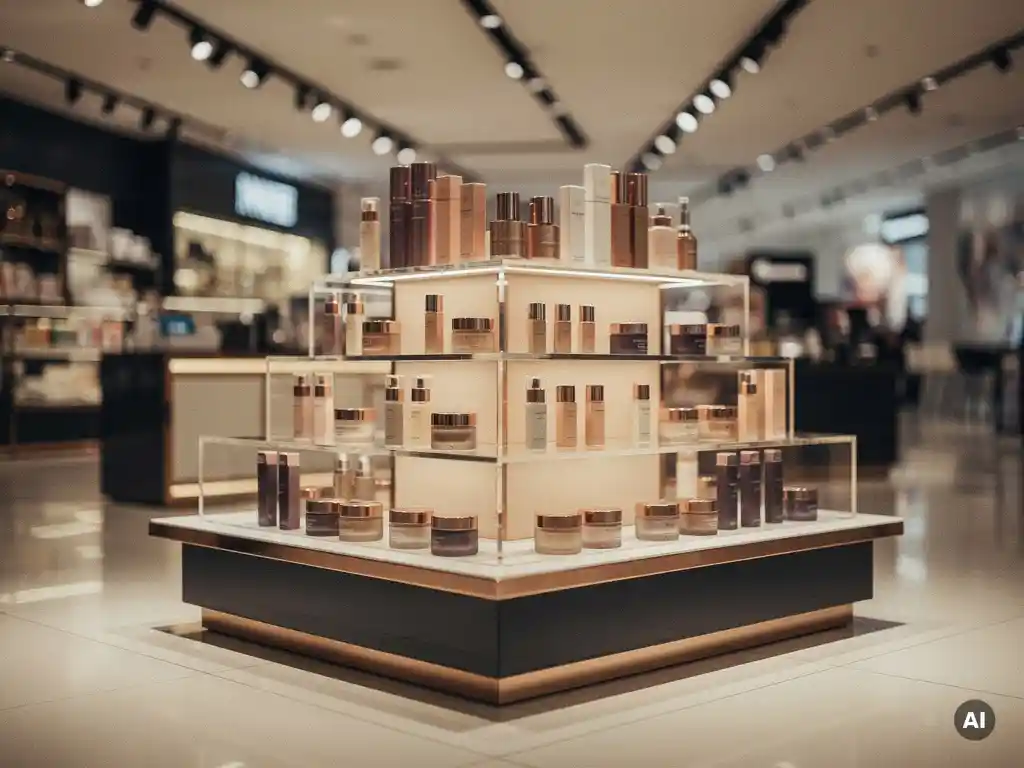
A point of sale display is a branded fixture or unit positioned within a retail environment to attract shopper attention and drive purchase decisions at or near the point of transaction. These displays work by intercepting shoppers at high-intent moments, presenting products with visual impact and contextual messaging that removes friction from the buying decision. The sections below address the most common questions brands and retailers ask when evaluating POS display strategy.
A point of sale display drives conversions by placing a product directly within a shopper's sightline at the moment they are most receptive to making a purchase. The display removes the need for a shopper to seek out a product, instead bringing it into the decision-making moment with visual cues, brand messaging, and product information that collectively reduce hesitation and prompt action.
The mechanism is straightforward: shoppers entering a retail environment are continuously processing visual stimuli. A well-designed in-store display cuts through that noise by using colour, structure, and hierarchy to direct attention. When a display is positioned correctly and communicates clearly, it shortens the path from awareness to purchase. This is particularly effective for impulse categories, new product launches, and promotional offers where the shopper may not have entered the store with a specific purchase intent.
Retail display also performs a secondary function beyond immediate conversion. It reinforces brand identity in a physical, tactile environment where digital advertising cannot reach. A shopper who does not purchase on first encounter still registers the brand, which influences future behaviour. The cumulative effect of consistent, high-quality POS display presence builds brand equity at the shelf level.
Point of sale displays span a wide range of formats, each suited to different retail environments, product categories, and campaign objectives. The primary types include freestanding display units, counter displays, shelf units, end caps, dump bins, and branded fixture systems. Each format serves a distinct role in how a product is presented and where it sits within the shopper journey.
The choice of format depends on the product, the retailer's store layout, and the campaign duration. Temporary displays suit short-term promotions, while permanent fixtures are appropriate for brands with an established, ongoing retail presence.
An effective point of sale display combines clear visual hierarchy, structural integrity, and brand-consistent messaging to guide the shopper from awareness to purchase. The most successful retail displays are those that communicate the product's value proposition within seconds, without requiring the shopper to read detailed copy or search for information.
Several factors determine whether a POS display performs:
Effectiveness is also shaped by how well the display has been tested before production. Rapid prototyping and in-store testing allow brands to validate shopper response and resolve structural or messaging issues before committing to a full rollout.
Point of sale displays should be placed where shopper traffic is highest and purchase intent is strongest. The most effective locations are till points, aisle ends, store entrances, and category adjacencies where the product's context is immediately understood. Placement strategy should be informed by store layout data, shopper flow analysis, and retailer guidelines.
Till point placements capture shoppers during a period of reduced movement and heightened receptivity, making them particularly effective for impulse purchases and small-format products. End caps benefit from visibility across multiple aisles and are well-suited to promotional displays and category hero products. Entrance zones create first impressions and work well for seasonal campaigns or brand awareness objectives.
Category adjacency placements, where a display sits near a complementary product category, can drive cross-sell behaviour. A skincare brand, for example, may benefit from placement adjacent to sun care or pharmacy ranges, where the shopper's mindset is already aligned with health and beauty purchasing.
Retailer approval is a critical consideration. Many major retail chains have defined planograms and fixture placement policies. Any display strategy must account for these parameters from the design stage to ensure the unit is compliant and deployable without modification on-site.
Point of sale (POS) and point of purchase (POP) displays are terms that are frequently used interchangeably, but they carry a subtle distinction in origin. Point of sale refers to the location where a transaction occurs, while point of purchase describes the display or material from the shopper's perspective, at the moment they make a buying decision. In practice, both terms describe the same category of in-store display and marketing material.
The terminology tends to vary by market, sector, and internal convention. UK retailers and brand teams often use POS as the default term, while POP is more common in marketing and shopper insights contexts. Neither term implies a meaningfully different type of display or a different function within the store environment.
What matters in practice is not the label but the strategic intent: both POS and POP displays exist to influence purchase behaviour at the shelf or transaction point. The design, placement, and material considerations are identical regardless of which term a brand or retailer prefers.
A brand should invest in a permanent display when it has an established, ongoing retail presence that justifies a long-term fixture. Permanent displays are appropriate for core product ranges with consistent distribution, flagship brand spaces within department stores or pharmacies, and category-defining products where shelf authority is a strategic priority. Temporary displays are better suited to new product launches, seasonal campaigns, and promotional mechanics with a defined end date.
The decision involves both commercial and logistical considerations:
Many brands operate a mixed strategy, using permanent fixtures to anchor their core range while deploying temporary displays around seasonal peaks, promotional windows, or new product introductions. This approach balances long-term brand presence with the agility to respond to commercial opportunities throughout the retail calendar.
Pivotal is a UK-based, full-service retail design company that manages the entire POS display process from initial concept through to on-site installation. For brands seeking to improve in-store conversion, Pivotal offers a structured, end-to-end capability that removes the complexity of managing multiple suppliers across the project lifecycle.
Brands including Estée Lauder, Eucerin, Avène, and Beiersdorf have partnered with Pivotal to deliver retail display solutions across major UK retail environments. To discuss a display project or request a consultation, contact the Pivotal team directly.