
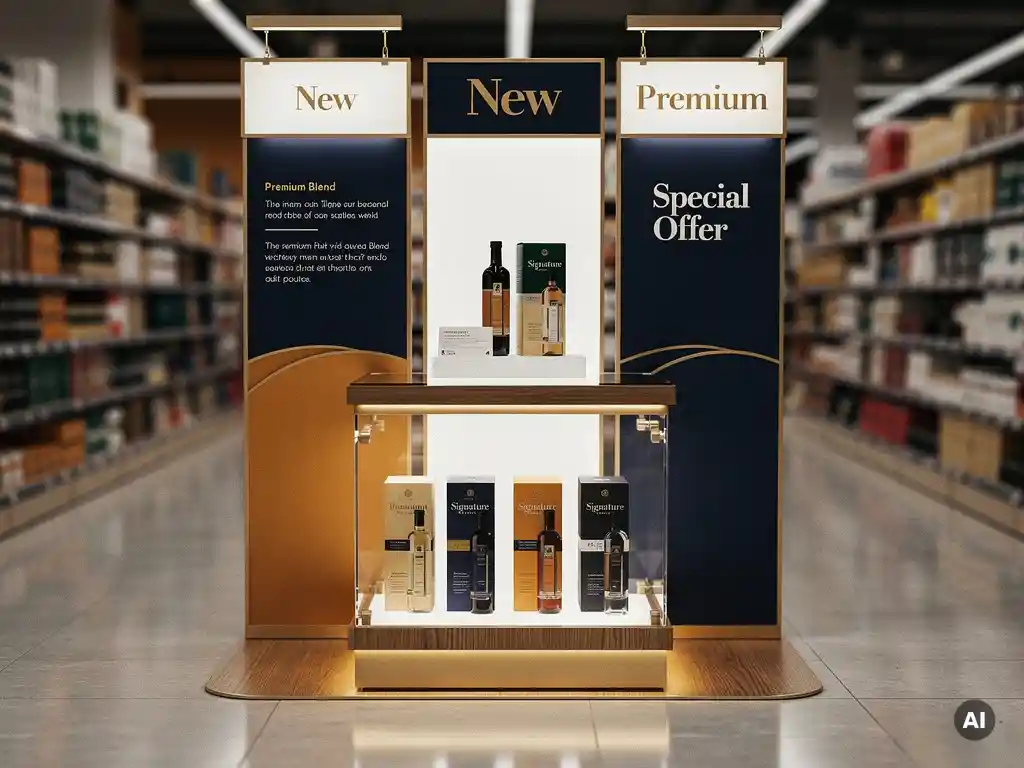
The most effective POS materials for driving in-store sales are those that combine strong visual impact with strategic placement at the point of purchase. Formats such as freestanding display units, shelf-edge strips, counter display units, and floor-standing units consistently outperform passive shelf arrangements by directing shopper attention and prompting unplanned purchase decisions. The right choice depends on the retail environment, the product category, and whether the display is intended for short-term promotional activity or long-term brand presence. The sections below address the key questions brand owners and marketing teams ask when evaluating point of sale materials.
The POS materials that have the greatest impact at the point of purchase are those positioned within the shopper's natural line of sight and decision-making path. Freestanding display units (FSDUs), counter display units (CDUs), and branded gondola end-caps consistently drive the strongest uplift by interrupting the shopper journey at high-traffic moments. Shelf-level materials such as wobblers, shelf barkers, and header cards reinforce brand messaging at the precise moment of selection.
Beyond placement, impact is determined by clarity of communication. A display that communicates a product benefit or promotional mechanic within two to three seconds of a shopper approaching it is far more effective than one that requires the shopper to pause and read. Strong hierarchy in graphic design, bold colour blocking, and tactile material finishes all contribute to this immediate legibility. In competitive retail environments such as pharmacy or health and beauty, where shelf density is high, standout at the point of purchase is not optional, it is the primary driver of conversion.
POS displays are manufactured from a wide range of materials, selected according to the display's intended lifespan, the retail environment, the weight of product it must carry, and the brand's aesthetic requirements. The most commonly used materials include acrylic, corrugated board, Foamex, MDF, metal, and injection-moulded plastic. Each brings distinct structural and visual properties that suit different applications.
Material selection is rarely a single-variable decision. A display combining a metal frame with acrylic shelving and printed Foamex headers, for example, balances durability with visual quality and cost efficiency. Experienced retail display manufacturers will specify materials in combination, guided by the display's functional requirements and the brand's positioning.
Temporary POS displays are designed for short-term use, typically aligned to a promotional campaign, seasonal push, or new product launch. They are most commonly constructed from corrugated board or lightweight printed substrates and are intended to be installed, used for a defined period, and then removed. Permanent POS displays, by contrast, are built to remain in-store for extended periods and are constructed from more durable materials such as metal, acrylic, MDF, or moulded plastic.
The distinction matters commercially because the two formats serve different strategic purposes. Temporary displays offer speed and cost efficiency, they can be produced quickly, distributed at scale, and changed frequently to reflect new messaging. Permanent displays represent a longer-term investment in brand presence, delivering consistent visibility and a more premium retail experience over months or years.
Many brands operate with both in parallel: a permanent branded fixture as the foundation of their in-store presence, supplemented by temporary POS materials that rotate with the promotional calendar. This layered approach maximises both consistency and agility at the point of sale.
POS material design influences shopper behaviour by guiding attention, communicating value, and reducing the cognitive effort required to make a purchase decision. Well-designed point of sale materials direct the eye to a product, establish its relevance to the shopper's need, and provide a reason to act, whether that is a promotional offer, a product benefit, or a brand cue that builds trust.
Colour, shape, height, and lighting all play a role in how shoppers perceive and interact with a display. Research in retail psychology consistently shows that shoppers make product selections within seconds of approaching a fixture. Displays that present information in a clear visual hierarchy, brand identity at the top, product range in the middle, price or promotional mechanic at the point of selection, align with the natural scanning pattern of a shopper in motion.
Material quality also signals brand positioning. A display constructed from premium materials with precise finishes communicates a different brand story than one printed on standard corrugated board. In categories such as luxury beauty, skincare, or premium food and beverage, the physical quality of the display is itself a brand signal that influences purchase confidence. Shopper insight data gathered at the concept stage can validate these design decisions before investment is committed to production.
Bespoke POS materials are the stronger choice for brands seeking genuine differentiation at the point of purchase. Off-the-shelf display solutions offer speed and lower upfront cost, but they are inherently generic, they cannot reflect a brand's specific identity, product dimensions, or retail environment requirements with precision. In competitive retail settings, a generic display is unlikely to outperform a purpose-built one.
That said, the decision should be guided by commercial context. For a short-run promotional test or a category where display investment is limited, a well-specified off-the-shelf unit with strong branded graphics may be entirely appropriate. For a national rollout across a major retail chain, or for a brand investing in a permanent shop-in-shop environment, bespoke design and manufacture delivers a measurably stronger return.
Bespoke development also enables integration of shopper insight data into the design process. A display built around observed shopper behaviour, how they approach a fixture, what triggers engagement, how they navigate a product range, will consistently outperform one designed without that evidence base. The upfront investment in bespoke development is, in most cases, recovered through improved conversion and a longer effective lifespan.
Correct in-store installation of POS materials depends on three factors: retailer approval of the display design and installation method, a trained and experienced fitting team, and a clearly managed rollout process that accounts for site-specific variables. Without all three, even a well-designed display can fail to deliver its intended impact through incorrect positioning, incomplete assembly, or non-compliance with retailer guidelines.
Retailer approval is the starting point. Major retail chains operate strict compliance requirements governing the dimensions, fixings, and placement of any third-party display introduced to their stores. Displays that do not meet these requirements risk rejection on site or removal after installation, representing a significant waste of investment. Working with a retail display partner whose installation teams are retailer-approved removes this risk from the outset.
The quality of the fitting team is equally critical. Installation carried out by employed, trained fitters, rather than subcontracted labour unfamiliar with the brand or the retailer's environment, produces a consistently higher standard of finish and compliance. National rollouts across dozens or hundreds of locations require a level of coordination and quality control that only a structured installation operation can reliably deliver.
Pivotal provides a complete end-to-end service for retail display materials, from initial concept and shopper insight through to manufacturing, compliance, and professional in-store installation. In 2025 alone, Pivotal's installation engineers visited a store every 34 minutes and completed over 2,000 new retail and brand experiences, a scale of operation that reflects genuine capability across national rollouts and individual site installations alike.
For brand owners and marketing directors looking to elevate their in-store display presence with a partner who manages the full project lifecycle, Pivotal offers the expertise, scale, and accountability to deliver. Contact the Pivotal team to discuss your next retail display project.