
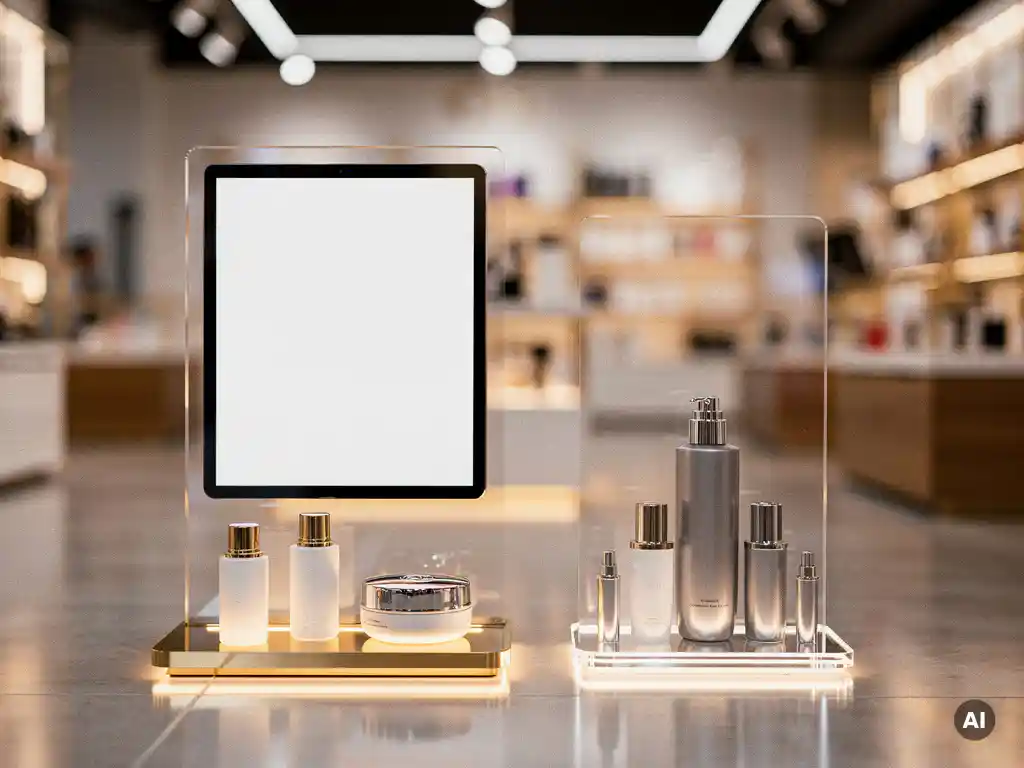
Digital and physical POS displays serve different commercial purposes and deliver different shopper experiences. Physical displays engage customers through tactile, three-dimensional presence at the point of purchase, while digital displays offer dynamic, updatable content through screens and interactive technology. For most brands, the right approach depends on product category, retail environment, and campaign objectives, and increasingly, the strongest in-store strategies combine both formats.
The sections below address the most common questions brand owners and retail experience managers ask when evaluating their point of sale display strategy.
Neither digital nor physical POS displays universally outperform the other, effectiveness depends on context. Physical displays consistently perform well for tactile product categories such as beauty, health, and premium lifestyle goods, where shoppers want to see, touch, and interact with the product directly. Digital displays tend to perform strongly in high-footfall, fast-moving environments where content relevance and real-time messaging influence purchase decisions.
Industry experience across retail environments shows that the most commercially effective in-store display strategies are those matched precisely to the shopper journey. A permanent fixture showcasing a skincare range in a pharmacy invites engagement through physical product placement and clear brand communication. A digital screen in a supermarket aisle can rotate promotional pricing and product benefits in seconds. The question is not which format wins, but which format serves the shopper at that specific moment in that specific location.
Physical POS displays offer permanence, tactile engagement, and brand consistency that digital formats cannot replicate. They allow shoppers to interact directly with products, create a defined brand space within a retail environment, and communicate brand identity through materials, form, and finish. For premium and considered purchases, this physical presence directly supports conversion.
For brands operating in beauty, wellness, and lifestyle sectors, where the in-store experience is central to the purchase decision, a well-executed physical retail display remains one of the highest-return investments in the marketing mix.
Digital POS displays offer flexibility, immediacy, and the ability to deliver dynamic content that responds to time, location, or promotional calendar. They are particularly effective where messaging needs to change frequently, where multiple products or offers must share a single display space, or where motion and interactivity are needed to capture attention in high-traffic environments.
Digital formats are well-suited to fast-moving consumer goods, technology products, and environments where promotional cadence is high. However, they require ongoing content management and technical maintenance, which should be factored into the total cost of ownership.
Physical POS displays typically carry a higher upfront production cost but lower ongoing operational costs, while digital displays often require lower initial hardware investment but accumulate costs through content management, software, connectivity, and maintenance over time. The total cost of ownership across the campaign or display lifecycle is the most accurate basis for comparison.
Physical displays involve design, prototyping, manufacturing, and installation costs. For large-scale national rollouts, these costs scale with volume but can be managed efficiently through a single end-to-end partner who handles manufacturing and retail display installation under one commercial arrangement. Once installed, a physical display requires no ongoing content spend unless creative is refreshed.
Digital displays carry hardware costs for screens and infrastructure, plus recurring expenditure on content creation, software licensing, and technical support. For brands that update creative frequently, this ongoing investment can be justified by the agility it provides. For brands running longer campaigns or operating in environments where content rarely changes, the recurring costs of digital may outweigh the benefits.
A brand should choose a physical POS display when the product category benefits from tactile interaction, when the retail environment calls for a permanent branded presence, or when the campaign requires a durable, high-quality fixture that reflects brand values through material and form. Physical is the stronger choice for premium, considered, or sensory product categories.
Specific scenarios where physical displays are the clear commercial choice include:
Yes, digital and physical POS displays are increasingly used together as complementary elements within a single in-store brand environment. A physical fixture provides the structural brand presence and product interaction, while an integrated digital screen adds dynamic content, storytelling, or promotional messaging. This hybrid approach combines the strengths of both formats.
The most effective hybrid installations are those where the digital and physical elements are designed together from the outset, rather than retrofitted. A screen embedded within a bespoke fixture, for example, maintains brand consistency in materials and form while delivering the content flexibility of a digital display. This approach is particularly effective in department stores, flagship retail environments, and brand activation spaces where shopper dwell time is higher and the brand experience needs to work across multiple touchpoints.
The key consideration for brands exploring hybrid solutions is integration, both in terms of design coherence and project management. When a single partner manages the design, manufacture, and installation of the combined unit, the result is a more cohesive brand experience and a simpler commercial process.
Pivotal works with brand owners and retail experience managers to design, manufacture, and install point of sale display solutions that deliver measurable in-store impact. Whether the brief calls for a permanent physical fixture, a hybrid digital-physical installation, or a national rollout across multiple retail locations, Pivotal manages the full project lifecycle under one roof.
If your brand is evaluating its in-store display strategy for 2026, contact Pivotal to discuss how a bespoke physical or hybrid POS solution can strengthen your retail presence and drive conversion at the point of purchase.