
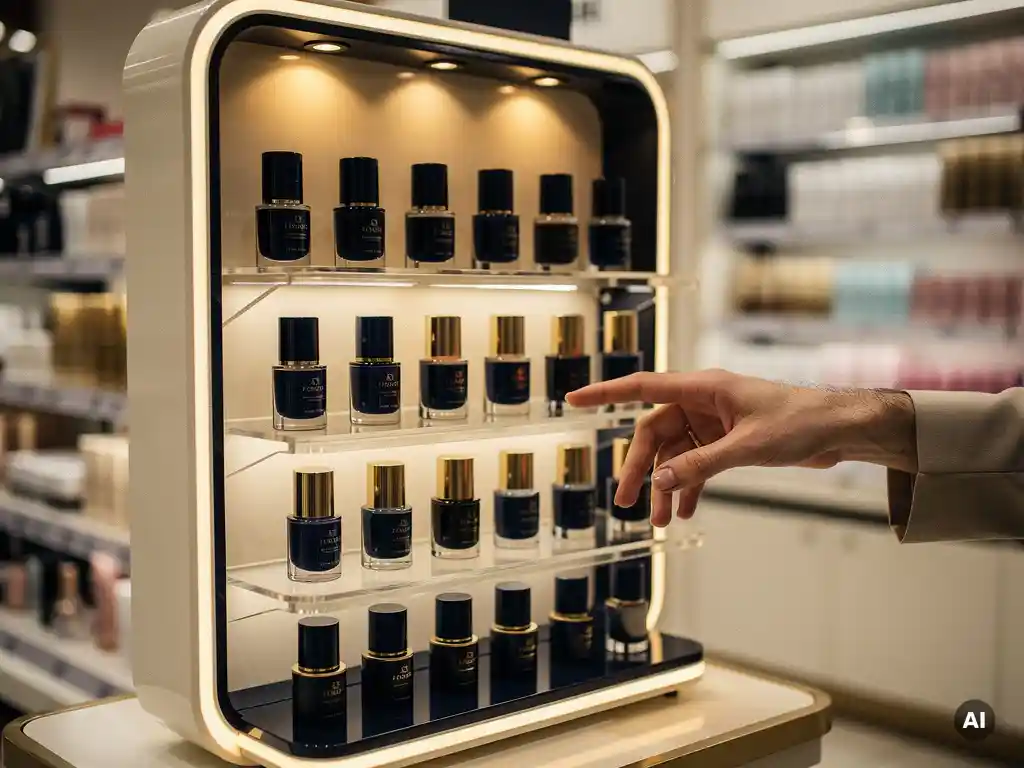
Point of sale design plays a direct role in converting shoppers by influencing purchase decisions at the precise moment of consideration, when a shopper is physically present, product is within reach, and brand communication can tip the balance. For brands selling through physical retail, POS design is not a cosmetic exercise; it is a commercial tool that shapes visibility, communicates value, and drives measurable conversion. The sections below address the most critical questions brand owners and retail experience managers are asking about POS design in 2026.
Effective point of sale design influences purchase decisions by directing attention, communicating product benefits quickly, and creating a moment of brand engagement that motivates action. In a physical retail environment, a shopper's decision window is narrow: well-executed POS design intercepts that moment with clarity, hierarchy, and brand consistency that generic shelf placement cannot achieve.
The mechanism is both visual and psychological. A display that is well-positioned, clearly signed, and visually coherent creates trust and recognition instantly. Shoppers are more likely to engage with, pick up, and purchase products that are presented with intentionality. Conversely, poor display design, cluttered messaging, weak structure, or misaligned brand identity, erodes confidence and encourages the shopper to move on.
Point of purchase design also plays a role in communicating product differentiation. In categories such as beauty, health, and wellness, where shelves are crowded with competing options, a branded display unit signals authority and investment. It tells the shopper, and the retailer, that the brand is serious about its in-store presence.
The POS design elements with the greatest impact on in-store conversion are visual hierarchy, structural quality, messaging clarity, and placement precision. These four factors determine whether a display captures attention, communicates effectively, and compels a shopper to act, in that order.
Material choices also contribute significantly. Acrylic, metalwork, and joinery each carry different aesthetic signals and durability profiles, and the right material selection reinforces the brand positioning while ensuring the display performs across its intended lifespan.
In 2026, shopper behaviour is defined by higher expectations of physical retail, a stronger preference for experiential engagement, and a growing sensitivity to sustainability credentials. Effective retail POS design must now do more than display product: it must create a moment worth having in-store, one that digital channels cannot replicate.
Shoppers who visit physical stores in 2026 are doing so with purpose. The casual browse has declined; the deliberate visit has increased. This means POS and in-store display design must work harder to reward that visit, through tactile interaction, clear product storytelling, and brand environments that feel considered rather than functional.
Sustainability is no longer a secondary concern. Brand owners are increasingly required to demonstrate environmental responsibility through the materials and production methods used in their retail displays. Shoppers notice, and retailers are beginning to mandate it. Displays built with sustainable materials and designed for longevity or disassembly are becoming the expected standard, not the exception.
There is also a growing expectation of consistency across retail environments. A shopper who encounters a brand in a pharmacy, a department store, and a supermarket expects a coherent visual identity, adapted for context, but recognisably unified. POS design systems that allow for this kind of scalable consistency are increasingly central to effective retail conversion strategy.
Temporary POS displays are designed for short-term campaigns, product launches, seasonal promotions, or limited-period activations, while permanent displays are built for sustained brand presence over an extended period. The conversion role of each differs significantly, and the choice between them should be driven by commercial objective, not budget alone.
Temporary point of purchase displays are optimised for immediacy. They are designed to create urgency, highlight a specific product or offer, and drive purchase within a defined window. Because they are campaign-specific, they can be more expressive and trend-responsive in their creative execution. However, their structural specification must still meet retailer compliance requirements and survive the duration of the campaign without degrading in appearance.
Permanent retail display design prioritises durability, brand consistency, and the ability to accommodate product range changes over time. A well-designed permanent fixture becomes a brand asset within the store, a recognisable destination that shoppers return to and retailers value as a driver of category performance. The investment in material quality and structural engineering is higher, but the commercial return compounds over a longer period.
For brands managing both campaign activity and ongoing shelf presence, the most effective approach combines both: a permanent fixture that anchors the brand in-store, supported by temporary POS that activates around it during key commercial periods.
POS design must be adapted to the specific retail environment because shopper mindset, fixture constraints, dwell time, and retailer requirements differ significantly across channels. A display designed for a pharmacy cannot simply be redeployed in a department store and expect equivalent performance.
Retailer approval processes add another layer of complexity. Each major retail chain has its own fixture specifications, compliance requirements, and installation protocols. Brands working across multiple retail environments need a design and production partner with the experience to navigate these requirements without compromising creative quality.
A brand should invest in bespoke point of sale design when its product, brand positioning, or retail environment demands differentiation that a standard display solution cannot deliver. Off-the-shelf units serve a functional purpose, but they communicate nothing distinctive, and in competitive retail categories, that is a significant commercial disadvantage.
The case for bespoke retail display design is strongest in the following circumstances:
Off-the-shelf solutions may be appropriate for short-term, low-investment activations where brand differentiation is not the primary objective. However, brands that treat POS design as a strategic asset, rather than a logistical necessity, consistently outperform those that default to generic display solutions.
The investment in bespoke design also extends to the production and installation process. A custom display that is poorly manufactured or inconsistently installed across retail locations loses much of its commercial value. End-to-end capability, from concept through to on-site installation, is what ensures the design performs as intended in every store.
Pivotal is a full-service retail design partner specialising in bespoke point of sale and in-store display solutions for brand owners operating across UK retail environments. For brands looking to strengthen in-store conversion, Pivotal provides:
In 2025 alone, Pivotal installed over 2,000 new retail and brand experiences, with in-store engineers visiting a store every 34 minutes. If your brand is planning a display refresh, a new product launch, or a national retail roll-out in 2026, contact Pivotal to discuss how bespoke POS design can deliver measurable results in-store.