
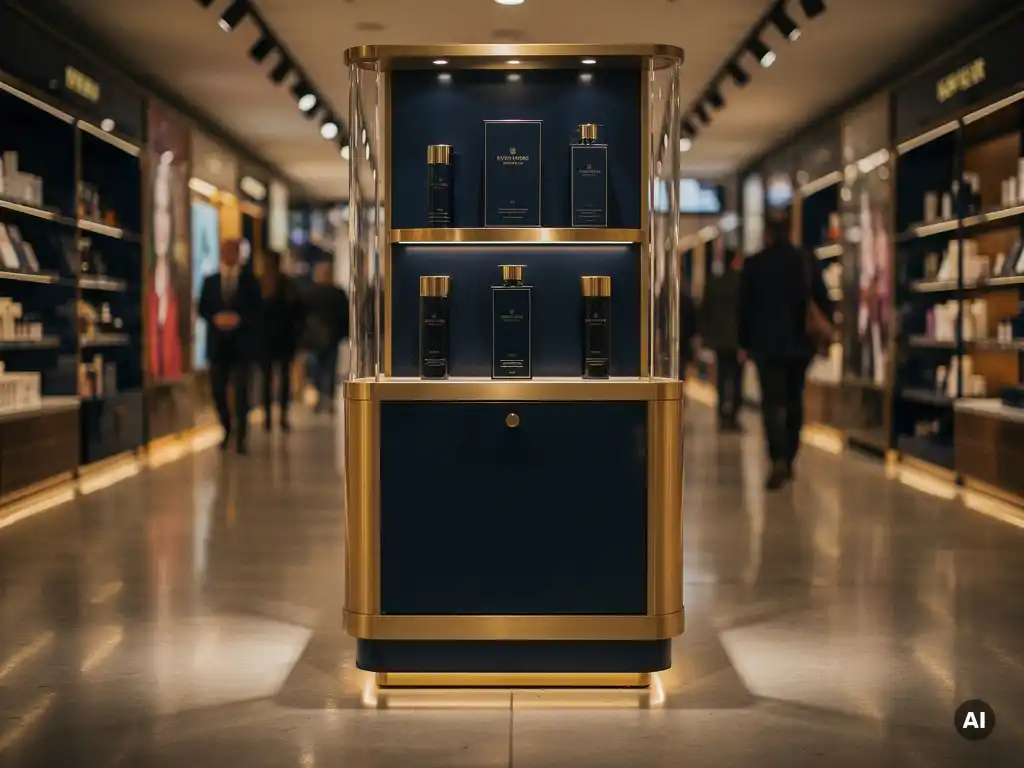
In high-footfall London stores, the POS display formats that consistently perform best are freestanding display units (FSDUs), gondola end caps, and countertop displays positioned at or near the point of purchase. These formats combine high visibility with strategic placement to intercept shoppers at the moments most likely to drive conversion. The sections below address the specific design, material, compliance, and format decisions that determine success in London's busiest retail environments.
The highest-performing POS display formats in busy retail environments are freestanding display units, end-of-aisle fixtures, and countertop point of sale displays. These formats succeed because they interrupt the shopper journey at high-traffic locations, maximise brand visibility without requiring shoppers to seek out the product, and create a dedicated brand moment within a competitive retail floor.
Freestanding display units are particularly effective in high-footfall London stores because they can be positioned independently of the main shelf run, placed in power aisles, near entrances, or adjacent to complementary product categories. End caps command attention from shoppers navigating the main aisle and are among the most sought-after positions in grocery, pharmacy, and health and beauty retail. Countertop displays perform strongly in pharmacy and specialist retail chains, where the proximity to the till creates a natural opportunity for impulse purchase.
Beyond format, the configuration of the display matters considerably. Displays that offer clear product hierarchy, unambiguous brand messaging, and a direct call to action at eye level consistently outperform those that rely on volume of product alone. In London's most competitive retail environments, where shoppers are often moving quickly and making rapid decisions, clarity of communication at the point of sale is as important as the physical format itself.
High-footfall locations impose significantly more demanding design requirements on in-store displays than lower-traffic environments. Displays must withstand frequent physical contact, maintain structural integrity over extended periods, and retain visual impact despite the wear and tear of constant shopper interaction. They also need to communicate brand messages quickly, because dwell time in busy locations is typically shorter.
In practical terms, this means the design brief for a London flagship store or a major pharmacy chain differs substantially from a smaller independent retailer. Key design considerations in high-footfall locations include:
These requirements mean that point of sale displays intended for high-footfall London stores benefit from more rigorous prototyping and testing before full rollout, rather than adapting a design originally created for a lower-demand environment.
For permanent POS display installations in London retail environments, the materials that offer the best balance of durability, aesthetics, and brand premium are metal, acrylic, and high-quality engineered wood such as MDF with specialist finishes. These materials hold their appearance under sustained use, can be finished to exacting brand specifications, and signal quality to shoppers at the point of purchase.
Metal, including powder-coated steel and aluminium, is the preferred choice for structural components in permanent fixtures. It resists warping, handles significant product weight, and can be fabricated to tight tolerances for a precise, premium finish. Acrylic is widely used for display elements that require transparency, illumination, or a high-gloss aesthetic, particularly in beauty, fragrance, and health retail where the visual quality of the display directly reflects on the brand. Joinery and woodwork, including veneered MDF and solid wood components, are appropriate for brand environments where warmth, craftsmanship, or a lifestyle positioning is central to the brand identity.
Material selection should also account for sustainability objectives. Retailers operating in major UK chains are increasingly scrutinising the environmental credentials of the displays placed in their stores, and brands that specify recycled, responsibly sourced, or low-VOC materials are better positioned to secure preferred placement and retailer approval. Choosing materials with longevity in mind also reduces the frequency of replacement, lowering the total environmental impact of a permanent retail display over its lifespan.
The choice between temporary and permanent POS displays depends on the commercial objective, the duration of the retail programme, and the retailer's willingness to accommodate each type. Permanent displays are appropriate for established product ranges with sustained distribution, while temporary displays suit promotional campaigns, new product launches, or seasonal activations where flexibility and speed to market are priorities.
In London's major retail environments, both formats serve distinct strategic purposes:
Many brands operating across London's high-footfall retail estate use both in parallel, with a permanent fixture anchoring the core range and temporary point of sale displays deployed around it during promotional windows. This approach maintains brand visibility year-round while preserving the agility to respond to commercial opportunities. The decision should always be grounded in the projected sales return relative to the display investment, the agreed terms with the retailer, and the brand's broader in-store strategy.
POS displays intended for major UK retail chains must be designed from the outset with each retailer's specific guidelines in mind, covering dimensions, fixings, materials, safety standards, and brand presentation rules. Compliance is not a final-stage check but a design constraint that shapes every decision from concept through to manufacture and installation.
Major UK retailers including pharmacy chains, grocery multiples, and department stores each maintain detailed technical specifications governing what can be placed on their shop floors. These guidelines typically address:
Brands that attempt to adapt an existing display design to meet retailer guidelines after the fact frequently encounter delays, additional costs, and compromised design outcomes. The more effective approach is to engage with retailer requirements at the briefing stage, ensuring the design team works within those parameters from the first concept. This is particularly important for brands placing displays in multiple store locations simultaneously, where a compliance issue at the design stage can affect an entire national rollout.
Pivotal provides end-to-end retail display solutions specifically designed for the demands of high-footfall London retail and major UK chain environments. For brands seeking to place point of sale displays in competitive, high-traffic locations, Pivotal's offer covers:
In 2025 alone, Pivotal installed over 2,000 new retail and brand experiences, with in-store engineers visiting a store every 34 minutes. That operational scale translates directly into programme reliability for brands managing time-critical retail activations. To discuss your next in-store display project, contact the Pivotal team today.