
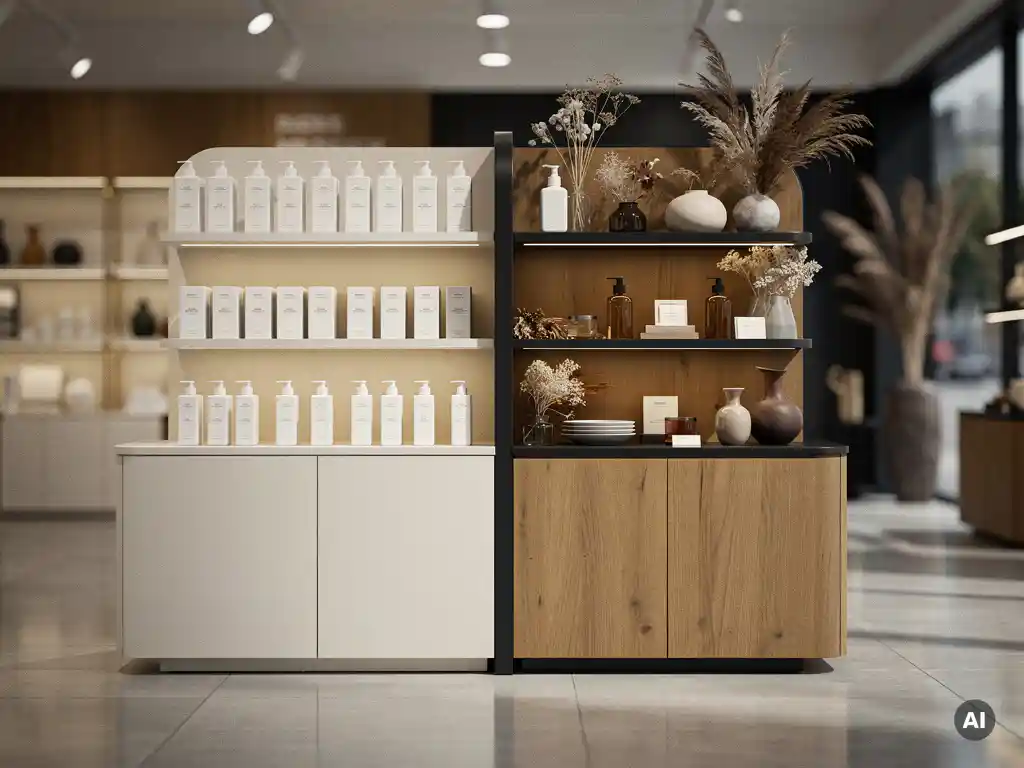
The most effective POS displays are emotion-led, but the right approach depends on your product category, retail environment, and the shopper's mindset at the moment of purchase. A display that leads with product information drives rational decisions; one that leads with emotional resonance drives desire. For most brands, the strongest strategy combines both, but the balance matters significantly.
The distinction between product-led and emotion-led retail display strategy is not merely aesthetic. It is a commercial decision that directly influences conversion rates, brand perception, and the shopper's willingness to engage at the point of sale. The sections below unpack each approach, clarify the differences, and outline how to determine the right strategy for your brand.
Shoppers stop at a display when something interrupts their default path through a store. That interruption is triggered by visual contrast, emotional relevance, or an immediate product need. What converts that pause into a purchase is a combination of clear messaging, brand trust, and a display that makes the next step feel obvious and low-effort.
Shopper behaviour at the point of sale is rarely as deliberate as brands assume. Research in retail psychology consistently shows that a significant proportion of purchasing decisions are made in-store rather than planned in advance. This means the display itself carries enormous weight: it must do the job of both attracting attention and closing the sale, often within a matter of seconds.
The key drivers of shopper engagement at a display are:
Understanding which of these levers carries the most weight for your specific shopper is the starting point for any effective in-store display strategy.
A product-led POS display prioritises factual, functional information, ingredients, specifications, usage instructions, price, or product range, to support a rational purchase decision. It works best when shoppers are actively seeking a specific solution, comparing options, or need reassurance about a product's credentials before committing to a purchase.
This approach is particularly effective in categories where the purchase decision is considered rather than impulsive. Pharmacy and health retail environments are strong examples: a shopper selecting a skincare treatment for a specific skin condition wants to understand what the product contains, how it works, and why it is the right choice. A display that leads with clinical credentials, dermatologist endorsements, or ingredient transparency serves that need directly.
Product-led displays also perform well when:
The risk of a purely product-led approach is that it can feel transactional. Without emotional engagement, even a well-informed shopper may not feel compelled to act. Product-led displays work hardest when the product itself carries sufficient appeal, or when they are paired with strong brand identity at the point of sale.
An emotion-led POS display uses imagery, narrative, aspiration, or sensory cues to create a feeling rather than deliver information. It connects the shopper to a lifestyle, identity, or desire associated with the brand, making the product feel personally relevant before any rational evaluation takes place. This approach suits categories where purchase motivation is driven by aspiration, self-expression, or reward.
Beauty, fragrance, fashion accessories, and premium lifestyle products are natural homes for emotion-led retail display design. A promotional display for a luxury skincare brand in a department store environment, for example, is far more likely to convert through aspirational imagery and tactile materials than through an ingredient list. The shopper is not just buying a product: they are buying into a version of themselves.
Categories well-suited to emotion-led displays include:
Emotion-led displays demand higher creative and material investment to be effective. A display that promises luxury must feel luxurious, in its finish, its structure, and its presentation. Misalignment between the emotional promise and the physical quality of the display undermines brand credibility at the most critical moment in the shopper journey.
The core difference between product-led and emotion-led POS displays is what they ask the shopper to do first: think or feel. A product-led display presents information and invites evaluation. An emotion-led display creates desire and invites identification. Both can drive purchase, but they engage different parts of the decision-making process and suit different categories, shoppers, and retail environments.
The practical differences extend across every element of the display:
Neither approach is inherently superior. The question is which is more aligned with the shopper's mindset and the brand's commercial objective at the point of purchase.
Yes, and for most brands, a POS display that integrates both product information and emotional engagement will outperform one that relies on either approach alone. The most effective in-store displays use emotion to attract and engage the shopper, then use product information to confirm the decision and reduce purchase risk. The two elements work sequentially, not in competition.
This integrated approach reflects how shoppers actually behave. A display might draw a shopper in through striking visuals and aspirational messaging, but if it then fails to answer basic questions about the product, what it does, who it is for, why it is worth the price, the moment of engagement is lost. Equally, a display that leads with dense product information and no emotional hook may never attract the shopper in the first place.
Effective integration means:
The balance between the two will shift depending on category, retail channel, and campaign objective, but the principle of leading with emotion and supporting with product holds across most shopper engagement scenarios.
Choosing the right retail display strategy requires an honest assessment of four factors: your shopper's mindset at the point of purchase, your product category's natural purchase driver, your retail environment, and your brand's current recognition level. These four variables, considered together, will indicate whether your display should lead with product, emotion, or a structured combination of both.
Start with the shopper. Ask whether the person standing in front of your display is actively seeking a solution, browsing without a fixed intent, or responding to an impulse. A mission-driven shopper needs product clarity; a browsing shopper needs emotional engagement to slow them down and draw them in.
Then consider the retail environment. A pharmacy fixture operates differently from a department store gondola or a supermarket end cap. The ambient experience, the category adjacencies, and the time a shopper typically spends in that environment all influence how much work your display needs to do and in what order.
Finally, assess your brand's recognition. A well-established brand with strong shopper familiarity can rely more heavily on emotional cues: the brand world does much of the product communication work. A newer or less-recognised brand needs to work harder on product clarity to build trust before it can trade on aspiration.
Key questions to guide your strategy:
Answering these questions with precision, ideally informed by shopper insight and in-store testing, is the foundation of a display strategy that converts rather than simply occupies shelf space.
Pivotal works with brand owners and marketing teams to translate strategic intent into physical retail display experiences that perform. Whether your brief calls for a product-led fixture in a pharmacy environment or an emotion-led promotional display in a premium department store, Pivotal's end-to-end capability covers every stage of the process:
In 2025, Pivotal installed over 2,000 new retail and brand experiences, with in-store engineers visiting a store every 34 minutes. That operational scale means your display strategy is backed by a partner with the infrastructure to deliver it consistently, at pace, and across multiple retail locations. To discuss your next in-store display project, contact the Pivotal team directly.