
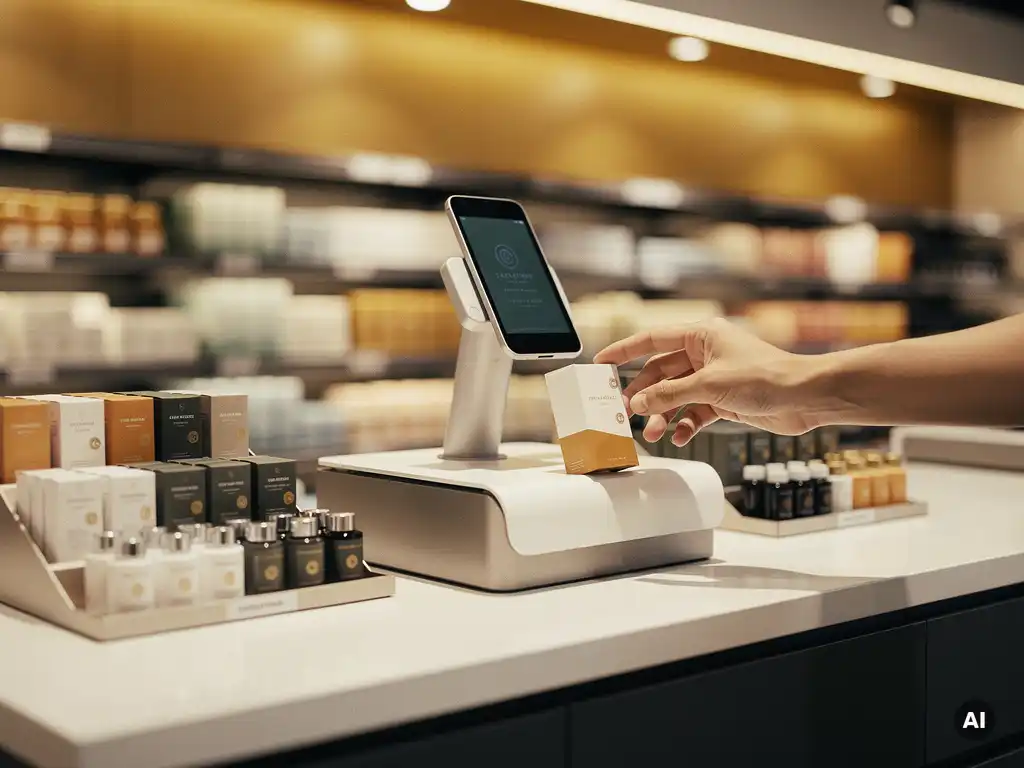
Yes, POS displays can increase average basket size at checkout. When positioned strategically at the point of purchase, well-designed checkout displays prompt unplanned add-on purchases that shoppers would not have sought out independently. The uplift in basket value depends on product relevance, display quality, and placement precision. The following questions unpack the mechanics behind that impact and what brands need to know to maximise it.
POS displays influence shopper behaviour by introducing purchase prompts at the moment when buying intent is already active. At checkout, shoppers have committed to a transaction and are in a receptive state. A well-placed display presenting a relevant, low-consideration product can convert passive awareness into an unplanned purchase within seconds, directly increasing the final basket value.
The mechanism is rooted in how shoppers process information in-store. Unlike planned purchases that involve deliberation, impulse purchases at checkout are driven by visual cues, perceived value, and proximity. A display that communicates a clear benefit or offer at eye level removes friction from the decision. The shopper does not need to seek the product out; the product presents itself at the right moment.
Checkout is also a dwell zone. Queuing creates time for shoppers to engage with nearby displays, making it one of the highest-value locations in any retail environment. Brands that occupy this space with targeted, well-executed point of sale displays gain a measurable advantage over those that rely solely on shelf placement elsewhere in the store.
Products that benefit most from checkout POS displays are low-cost, low-consideration items that require minimal evaluation before purchase. These include confectionery, travel-sized personal care products, batteries, lip balms, hand sanitisers, and small gift or impulse accessories. The common factor is that the perceived risk of buying is low, and the perceived reward is immediate.
In health and beauty retail environments, such as pharmacies and department stores, checkout displays are particularly effective for trial-size or promotional SKUs. A shopper collecting a prescription or browsing skincare may not have planned to buy a lip treatment or a travel moisturiser, but a well-positioned display at checkout can prompt exactly that purchase.
Products with strong visual packaging or an obvious seasonal or gifting angle also perform well in checkout display formats. The display itself must do the selling, so products that communicate their value proposition quickly and clearly, through colour, form, or a short promotional message, are inherently better suited to this environment than those requiring detailed explanation.
An effective POS display drives add-on purchases by combining clear visual hierarchy, product relevance, and structural integrity in a format that commands attention without disrupting shopper flow. The display must communicate the product's value proposition within a second or two of a shopper's gaze landing on it. Anything that requires reading or interpretation slows the decision and reduces conversion.
The display must be immediately recognisable as part of a brand's identity while standing out from its surroundings. Strong use of colour, bold typography, and considered use of materials all contribute to cut-through in a busy retail environment. A display that blends into its surroundings or looks inconsistent with the brand it represents fails at the first point of contact.
Shoppers are more likely to add a product to their basket if they can easily interact with it. Displays that present products at a natural reach height, with clear organisation and no risk of items falling or appearing dishevelled, reduce hesitation. Structural robustness also matters for retailer compliance: a display that deteriorates quickly or disrupts the flow of the checkout area will be removed, eliminating any basket impact entirely.
Retailers and brands measure the basket impact of checkout displays primarily through sales data comparison, tracking the unit sales and average transaction value of featured products before, during, and after a display is active. This before-and-after methodology, often combined with control store comparisons, provides a direct read on the incremental uplift attributable to the display.
Scan data from EPOS systems is the most commonly used source, as it captures every transaction at SKU level and can be segmented by store, time period, and location within the store. When a display is introduced at checkout, a measurable increase in units sold per transaction for the featured product, without a corresponding decline elsewhere in the category, indicates genuine basket growth rather than cannibalisation.
Brands working with retail partners can also access shopper panel data, which tracks what individual shoppers buy across multiple visits. This allows a more nuanced view of whether checkout display exposure is recruiting new buyers, increasing purchase frequency, or driving larger transaction sizes. Compliance monitoring, confirming that displays were installed correctly and remained in place for the intended period, is an equally critical input, since basket data is only meaningful if the display was actually present and visible throughout the measurement window.
Whether a checkout POS display should be permanent or temporary depends on the commercial objective, the product lifecycle, and the retailer's space allocation policy. Temporary displays are better suited to promotional periods, new product launches, and seasonal activations. Permanent displays are appropriate for core range products with consistent demand and a long-term retail partnership in place.
Temporary in-store displays offer flexibility. They can be designed, manufactured, and deployed quickly in response to a campaign window or competitive pressure, then replaced with the next activation without leaving a redundant structure in the retail environment. For brands running time-limited promotions or testing a new product's performance at checkout, temporary formats reduce financial commitment while still generating basket impact.
Permanent fixtures, by contrast, require greater upfront investment but deliver sustained visibility and often achieve better retailer buy-in. A well-designed permanent display signals long-term commitment to the category and tends to receive more prominent placement. The trade-off is that permanent structures must remain visually fresh and structurally sound over time, which makes the quality of materials and build specification a critical decision at the outset.
In practice, many brands use a layered approach: a permanent branded unit that holds the core range, supplemented by temporary point of sale displays during key promotional periods. This combination maintains consistent presence while allowing the flexibility to respond to seasonal opportunities and drive short-term spikes in basket size.
Pivotal designs, manufactures, and installs checkout POS displays that are built to drive commercial outcomes, not just fill space. As a full-service retail design partner, Pivotal manages the entire process from initial concept through to on-site installation, carried out by its own employed fitting teams who are approved to work within major UK retailers.
If your brand is looking to increase average basket size through point of sale displays at checkout, speak to the Pivotal team to discuss how a bespoke display solution can be designed and delivered to meet your commercial objectives.