
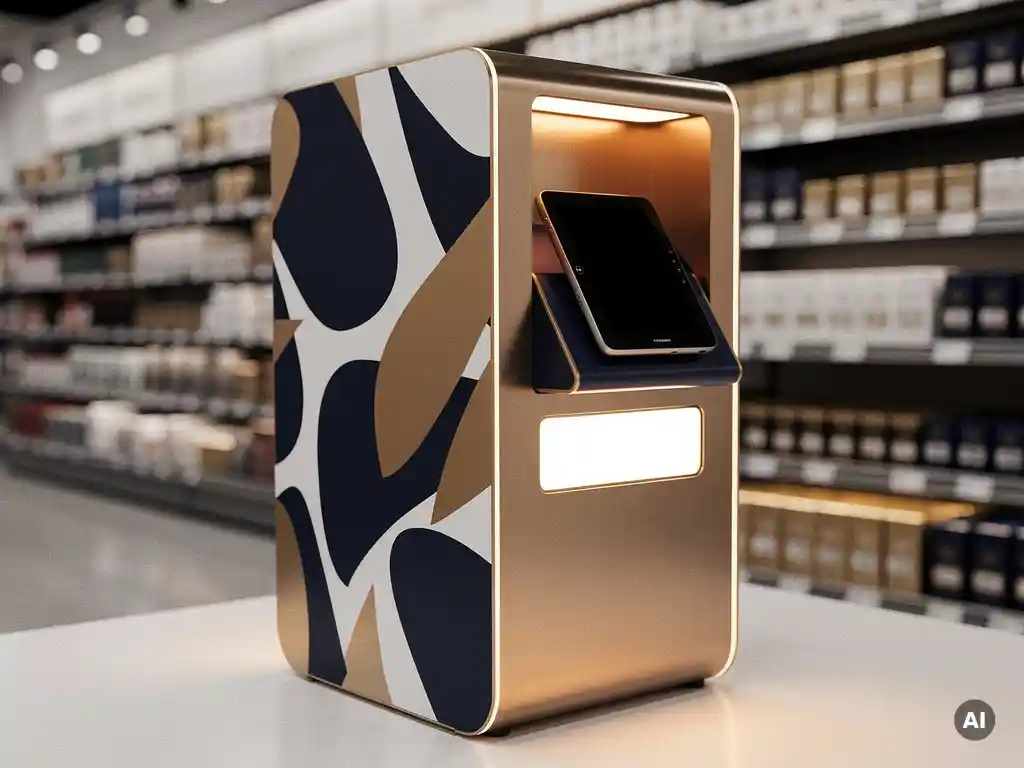
Effective POS displays should pursue both brand awareness and direct conversion, but the balance depends on context. In most retail environments, conversion is the primary commercial objective at the point of sale - the shopper is already present, already considering a purchase, and the display must close that decision. Brand awareness becomes the dominant priority when launching a new product, entering a new retail channel, or building recognition among unfamiliar shoppers. The questions below unpack how to navigate this balance across different scenarios, environments, and measurement approaches.
Shoppers buy at the point of sale when a display removes friction, creates relevance, and delivers a clear reason to act. The physical retail environment compresses the decision-making process - a well-executed display communicates product benefit, brand credibility, and purchase justification within seconds. When those three signals align, conversion follows.
Several factors determine whether a shopper moves from browsing to buying. Visibility is the first barrier: a display that fails to interrupt the shopper's path never enters the decision at all. Once noticed, the display must communicate quickly - through hierarchy of information, strong brand identity, and a clear value proposition. Shoppers in pharmacy environments, for example, respond to clinical credibility and ingredient transparency. Shoppers in department stores respond to aspiration and exclusivity. The display must reflect the shopper's mindset in that specific context.
Tactile engagement also plays a measurable role. Physical interaction with a product or display - touching a tester, reading a panel, picking up a unit - increases dwell time and strengthens purchase intent. This is precisely why the physical retail experience retains commercial value that digital channels cannot replicate. In-store shopper engagement is not passive; it is an active, sensory process that well-designed POS materials are built to facilitate.
Brand awareness in POS display design refers to the objective of making a brand recognisable, memorable, and associated with specific values, regardless of whether an immediate purchase occurs. Conversion, by contrast, is the objective of prompting a specific action at the point of sale, typically a purchase. The design decisions that serve each objective are often in tension with one another.
A display optimised for brand awareness prioritises visual impact, consistent brand language, and emotional resonance. It uses colour, form, and messaging to embed the brand in the shopper's memory. A display optimised for conversion prioritises clarity, product accessibility, pricing communication, and calls to action. It reduces the steps between interest and purchase.
The distinction matters because brands frequently conflate the two. A visually striking display that wins awards but obscures the product range or omits a clear reason to buy is an awareness asset, not a conversion tool. Equally, a functional fixture loaded with promotional messaging but stripped of brand identity may drive a single transaction while failing to build the long-term equity that sustains repeat purchase. Effective retail POS strategy requires a deliberate decision about which objective is primary, and design choices that reflect that decision consistently.
The priority between brand awareness and conversion should be determined by the retail environment's role in the shopper journey. High-footfall, high-dwell environments favour awareness objectives. High-intent, destination-led environments favour conversion. Neither objective is universally superior - the retail context defines which delivers greater commercial return.
In pharmacy and health retail settings, shoppers typically arrive with a specific need or condition in mind. Conversion-focused displays that lead with product benefit, recommended use, and clear differentiation from adjacent products perform strongest here. Pivotal's work with brands such as Eucerin and Avène in pharmacy environments reflects this principle - the display must earn trust and guide selection efficiently.
In department stores and beauty halls, the shopper journey is more exploratory. Brand awareness displays that create a distinctive environment, communicate brand heritage, and invite interaction support the longer consideration cycle that premium purchases require. Promotional displays for brands such as Estée Lauder in Boots UK operate within this logic - the display environment communicates brand positioning as much as it promotes a specific product.
In grocery and convenience retail, speed of recognition is paramount. Displays must cut through a visually competitive environment and trigger recall of a brand already known to the shopper. Here, awareness and conversion operate almost simultaneously - the display must remind and prompt in a single visual moment.
Display placement within a store directly determines which objective a POS display can realistically achieve. Placement at the store entrance or in high-traffic corridors favours brand awareness, because shoppers at those points are not yet in purchase mode. Placement at the fixture, at the shelf edge, or adjacent to the checkout favours conversion, because the shopper is actively evaluating or finalising their basket.
End-of-aisle placements occupy a middle position. They intercept shoppers mid-journey, creating an opportunity to redirect attention towards a featured product. When well-executed, an end-of-aisle display can achieve both, using strong brand presence to attract attention and a clear promotional mechanic to drive selection. However, this dual function requires careful design prioritisation; displays that attempt to do everything equally often achieve neither objective with sufficient impact.
Floor-standing display units positioned near complementary categories can trigger unplanned purchases by creating contextual relevance - a skincare display adjacent to sun protection, or a health supplement display near vitamins. In these placements, conversion is the primary metric, but the display still benefits from strong brand identity to establish credibility in an unexpected context.
Yes, a single POS display can achieve both brand awareness and conversion, but only when the design is structured to serve each objective at a different stage of the shopper's engagement with the unit. The key is layering - the display must work at distance, at mid-range, and at close proximity, with each layer serving a distinct purpose.
At distance, the display communicates brand identity through colour, form, and visual architecture. This is the awareness layer - it interrupts the shopper's path and establishes brand recognition before the shopper is close enough to read any detail. At mid-range, the display communicates the product proposition and its relevance to the shopper's need. At close proximity, it delivers the conversion triggers: product accessibility, pricing, promotional mechanics, and a clear call to action.
This layered approach requires disciplined information hierarchy and a clear understanding of how shoppers physically move through and engage with a display. It also requires that neither objective is compromised to serve the other, which is where experienced retail display design becomes critical. A display that attempts to communicate brand story and promotional detail at the same visual weight achieves neither with clarity.
Measuring POS display success requires separate metrics for brand awareness and conversion, applied consistently across the display's deployment period. Conflating the two objectives in measurement produces data that obscures performance and leads to poor design decisions in subsequent campaigns.
For conversion-focused displays, the primary metrics are straightforward:
For awareness-focused displays, measurement is less direct but no less rigorous:
Compliance measurement deserves particular emphasis regardless of objective. A display that is incorrectly installed, partially assembled, or missing key components cannot deliver on either awareness or conversion. Systematic compliance tracking, including post-installation audits, is a non-negotiable component of any rigorous POS measurement framework.
Pivotal works with brand owners and marketing directors to resolve the awareness-versus-conversion question before a single unit goes into production. As a full-service retail design partner, Pivotal brings strategic, creative, and operational capability together under one roof, ensuring that display objectives are translated into design decisions, not left to chance.
If your brand is planning a POS display campaign and needs a partner with the capability to take it from concept through to compliant, in-store installation, contact Pivotal to discuss your brief.