Luxury brands translate identity into store environments through a deliberate combination of spatial design, material selection, sensory curation, and bespoke fixtures that embody the brand's values at every touchpoint. The store is not a backdrop for products - it is the brand made physical. For luxury retailers, the environment communicates exclusivity, craftsmanship, and heritage before a single product is touched. The sections below address the most critical questions surrounding luxury brand store design, from foundational principles to emerging sustainability practices.
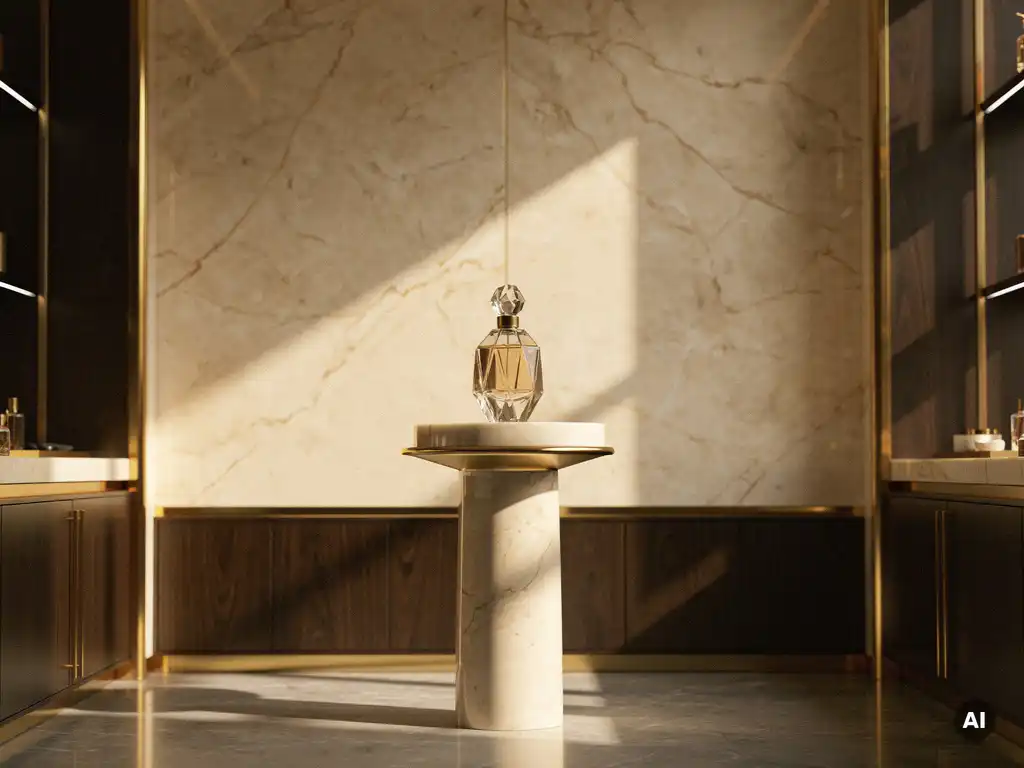
Luxury in a physical store is communicated through the quality and precision of every material, surface, and detail within the environment. High-end finishes such as natural stone, solid timber, brushed metal, and hand-applied plaster signal craftsmanship. Controlled lighting, generous spatial proportions, and deliberate product placement reinforce a sense of rarity and exclusivity. Together, these elements create an in-store brand experience that speaks without words.
Beyond materials, sensory layering plays a significant role. Scent, acoustics, and temperature are actively managed in luxury retail environments to create an atmosphere that feels curated rather than commercial. The absence of clutter is itself a design statement - fewer products displayed with greater care signals that each item carries genuine value.
Tactile surfaces are particularly important. When a customer runs their hand across a display counter or lifts a product from a carefully designed fixture, the physical experience reinforces the brand's quality narrative. This is why luxury brand store design invests heavily in materials and finishes that reward close inspection, not just visual impact from a distance.
Luxury brands use store layout to control the pace, flow, and emotional journey of the shopper. Wide aisles, deliberate sightlines, and zoned spaces slow the customer down, encouraging exploration rather than transaction. The layout communicates that time spent in the store is valuable - a reflection of the brand's broader positioning around exclusivity and considered consumption.
Brand values are embedded in spatial hierarchy. A heritage brand might position archival or craft-focused displays at the entrance to anchor the customer in the brand's history before introducing current collections. A brand built on innovation might use open, flexible layouts that signal forward-thinking design. In both cases, the floor plan is a strategic document, not merely a practical one.
Private areas, consultation spaces, and personalised service zones are increasingly central to luxury retail layout. These spaces signal that the brand values the individual customer relationship above volume throughput - a direct architectural expression of the luxury service philosophy.
Luxury retailers invest in bespoke fixtures and displays because off-the-shelf solutions cannot carry the weight of a premium brand identity. Standard fixtures introduce visual inconsistency and undermine the carefully constructed world a luxury brand builds around its products. Bespoke display design ensures that every element of the store environment is an extension of the brand, not a compromise of it.
Custom fixtures also serve a functional purpose specific to luxury retail. Products that require particular lighting angles, specific spatial relationships, or tactile interaction need display solutions engineered precisely for those requirements. A fragrance house, a fine jeweller, and a luxury skincare brand each require fundamentally different approaches to how products are held, lit, and presented.
The investment in bespoke retail display design and development also delivers long-term commercial value. A well-executed fixture programme strengthens brand recognition, supports premium price positioning, and reduces the need for heavy promotional activity. The environment itself becomes a sales tool - one that operates continuously and at scale across every customer visit.
The key distinction between luxury retail design and premium retail design lies in intent and degree. Premium retail design communicates high quality and superior value within a competitive market. Luxury retail design communicates that the brand exists in a category of its own - one where price is secondary to experience, heritage, and exclusivity. Premium competes; luxury transcends competition.
Premium retail environments invest in quality materials and clean aesthetics, but they are still oriented around commercial efficiency. Product density remains relatively high, promotions are present, and the store is designed to serve a broad customer base with a consistent, elevated experience. The design signals "better than average" within an accessible framework.
Luxury retail environments prioritise atmosphere over efficiency. Product density is deliberately low. Staff-to-customer ratios are high. Every surface, fixture, and detail is treated as a brand communication opportunity. The physical retail experience is itself the product - the goods on display are almost incidental to the world the brand has constructed around them. This is where bespoke craftsmanship, architectural investment, and sensory design operate at their most intensive.
Luxury brands maintain consistent identity across multiple store locations through rigorous design standards, centralised brand guidelines, and the use of trusted manufacturing and installation partners who can deliver to specification at every site. Consistency is not uniformity - flagship stores may differ in scale and local expression - but the core identity markers remain constant regardless of geography.
Brand identity in retail is maintained through a combination of fixed and flexible design elements. Fixed elements include signature materials, colour palettes, lighting specifications, and proprietary fixture designs. Flexible elements allow for local adaptation - a store in Tokyo may incorporate spatial references appropriate to its setting while retaining the brand's defining visual language.
Operational discipline is equally important. Installation quality, maintenance standards, and compliance with display guidelines determine whether the brand experience holds up over time and across locations. Brands that treat the in-store environment as a living asset - regularly auditing, refreshing, and maintaining it - sustain their luxury positioning far more effectively than those who treat installation as a one-time event.
Sustainable design is reshaping luxury retail environments by redefining what premium materials and responsible production mean in the context of brand identity. For luxury brands, sustainability is not a cost-saving measure - it is an extension of the values of craft, longevity, and intentionality that define the sector. Brands that integrate sustainable design credibly strengthen, rather than dilute, their luxury positioning.
In practice, this means a shift toward responsibly sourced timbers, recycled metals, low-VOC finishes, and modular fixture systems designed for disassembly and reuse. It also means prioritising durability over disposability - a principle that aligns naturally with luxury retail's existing emphasis on quality over volume.
The luxury retail environment of 2026 increasingly reflects a dual mandate: to deliver an exceptional physical experience while demonstrating environmental accountability. Brands that achieve both simultaneously are those working with design and manufacturing partners who understand how to build sustainable solutions without compromising on aesthetic or structural integrity.
Pivotal is a UK-based, full-service retail design company that works with brands to create, manufacture, and install in-store environments that translate brand identity into physical space. For luxury and premium brands seeking to strengthen their retail presence, Pivotal offers:
Brands including Estée Lauder, La Prairie, and Beiersdorf have trusted Pivotal to deliver in-store environments that perform commercially and communicate brand values with precision. If your brand is ready to invest in a luxury retail environment that reflects your identity at every touchpoint, contact Pivotal to discuss your next project.
The timeline for a bespoke luxury retail environment varies depending on project complexity, number of locations, and the extent of custom manufacturing required, but most end-to-end projects run between 12 and 26 weeks from initial concept to completed installation. Rapid prototyping stages, where physical samples are reviewed and approved before full production, are built into this timeline and help prevent costly revisions later. Brands planning a new store opening or a significant refit should engage their design and manufacturing partner as early as possible to avoid compressing the production schedule, which is where quality and consistency are most at risk.
One of the most frequent mistakes is prioritising visual impact in renders and presentations without adequately considering how the environment performs under real retail conditions — including lighting shifts throughout the day, product changeovers, and high-traffic wear on surfaces and fixtures. Another common error is underinvesting in fixture engineering: a display that looks exceptional in isolation can fail functionally if it doesn't account for the specific weight, scale, or interaction requirements of the products it holds. Brands also frequently underestimate the importance of installation quality, which is where even a well-designed scheme can fall short if the on-site execution doesn't match the specification.
The key is to distinguish between the brand's non-negotiable identity markers — signature materials, proprietary colour palettes, defining spatial proportions — and the design elements that can evolve without disrupting recognition. A structured brand audit at the start of the redesign process helps identify which fixtures, finishes, and spatial cues customers associate most strongly with the brand, ensuring those are preserved or thoughtfully evolved rather than replaced. Working with a manufacturing partner who has delivered previous installations for the brand is also a significant advantage, as they bring institutional knowledge of what has performed well commercially and what has presented practical challenges.
Yes — and the gap between sustainable and conventional materials has closed considerably in recent years. Responsibly sourced hardwoods, recycled metal alloys, and low-VOC surface finishes are now available at specifications that meet the tactile and visual standards luxury retail demands. The critical factor is working with a manufacturing partner who has hands-on experience with these materials in a retail context, as sustainable options can behave differently during fabrication and finishing than their conventional counterparts. When specified and handled correctly, sustainable materials don't require any aesthetic compromise — and in many cases, their provenance becomes an additional layer of brand storytelling.
Consistency at scale depends on three things: centralised manufacturing to a single, controlled specification; detailed installation documentation that leaves no room for on-site interpretation; and a trusted network of installation partners — ideally employed fitters rather than subcontractors — who are trained to deliver to that specification in every market. Brand compliance audits after installation, and again at regular intervals during the store's operational life, are essential for catching drift before it becomes a brand issue. Brands operating across multiple geographies should also build flexibility into their fixture programme to accommodate local building regulations and site constraints without compromising the core design language.
Ideally, a retail design and manufacturing partner should be engaged during the concept development phase, before architectural decisions are finalised. Bringing manufacturing expertise into the conversation early means that design ambitions are tested against production feasibility from the outset, avoiding situations where a concept is developed in detail only to be value-engineered at the last minute. Early engagement also allows for rapid prototyping to inform design decisions with physical evidence rather than relying solely on digital renders, which is particularly valuable for tactile, material-led luxury environments where the physical experience of a surface or fixture is central to the brand proposition.
The most direct indicators are dwell time, conversion rate, and average transaction value — all of which a well-designed luxury environment should positively influence by encouraging exploration, supporting the service interaction, and reinforcing premium price positioning. Brands also track qualitative measures such as customer feedback, staff observations on how customers engage with specific zones or fixtures, and the frequency with which the environment requires intervention to maintain its intended standard. Over time, comparing performance data across locations with varying levels of design investment provides a clearer picture of the commercial return on environmental quality — and typically makes a strong case for treating the store as a strategic asset rather than an operational overhead.